

Before the avenue acquired its famous name
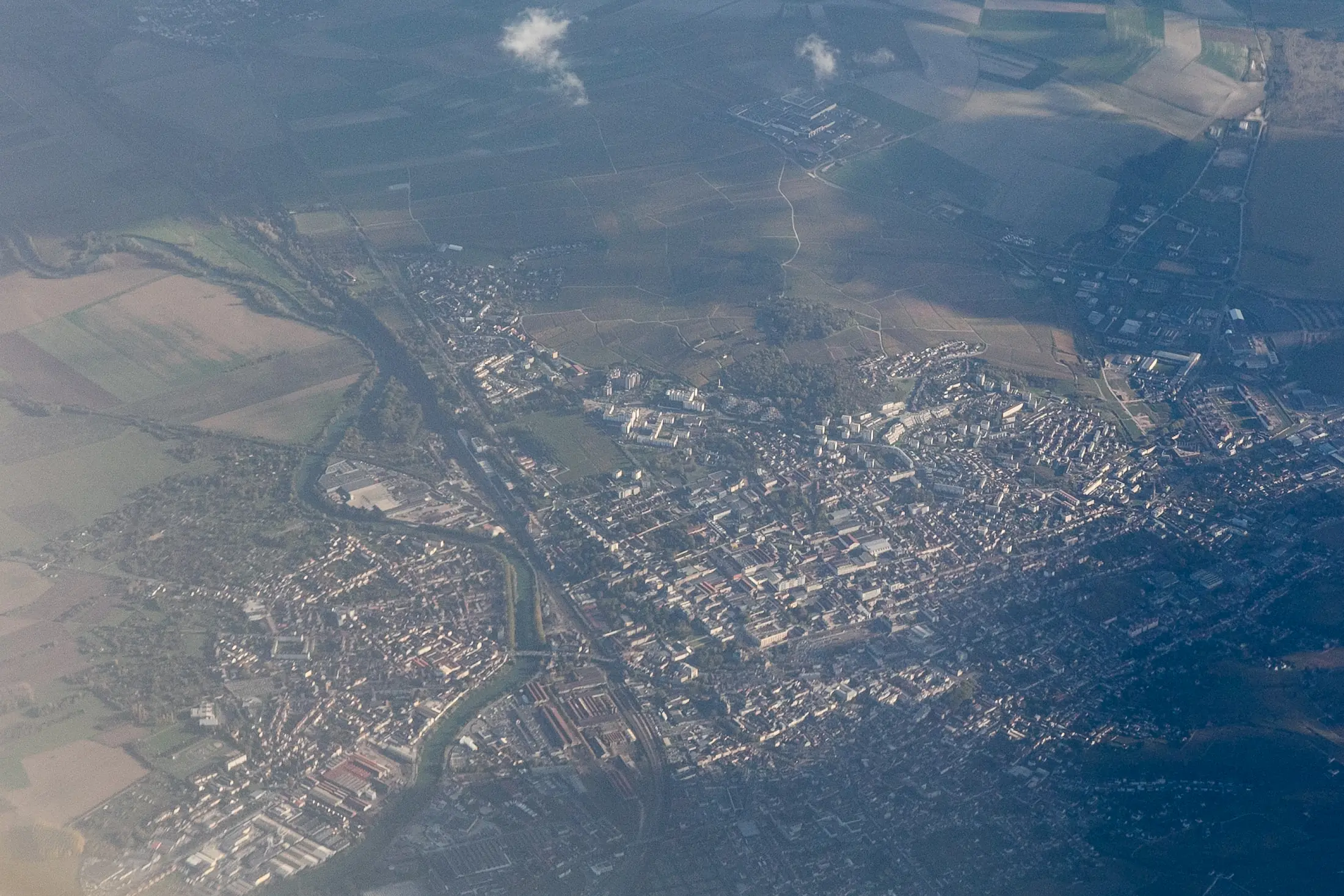
The Champagne houses first developed along the faubourg du Commerce. A municipal resolution in 1804 recorded the concentration of wine businesses there and their rapid building activity, drawn by the quality of the cellars. The street’s celebrated architecture grew around production and storage: those stately frontages belonged to firms moving bottles as well as entertaining guests.
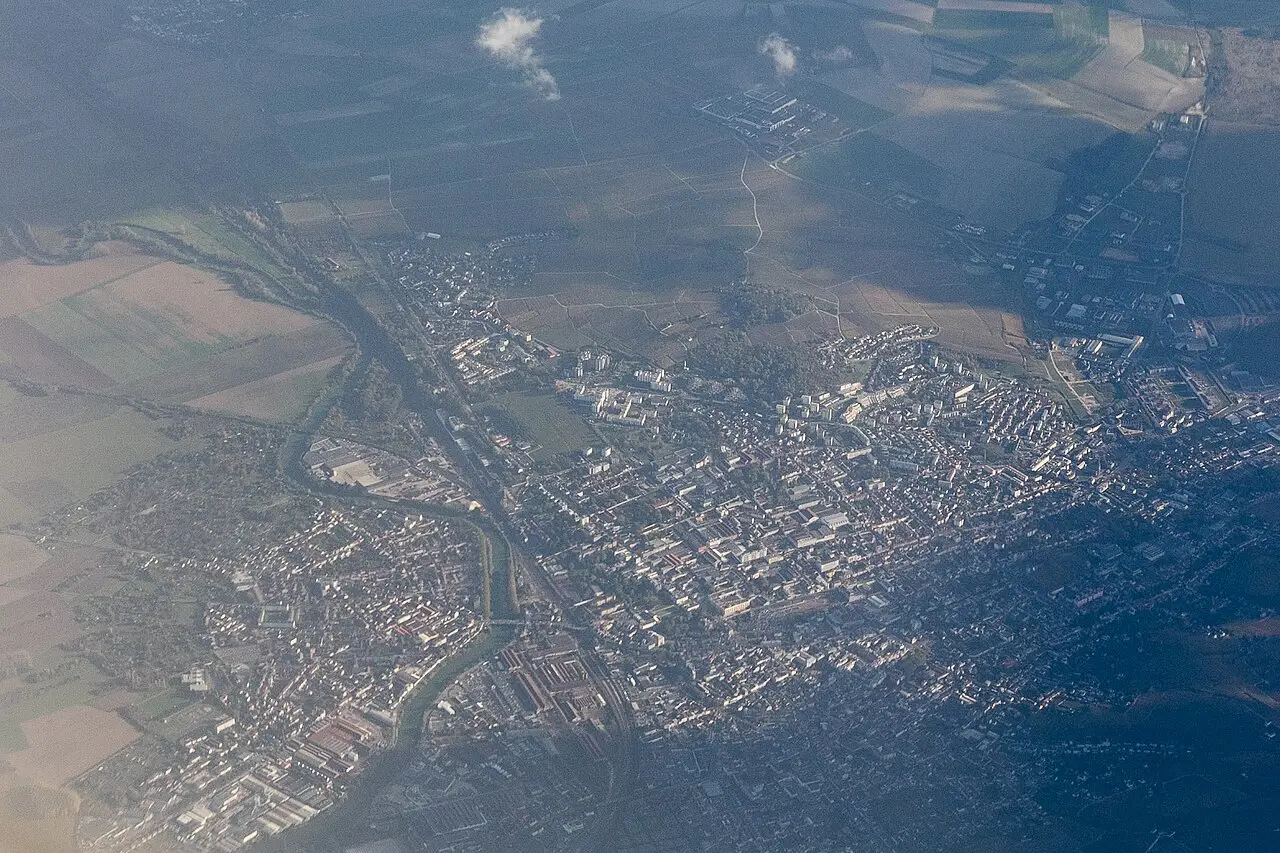
The Marne, the canal and then the railway supported that commercial expansion. Épernay’s municipal archives identify the arrival of rail in 1849 as a turning point in the town’s economy and appearance. Their industrial-history material compares plans dated 1791, 1830, 1906 and 2016, showing the loss of fortifications, railway construction and urban extension across successive generations.
On 27 February 1925 the council renamed rue du Commerce as avenue de Champagne. That date, commemorated by the city during the avenue’s 2025 centenary, is later than many of its best-known businesses. Walking the avenue today therefore means following a commercial landscape already well established before it received the Champagne name familiar to visitors.
Claude Moët and a growing international trade
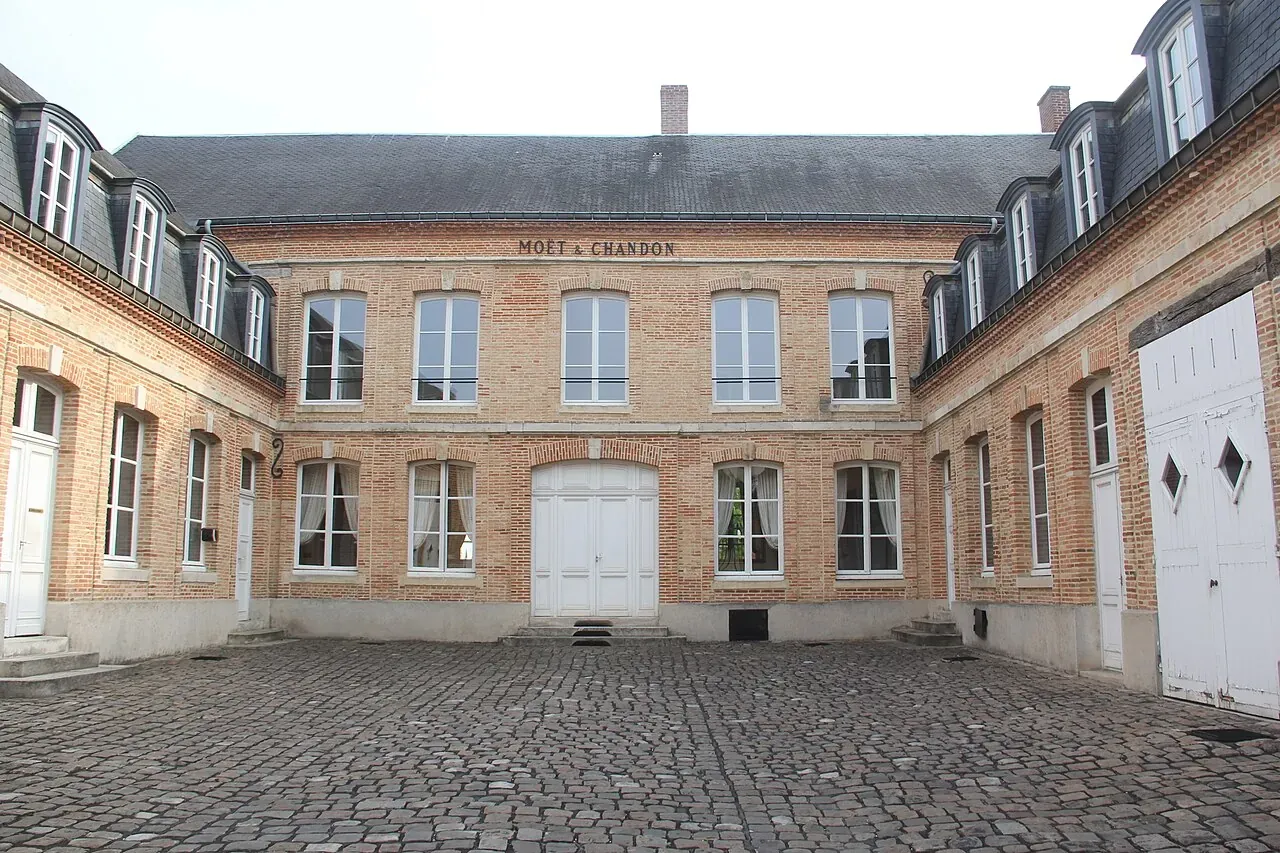
Claude Moët founded his wine business in 1743. His grandson Jean-Rémy subsequently developed its international markets, linking Épernay with customers beyond France. The family’s presence helps explain the avenue’s combination of wine production and grand domestic architecture: fortunes made through Champagne could be displayed in buildings located directly above the storage spaces on which the trade depended.
Napoleon visited the Épernay estates and awarded Jean-Rémy Moët the Légion d’Honneur. Moët’s own history links the Impérial name to that imperial association. Moët Impérial was created in 1869, giving the political memory a lasting commercial expression on the label. The account of Napoleon’s troops inventing sabrage belongs to legend, not to the documented foundation of the business.
The Moët cellar network is described by the house as 28 kilometres long. Its present reception is at 18 avenue de Champagne, while older heritage descriptions sometimes use number 20. Those neighbouring street numbers belong to a large working estate whose history extends beyond a single visitor doorway. The chalk below the town forms as important a part of that heritage as the buildings above.

Perrier-Jouët, art and the merchant’s château
Pierre-Nicolas Perrier and Rose-Adélaïde Jouët established Perrier-Jouët in 1811. Their family developed vineyard holdings in Cramant, Avize and Chouilly in the Côte des Blancs. The Chardonnay identity associated with the house today thus connects its Épernay premises with vineyard villages farther south, illustrating how the commercial town depended on fruit grown across the surrounding hills.
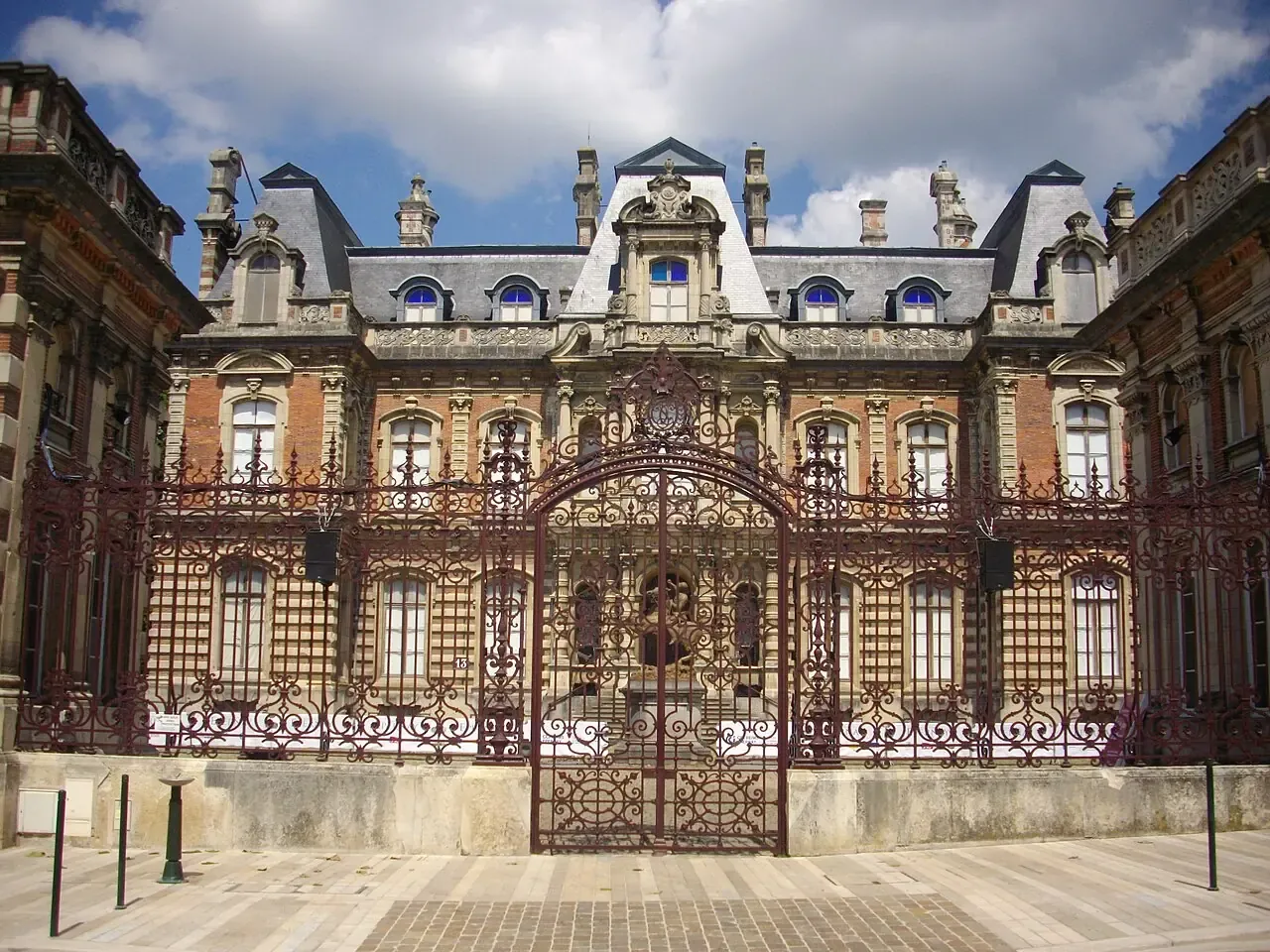
Charles Perrier commissioned Château Perrier between 1852 and 1857. Architect Pierre-Eugène Cordier combined references to French Renaissance and Louis XIII buildings in its four façades, using brick, stone, slate and glass. Charles and Octavie Gallice moved into the residence in 1856. Behind its display of wealth stood cellars connected to the railway, joining reception rooms and production within one property.
After Charles and Octavie died in 1878, Henri Gallice inherited the château. He commissioned Pierre Le Nordez’s hunting sculpture, Le Veneur, which remains in the courtyard. The château later served as a temporary hospital during the First World War and as military headquarters during the Second. Its changing uses make the building a record of Épernay’s wider history as well as the Champagne trade.
Perrier-Jouët’s artistic identity took another form in 1902, when Émile Gallé decorated four magnums with white Japanese anemones. The flowers subsequently became the Belle Epoque emblem. The house’s Maison Belle Epoque at number 11 preserves Art Nouveau works including Gallé’s dragonfly table and pieces by Hector Guimard, linking Champagne hospitality with decorative arts.
The railway and Mercier’s industrial ambition
The Paris–Épernay railway opened in 1849, creating new commercial possibilities along the Marne. Railway construction and repair workshops followed in 1850, according to the city’s heritage diagnosis. The trains supported Champagne exports while also making Épernay an industrial town with a railway workforce. Its nineteenth-century expansion cannot be explained by mansion-building alone.
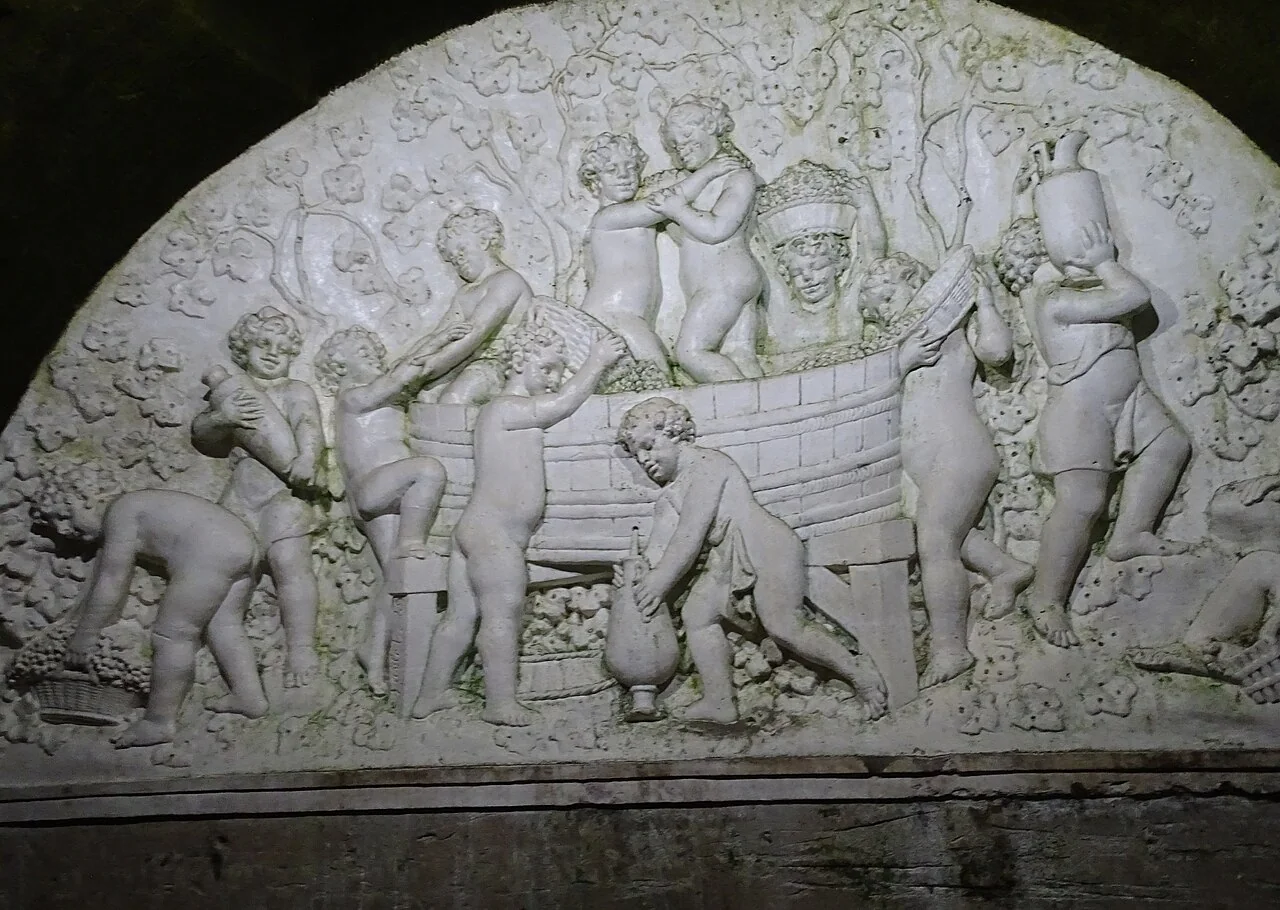
Eugène Mercier founded his Champagne business at twenty and made technological display part of its identity. The house introduced electricity into its cellars in 1886. Its underground complex extended over a single level, with transport infrastructure designed for moving wine efficiently. Gustave Navlet’s carved bas-reliefs turned parts of that production environment into a setting for storytelling and public spectacle.
Mercier’s giant blending cask travelled to the 1889 Paris Universal Exhibition. The house describes a capacity equivalent to 200,000 bottles and a weight exceeding twenty tonnes. The feat promoted Épernay’s wine through industrial scale and ambitious logistics. A Navlet relief commemorating President Carnot’s 1891 visit supplies another named episode in the house’s public history.
The exhibition tradition continued with Mercier’s anchored balloon bar at the 1900 Paris exposition, followed by a Paris–Épernay motor rally in 1904. Railways, electricity, balloons and cars all appear in this one producer’s history. They place the Avenue’s cellars firmly within the inventive, publicity-conscious commercial world of the late nineteenth and early twentieth centuries.

Other families behind the façades
Auguste Boizel and Julie Martin founded Boizel-Martin in 1834. Both had worked as pastry chefs, and Julie’s family owned vines at Aÿ and Mareuil-sur-Aÿ. The firm began shipping to Britain in 1851; the Hedges-Butler family represented it there for more than a century. That long British relationship adds another thread to Épernay’s export history.
Boizel’s family chronology records Brut wines from 1872, a Blanc de Blancs in 1929 and Joyau de France based on the 1961 vintage. The preserved Trésor cellar contains bottles from the foundation year, 1834. Atelier 1834 opened in 2018 after a two-year restoration, joining the house’s historical collection to modern production spaces at 46 avenue de Champagne.
Henri-Marc de Venoge came from Switzerland’s canton of Vaud and established de Venoge & Cie with his son Joseph in 1837. The blue ribbon associated with the house refers both to the Venoge river and the French Order of the Holy Spirit. Its Épernay premises at number 33 provide a different family and geographic origin within the same avenue.
Pol Roger made his first wine sale in January 1849 and moved from Aÿ to Épernay in 1851. By 1855 the business was favouring brut wines for English customers. The house’s current address, 1 rue Winston Churchill, recalls its later association with Britain’s wartime prime minister. Its private working premises remain part of the town’s history without becoming a public museum.
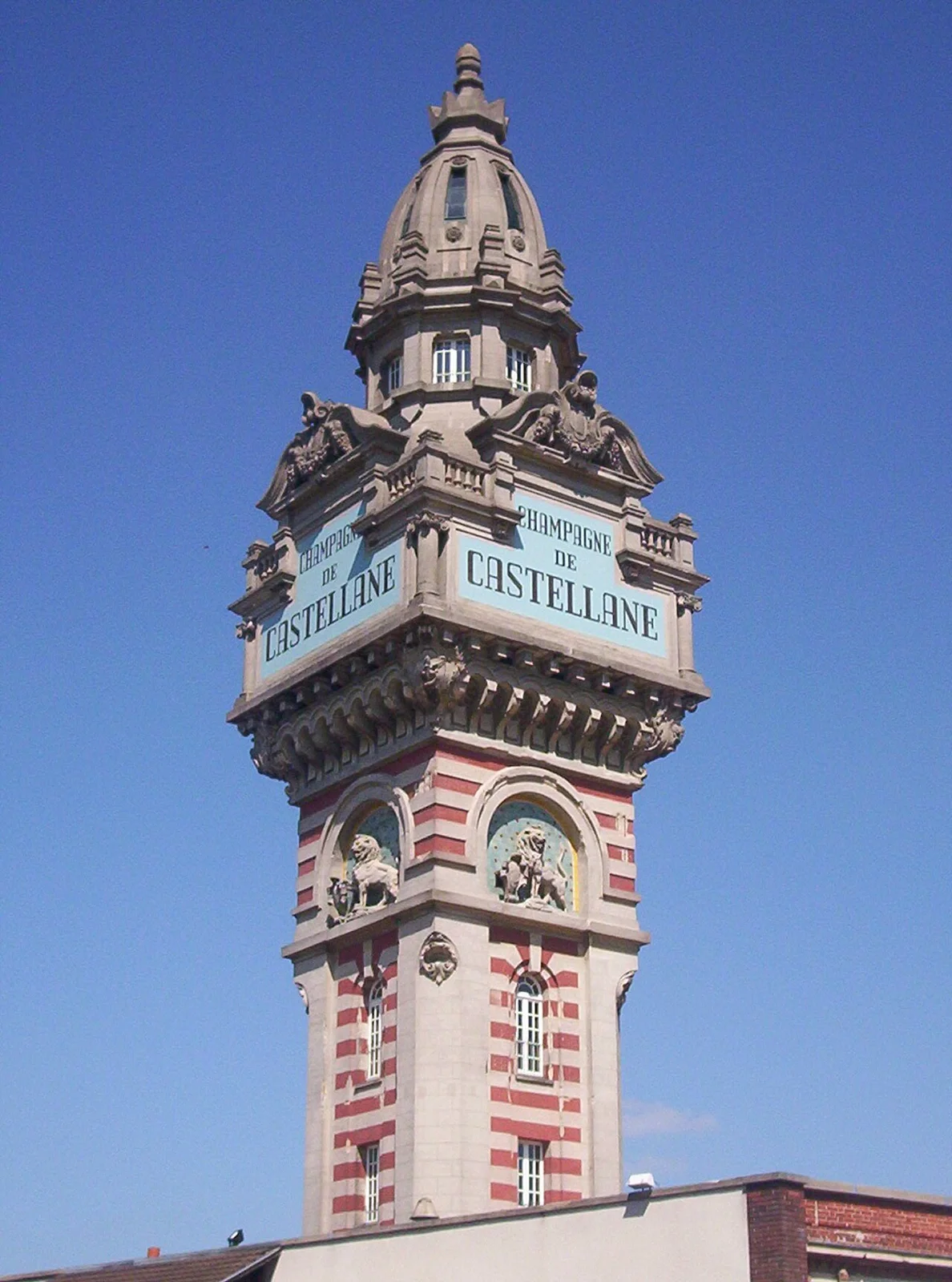
Viscount Florens de Castellane founded his house in 1895, adopting a red Saint Andrew’s cross inspired by a Champagne regiment’s standard. His cousin Boni developed distribution in Paris in 1899. Leonetto Cappiello designed an advertising poster in 1902. The tower, advertising collection and label archive reveal how architecture, graphic design and brand recognition worked together in the expanding wine trade.
From private mansion to public museum
The present Musée du vin de Champagne et d’Archéologie régionale opened at Château Perrier on 29 May 2021, after 23 years without public access. The Ministry of Culture records about 100,000 collection objects and 2,500 pieces displayed at reopening. Its scope reaches from regional archaeology to Champagne production, placing the avenue within a much longer story of people and landscape.
The château had housed earlier museum collections and a library after the Second World War. Safety concerns closed the public facilities in 1998; the later rehabilitation created a new museum within the historic merchant residence. The building’s protected architectural fabric, marquetry floors and decorated interiors became part of the visitor experience alongside the collections.
UNESCO inscribed Champagne’s hillsides, houses and cellars in 2015. The Avenue de Champagne forms one of three representative components, alongside Saint-Nicaise Hill in Reims and the historic slopes around Hautvillers, Aÿ and Mareuil-sur-Aÿ. Its significance lies in the connected system of production, storage and trade, with underground galleries as essential as the avenue’s monumental surface.
The 1925 street name, the 2015 inscription and the 2021 museum opening mark three different stages of recognition. Épernay first gave its commercial street a regional identity, then gained international recognition for the Champagne landscape, then reopened a merchant’s château as a public cultural institution. Those dates frame a walk through a town still making the product that transformed it.


Plan your trip to Épernay
Get there
Book a tour
Select the departure point and date on the booking page. Check the meeting point, language and inclusions before paying.
Compare toursWe may earn a commission if you book through these links, at no extra cost to you.