

Calais to Reims: distance and route
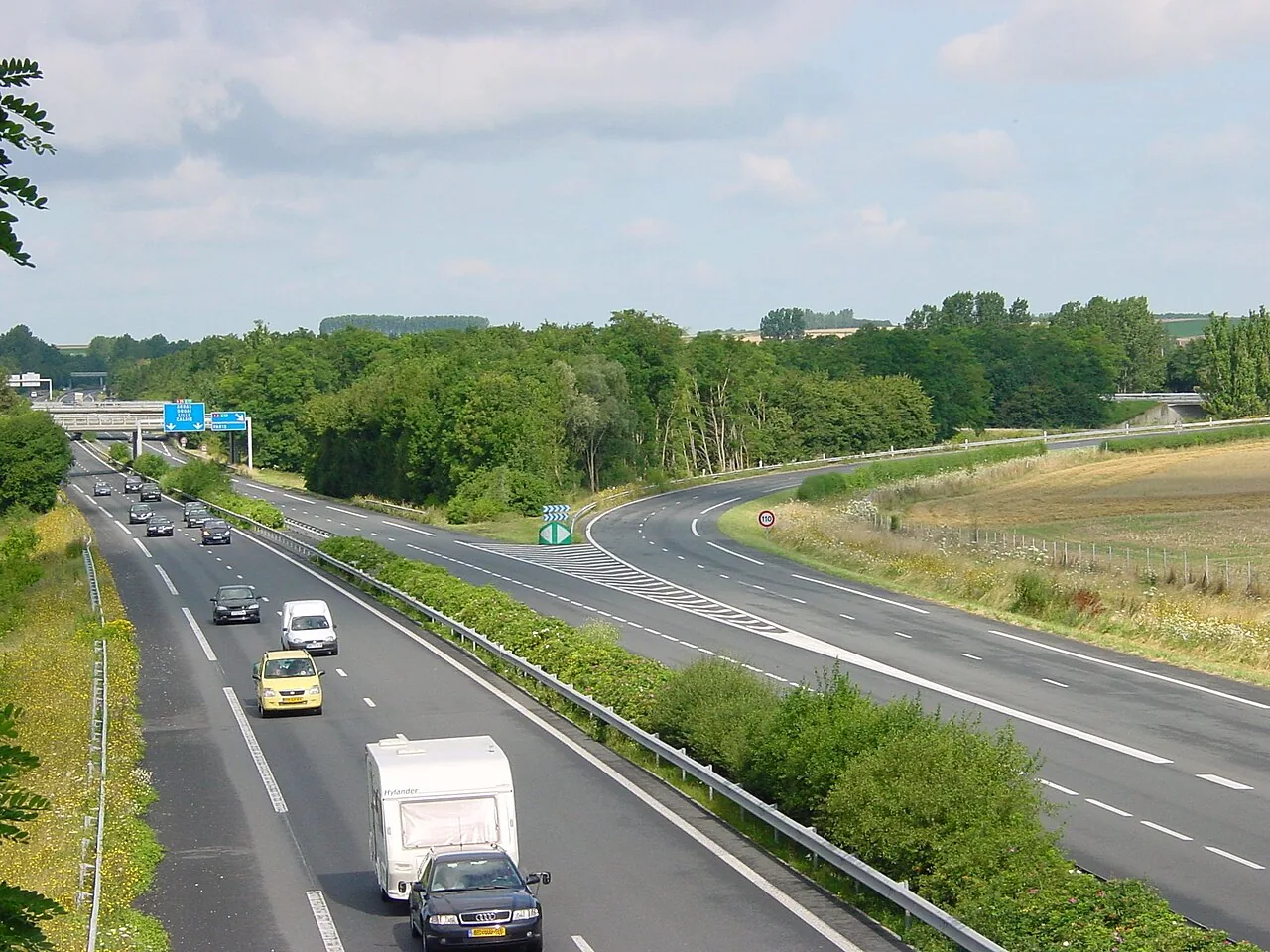
From the Channel crossing, the A26 is the main motorway corridor towards Reims. LeShuttle describes the Calais–Reims journey as about 275km, with an indicative drive of 2 hours 35 minutes. Allow additional time for the Calais terminal, fuel stops and congestion beyond that route-guide estimate. Enter the hotel or car-park entrance as the destination before leaving Calais.
Reims is a useful first base because it combines the cathedral, restaurants and several Champagne houses within the city. The Champagne by car itinerary then uses named stops at Taittinger, the Faux de Verzy, the Phare de Verzenay and Mercier. The itinerary separates the road journey from the tasting appointments so that the person driving can keep those days alcohol-free.
Épernay is a separate destination south of Reims. Its tourist office gives 28km between the two towns and identifies the A4 and A26 among the region’s approach routes. That town-to-town figure is not an exact Calais–Épernay mileage. For an Épernay hotel, put the final street address into the Sanef route calculator and your navigation app.
A26 tolls: the verified vehicle-class range
Sanef’s official tariff booklet, effective from 1 February 2026, lists Calais, péage de Setques, to Reims, péage de Courcy at €26.60 for class 1 and €38.70 for class 2 (checked October 2026). That gives a €26.60–€38.70 range across those two vehicle classes for that specific tolled section, not an all-vehicle or all-exit quotation.
Sanef defines class 1 as a vehicle no higher than 2m with a maximum authorised weight of 3.5 tonnes or less. Class 2 covers vehicles over 2m and below 3m, also up to 3.5 tonnes. A campervan or caravan combination can therefore be charged differently from a standard car. Use the operator’s vehicle-class guidance before budgeting.
The 2026 Sanef tariff PDF identifies the entry and exit names behind those prices. Its online calculator asks for the vehicle class and the route. A different Reims exit, an onward A4 section or a larger vehicle can change the charge; calculate that itinerary directly instead of applying the Setques–Courcy price to every Champagne journey.


LeShuttle or the Dover–Calais ferry
LeShuttle carries vehicles between Folkestone and Calais in 35 minutes through the Channel Tunnel. Its vehicle ticket includes up to nine people, and passengers remain with their vehicle during the crossing. The 35-minute journey excludes the time spent arriving, checking in, passing border controls and loading the train.
LeShuttle’s on-the-day guidance asks customers to arrive between one and two hours before the booked departure. It also asks for Advance Passenger Information to be completed 24 hours before travel. Save the booking reference and follow the vehicle-size instructions on the booking; roof-mounted equipment and anything being towed belong in the vehicle details.
DFDS’s Dover–Calais ferry has a published crossing time of 100 minutes and operates with vehicles on that route. Its timetable is shown in local time and can change with weather. Compare the sailing and check-in instructions with LeShuttle’s train crossing before fixing a first-night restaurant booking in Reims.
Calais and Reims use French local time, one hour ahead of the UK. The France-bound arrival printed on a crossing itinerary therefore needs to be read in its stated time zone. A 35-minute tunnel crossing and a 2-hour-35-minute drive are different journey segments; neither figure includes the other or the terminal arrival allowance.
Where to stop on the A26
Sanef’s motorway directory names service areas at Rely, Souchez, Baralle, Urvillers and Mont de Nizy on the A26 corridor towards Reims. Its kilometre markers place Urvillers at A26 km179 and Mont de Nizy at km238. Use the operator’s service-area directory to select a stop on your actual carriageway.
For the northbound return, the directory separately identifies Saint-Hilaire-Cottes, Angres and Rumaucourt, as well as Urvillers. Opposite-direction service areas can carry different names even at similar kilometre positions. Save the return-side stop with the Calais-bound journey; a southbound place name does not identify an entrance from the other carriageway.
Sanef says all 72 service areas across its network have electric-vehicle charging, with published power ratings of 150–350kW. That network statement does not specify your car’s charging speed or a vacant connector. Open the charging map for the A26 area you plan to use and match its connector to the vehicle. Keep the Reims hotel charging request separate from a motorway charging stop.

French driving rules and the kit to carry
GOV.UK says a UK photocard driving licence can be used in France; a paper licence may need updating or the relevant international driving permit. It also directs drivers to the UK vehicle-identifier requirements that replaced GB stickers. Keep the vehicle registration and insurance documents with the driver’s travel paperwork, and use the official France driving advice for the document checks.
France’s Service Public requires a CE-marked high-visibility vest, kept within reach, and an approved warning triangle in the car. Its emergency-stop guidance gives at least 30m for placing a triangle when needed, but says it is not compulsory to place one if doing so would endanger your life. Read that exception before attempting to walk beside fast-moving motorway traffic.
The official general motorway limit is 130km/h, reducing to 110km/h in rain or other precipitation. When visibility is below 50m, Service Public gives a maximum of 50km/h on all road types. Lower signed limits and separate probationary-licence rules can apply. The A26 journey time is a planning estimate, never a reason to exceed a displayed restriction.
Reims has a low-emission zone administered by Grand Reims. Before driving into the city, use the official ZFE page to view the boundary and vehicle requirements. This matters for an older UK vehicle as well as a French one; an overnight hotel reservation does not establish permission to enter the restricted area.
Parking in Reims
EFFIA’s covered Reims Clairmarais P1 car park is at impasse des Comptoirs Français, beside the city-centre railway station. The operator publishes 24-hour access and a 1.90m height limit. Its walk-up tariff lists €14.90 for 24 hours (checked October 2026). A roof box or taller van may need another parking option even when the vehicle fits a standard motorway class.
The operator’s Clairmarais P1 page offers online booking and explains that the issued ticket is used for pedestrian access and exit. Save it before walking to your hotel or joining a station pickup. Reims station parking and Champagne-Ardenne TGV parking are separate sites: the latter is at Bezannes, outside the central city.
For central Reims street parking, the city publishes 15 minutes free once per day per vehicle in its paid zones. Read the local meter and the city parking map for the zone you use. A full Taittinger visit or a cathedral-and-lunch stop needs a longer parking arrangement than that short initial period.
Parking for Épernay’s Avenue de Champagne
Épernay tourist office identifies the Jard underground car park, entered from rue Eugène Mercier, about 150m on foot from its office at 7 avenue de Champagne. Centre-Ville parking has entrances at place Hugues Plomb and boulevard du Cubry, around 700m from the office. Its practical information states that the first hour in those underground car parks is free.
The streets beside the tourist office—including rue Jean Moët, rue Pupin and rue Jean Chandon-Moët—have paid parking. Use the tourist office’s practical page for the entrances and work notices, then walk to the booked house. Moët’s visitor entrance is at 18 avenue de Champagne, Boizel at 46 and Mercier at 68; the street number belongs in the booking-day route.
Leave the car parked on tasting days
The tours and packages guide includes departures from Reims and Épernay with transport between named producers. A pickup at Reims Centre means Cour de la Gare, not Champagne-Ardenne TGV. Give that actual meeting point to the hotel or taxi operator when leaving your own car parked for the day.
The car-free guide also connects the Reims–Épernay railway with village visits and local taxis. Choose an alcohol-free driver for any road-based day, or book a driver for the whole tasting circuit. Champagne’s chalk-cellar tours commonly end with wine: the ticket’s two or three cuvées are tasting inclusions, not a driving allowance.
Returning to Britain with Champagne
GOV.UK’s current Great Britain allowance includes 18 litres of wine, still or sparkling, for eligible travellers aged 17 or over. That is 24 standard 750ml bottles by arithmetic. Goods must travel with you and be for your own use or gifts; personal allowances cannot be pooled between travellers. The separate nine-litre category for other lower-strength alcoholic products is not the wine allowance.
If you exceed the wine allowance, GOV.UK says tax and duty apply to all the goods in that category. Its example uses 19 litres of wine: the whole amount becomes liable. Keep purchase receipts and read the official customs page before loading the return car. Northern Ireland has a separate guidance route.
Comité Champagne recommends storing bottles in a dark, odour-free place at about 10–15°C and resting wine after a long journey. Those are useful reasons to keep purchases away from direct sunlight and unpack them after the Calais crossing. Our bringing Champagne home guide joins the customs rules with the bottle-by-bottle planning.
Calais to Reims by car: FAQ
How far is Reims from Calais?
LeShuttle’s driving guide gives approximately 275km by the A26, with an indicative drive of 2 hours 35 minutes before stops and delays.
How much is the A26 toll?
For Calais Setques to Reims Courcy, Sanef’s February 2026 tariff is €26.60 for class 1 or €38.70 for class 2 (checked October 2026). Different exits and vehicle classes need their own quotation.
Can I drive between Champagne tastings?
Plan an alcohol-free driver or book a transported tour from Reims or Épernay. The two or three wines included in a house ticket do not specify an amount that is safe for driving.
How much Champagne can I bring home?
GOV.UK’s current Great Britain wine allowance is 18 litres, still or sparkling, for eligible travellers aged 17 or over. Goods above the allowance must be declared.
Plan your trip to Champagne
Get there
Book a tour
Select the departure point and date on the booking page. Check the meeting point, language and inclusions before paying.
Compare tours ↗We may earn a commission if you book through these links, at no extra cost to you.