

Five Champagne vineyard areas
Numbered labels mark orientation places, not appellation boundaries: Verzenay, Dormans, Avize, Sézanne and Bar-sur-Seine. Comité Champagne groups the vineyards into four main regions; this map shows the Sézannais separately for visitors.
- Montagne de Reims — Verzenay — Phare de Verzenay
- Vallée de la Marne — Dormans — Dormans heritage-map orientation point
- Côte des Blancs — Avize — Avize village orientation point
- Côte de Sézanne — Sézanne — Sézanne heritage-map orientation point
- Côte des Bar — Bar-sur-Seine — Bar-sur-Seine heritage-map orientation point
Where Champagne sits in France
Champagne’s vineyards are in north-eastern France, around 150km north-east of Paris according to the Comité Champagne. Reims and Épernay are the two best-known visitor bases in the Marne department, while Troyes opens up the southern Côte des Bar in Aube. This is inland France: you will not find the vineyards on the Channel coast after crossing to Calais. Your onward journey continues through northern France before the chalk slopes, house names and village vineyards begin to shape the view.
The Champagne appellation crosses five departments: Marne, Aube, Aisne, Haute-Marne and Seine-et-Marne. Its boundaries were defined in 1927. The Comité’s 2025 figures give 319 vineyard villages and approximately 34,200 hectares of vines, spread across the administrative regions of Grand Est, Hauts-de-France and Île-de-France. Those are wine-growing boundaries, so a hotel search for the broad word Champagne can cover places a considerable distance apart. Start with a town or named vineyard area when choosing accommodation.
Read the region as several vineyard areas
The Comité Champagne groups the vineyards into four main areas: Montagne de Reims, Vallée de la Marne, Côte des Blancs and Côte des Bar. Visitor guides often show the Côte de Sézanne separately, giving five useful labels for planning a trip. We use that five-area visitor description here while keeping the Comité’s four-area classification clear. The names describe different parts of a dispersed vineyard, not five districts that can all be walked from one railway station.
The Comité notes that the most distant vineyard areas are more than 200km apart. That is why a Reims hotel and a Côte des Bar appointment are not automatically convenient partners. Use our Champagne map to locate the town, then check the exact house address on its booking page. A producer’s label may be familiar in Britain while its visitor entrance is in Aÿ, Urville, Épernay or a village outside Reims. The address determines the transport plan.

Montagne de Reims: the slopes south of the city
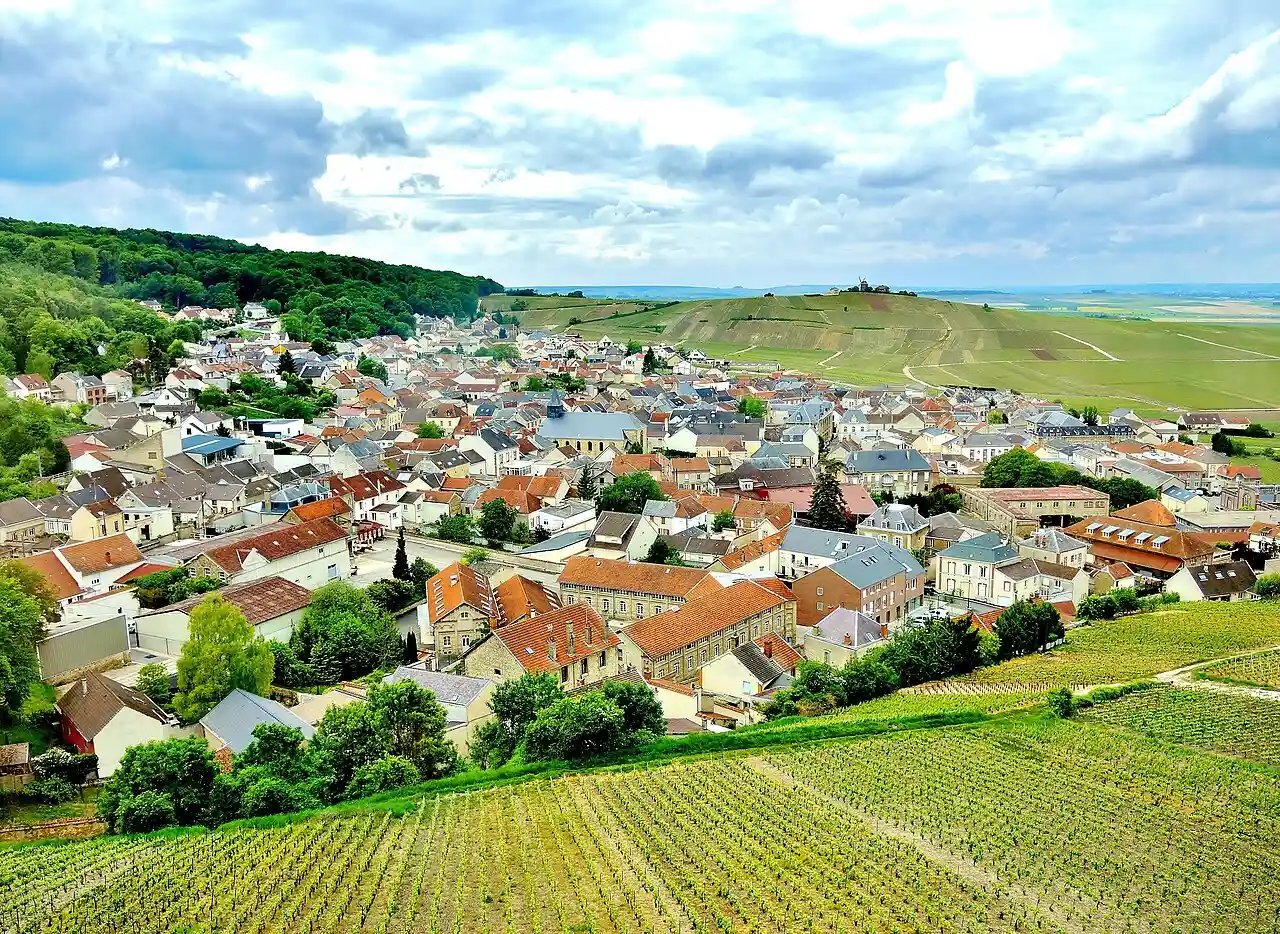
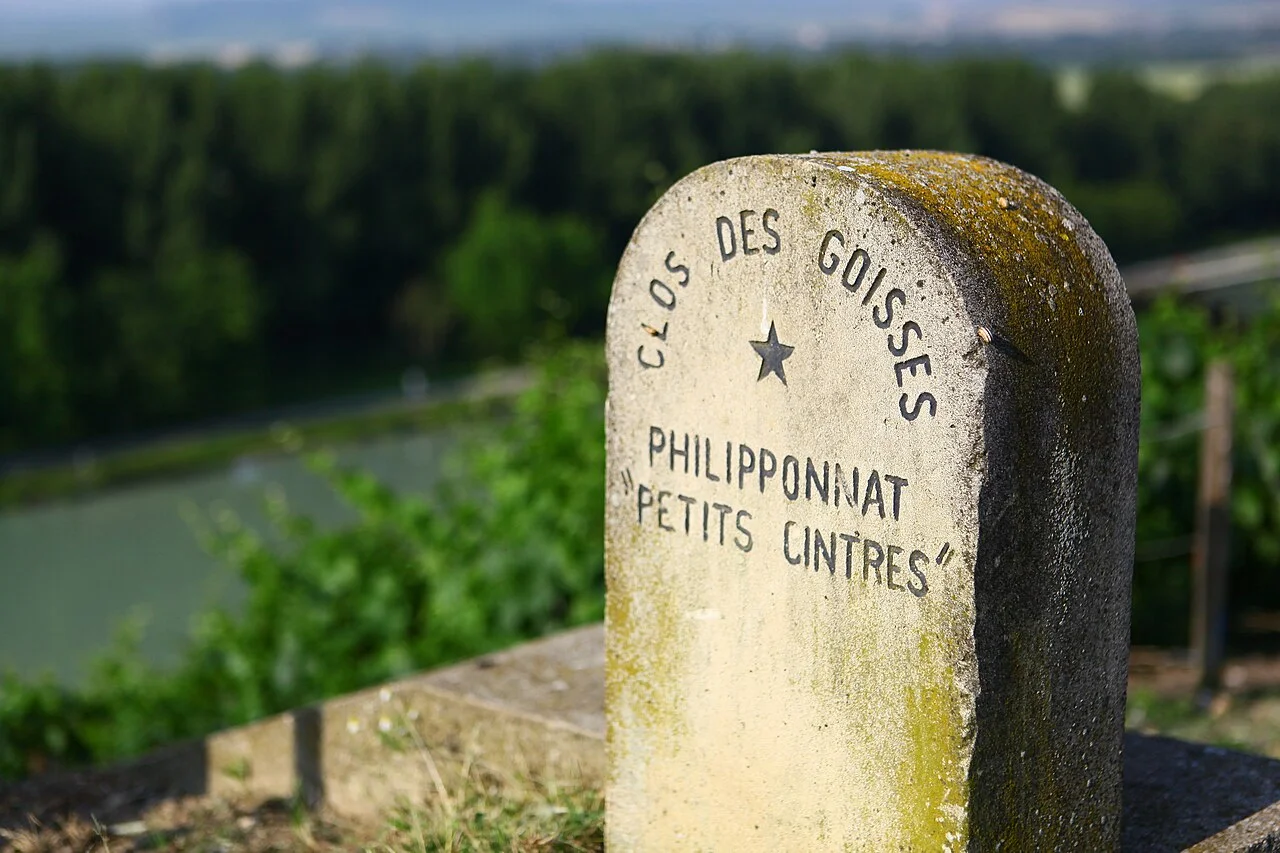
The Montagne de Reims lies between the Reims and Épernay sides of the northern vineyard. Verzenay, Verzy, Bouzy and Ambonnay are useful village names to recognise when comparing visits. Pinot Noir is particularly associated with this area in the Comité’s account of Champagne’s grape geography. The word montagne should not suggest an Alpine holiday: this is a wooded ridge and vineyard landscape, with villages and slopes providing the setting for grower appointments.
Verzy also offers the ONF’s 3km Faux de Verzy trail through its protected dwarf beech reserve. That gives a named non-tasting stop to combine with the vineyard landscape, provided you arrange the journey from town. Our Montagne de Reims guide links the villages with the Phare de Verzenay and local houses. Sleeping in Reims places its cathedral and station within the city visit; a rural appointment in Verzy remains a separate journey with an exact starting address.
Vallée de la Marne: follow the river villages
The Vallée de la Marne follows the river corridor through vineyard country. Aÿ, Mareuil-sur-Aÿ, Hautvillers, Damery and Dormans are names you will encounter around Épernay and farther west. The Comité associates the eastern Marne valley particularly with Pinot Noir and the western part with Meunier. Those broad patterns help explain the landscape and blends, but they do not identify the contents of an individual bottle: the producer’s own cuvée description does that.
Hautvillers, Aÿ and Mareuil-sur-Aÿ form the historic-vineyard component of UNESCO’s 2015 Champagne Hillsides, Houses and Cellars inscription. The designation also includes components in Reims and Épernay; it does not mean every village or every cellar in Champagne has the same listed status. Our Aÿ and Marne valley guide follows the villages, while the Aÿ guide helps with a stay beside the vines. Check the specific village before interpreting a tour description that simply says Marne Valley.

Côte des Blancs: Chardonnay country south of Épernay
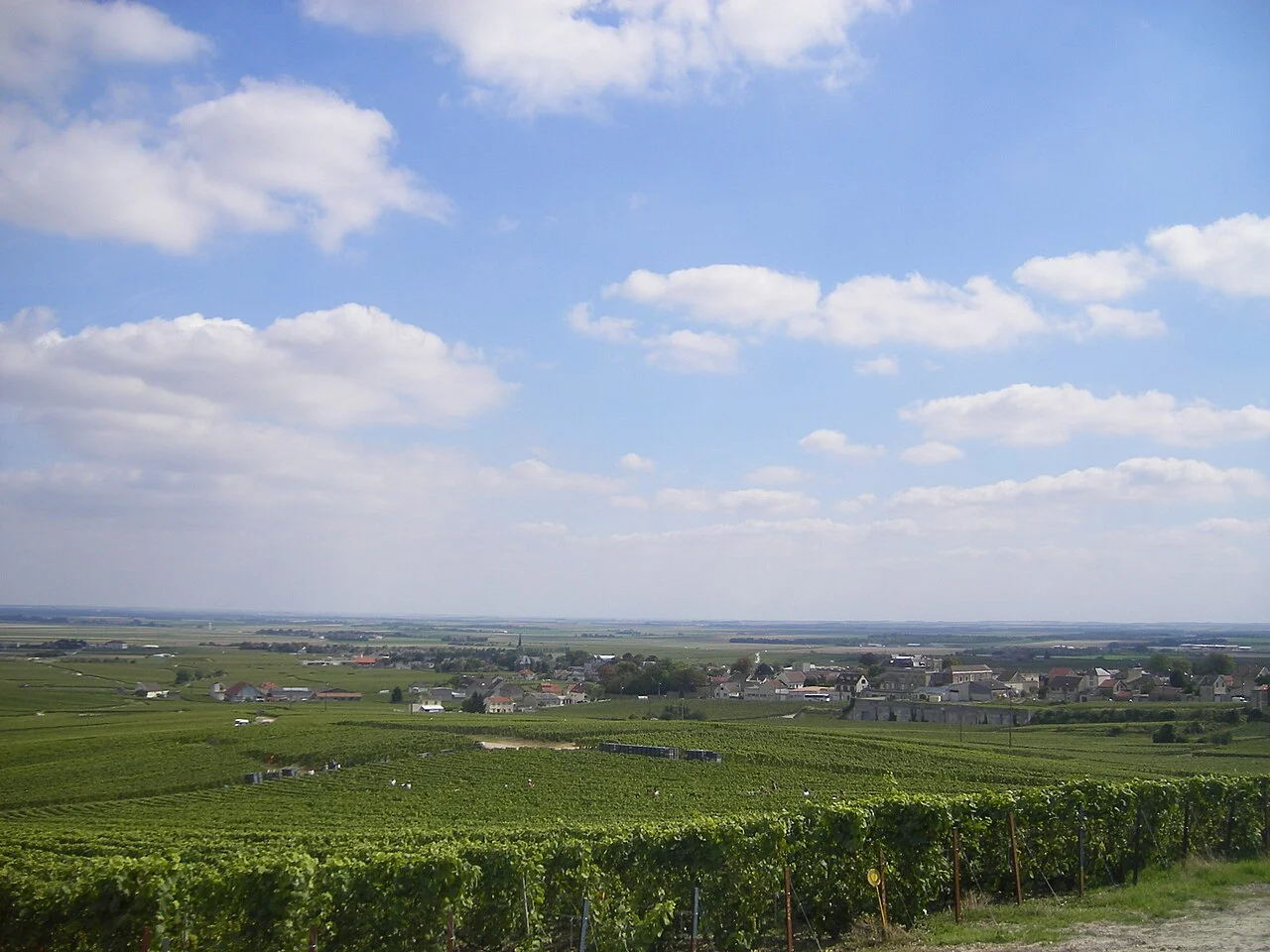
The Côte des Blancs is the vineyard area associated particularly with Chardonnay. Chouilly, Cramant, Avize, Oger and Le Mesnil-sur-Oger give you concrete places to plot south of Épernay. The Comité describes this chalky strip as roughly six to nine miles long. A visit here can focus on a village producer and the surrounding slopes, with Épernay providing a different setting of large avenue houses, restaurants and its main railway station.
Our Côte des Blancs guide brings together village visits and practical stops. Read the house’s booking instructions before setting out from Épernay: a famous name on a bottle does not establish a daily drop-in reception or a public cellar tour. For cycling, the Épernay tourist office publishes a Côte des Blancs Nord circuit of a little over 21km, using roads and including hills. That is a named route distance, not an assurance that every vineyard appointment can be reached on a protected cycle path.
Côte de Sézanne: keep the fifth label in view
The Côte de Sézanne is another Chardonnay-associated vineyard area in the Comité Champagne’s account of grapes and soils. Its name comes from Sézanne, south of the main Côte des Blancs visitor villages. It is useful to identify separately when reading maps and producer addresses, even though the Comité’s headline vineyard division uses four main regions. A booking described as Sézannais should not be treated as a cellar appointment on Épernay’s Avenue de Champagne.
For a first short trip, choose whether Sézanne is a deliberate part of your route or a separate return visit. Épernay, Avize and Sézanne are distinct destinations, and an itinerary should name the actual producer and departure point before adding a journey. Our Côte des Blancs area guide provides the neighbouring vineyard context; the producer’s official contact page supplies the address and available appointment. No general daily opening or admission price is assumed for an entire vineyard area.

Côte des Bar: the southern Champagne trip
The Côte des Bar lies in Aube, around Bar-sur-Seine and Bar-sur-Aube. The Comité’s wine-route page puts the beginning of this southern itinerary around two hours from Reims. Pinot Noir is the dominant regional association, and village names such as Urville and Les Riceys belong on a southern plan rather than an Épernay town walk. Troyes is the useful city name to pair with the area when comparing hotels and looking for a wider urban visit.
Our Côte des Bar guide covers the southern vineyard, while Troyes provides its own historic-town itinerary. Drappier’s Urville address is one example of why the word Champagne alone is too broad for routing. Read a southern tour’s collection point before buying rail tickets to Reims. A two-hour regional drive estimate is neither a guided-tour duration nor the length of a transfer from every Reims hotel; use the actual start and finish addresses for your day.
Is Reims or Épernay the capital of Champagne?
Épernay’s tourist office uses the description Capital of Champagne. That is a useful tourism identity for the town of the Avenue de Champagne, with Moët & Chandon, Perrier-Jouët, Pol Roger and Mercier among its familiar names. Reims is associated with the coronations of French kings and has its own major Champagne estates, including Pommery and Taittinger. Treat the two as different bases with overlapping wine interests, not rival answers to a single railway destination.
For a cathedral-and-cellars weekend, Reims combines Notre-Dame with the Saint-Nicaise house district and direct trains from Paris. For the avenue and nearby vineyard villages, Épernay gives you the houses along its central walk and Château Perrier’s museum at number 13. The Champagne appellation spans five departments, so neither town replaces the need to locate a booked producer. Our Reims and Épernay guides make the actual sights, houses and station arrangements visible before you select a base.

From London by train: Paris is the interchange
Eurostar’s London St Pancras to Paris Gare du Nord route takes 2 hours 16 minutes on most advertised services, with some journeys longer. The onward Champagne trains leave Paris Gare de l’Est, a different station. Eurostar describes the walk between Gare du Nord and Gare de l’Est as about ten minutes. That walking estimate is only the station-to-station transfer; it excludes getting off your train, navigating platforms, buying food and waiting for the onward departure.
SNCF Connect advertises a fastest Paris–Reims journey of 46 minutes and a fastest Paris–Épernay journey of 1 hour 20 minutes. These are route minima, not a guaranteed connection with a particular Eurostar arrival. Buy a sequence with a workable Paris transfer and distinguish Reims Centre from any booking offered to Champagne-Ardenne TGV. Our Getting There guide links the operators and explains the station choices. There is no direct London-to-vineyard journey hidden inside the Paris–Reims headline time.
From Calais by road
LeShuttle’s driving guide gives Calais–Reims as approximately 275km via the A26, with an indicative driving time of 2 hours 35 minutes. Its Folkestone–Calais crossing takes about 35 minutes, but check-in, boarding, disembarkation and road stops add time to the full journey. The road figure ends at Reims; it should not be reused as the distance to Épernay, Troyes or a house in the Côte des Bar. Enter your hotel’s full address when planning the final leg.
The A26 route has tolls, whose charge depends on the actual junctions and vehicle class. Use the motorway operator’s current calculator through our UK travel information rather than a recycled approximate toll in a general driving article. Once you reach Champagne, arrange a driver or other transport for tasting days. A booking in Aÿ, Verzy or Urville has a precise visitor entrance and start time; naming those before setting off makes the trip easier to organise.
Questions about your visit
Where is Champagne in France?
The Champagne wine-growing region is in north-eastern France, around 150km north-east of Paris. Its appellation covers parts of Marne, Aube, Aisne, Haute-Marne and Seine-et-Marne, with Reims, Épernay and Troyes useful visitor bases.
Are there four or five Champagne subregions?
The Comité Champagne groups the vineyard into four main areas: Montagne de Reims, Vallée de la Marne, Côte des Blancs and Côte des Bar. Visitor maps often show the Chardonnay-associated Côte de Sézanne separately, creating five useful planning labels.
How far is Champagne from Calais?
LeShuttle gives Calais to Reims as about 275km via the A26 and around 2 hours 35 minutes driving. That estimate is to Reims, not to every town or vineyard in the Champagne appellation.
Can I reach Champagne from London without a car?
Yes. Take Eurostar from London St Pancras to Paris Gare du Nord, transfer to Gare de l’Est, and book an onward train to Reims or Épernay. The fastest advertised Paris legs are 46 minutes and 1 hour 20 minutes respectively; connection time is additional.
Plan your trip to Champagne
Get there
Book a tour
Select the departure point and date on the booking page. Check the meeting point, language and inclusions before paying.
Compare toursWe may earn a commission if you book through these links, at no extra cost to you.