
A forested plateau above Champagne
The Montagne de Reims combines a forest plateau with vineyard slopes and inhabited villages between Reims and Épernay. Its regional park was officially recognised on 28 September 1976. That modern designation protects an older landscape of woodland, farming and wine production. The park’s own history traces the campaign back to local concern in the 1950s, followed by more organised action as urban growth, pollution and intensive agriculture threatened the rural environment.
In 1969 the mayors of Germaine, Saint-Imoges and Ville-en-Selve began developing the idea of a protected green area. An association for nature protection, leisure and tourism in the Montagne de Reims followed in 1970. The 1976 park was therefore the result of local organisation rather than an ancient boundary. Its label covers a living territory, with villages and economic activity alongside protected habitats. It is different from the Champagne appellation’s classification of particular winegrowing communes.
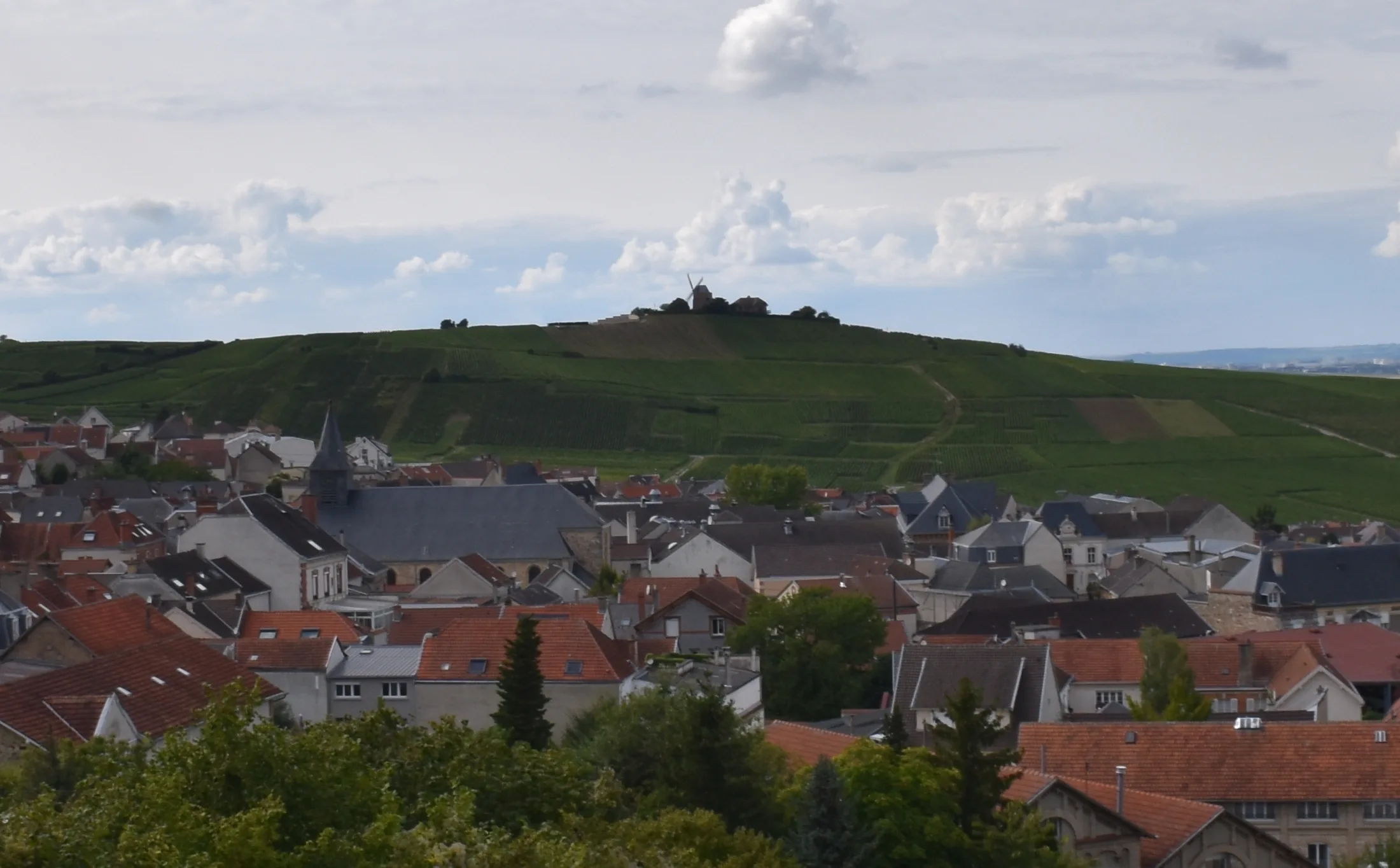
The windmill that first milled grain
The Tinot-Vincent couple built the Moulin de Verzenay on Mont-Bœuf in 1818. Designed to mill two kinds of grain simultaneously, it began as agricultural equipment rather than a monument to Champagne. The Boudeville family acquired it in 1863 and ceased milling in 1903. Its prominent position later made the former mill one of the vineyard landscape’s most recognisable landmarks, but its original function remains an important part of its story.
During the First World War the mill served as an observation post. The American army used it again in 1944. Restoration of the timberwork and four sails began in 1949, and G.H. Mumm took responsibility for its conservation in 1972. The surviving building is protected as a Historic Monument. Those successive dates connect food production, military observation and heritage stewardship at one hilltop, with the Champagne-house association representing its later history rather than its construction.

Joseph Goulet’s inland lighthouse
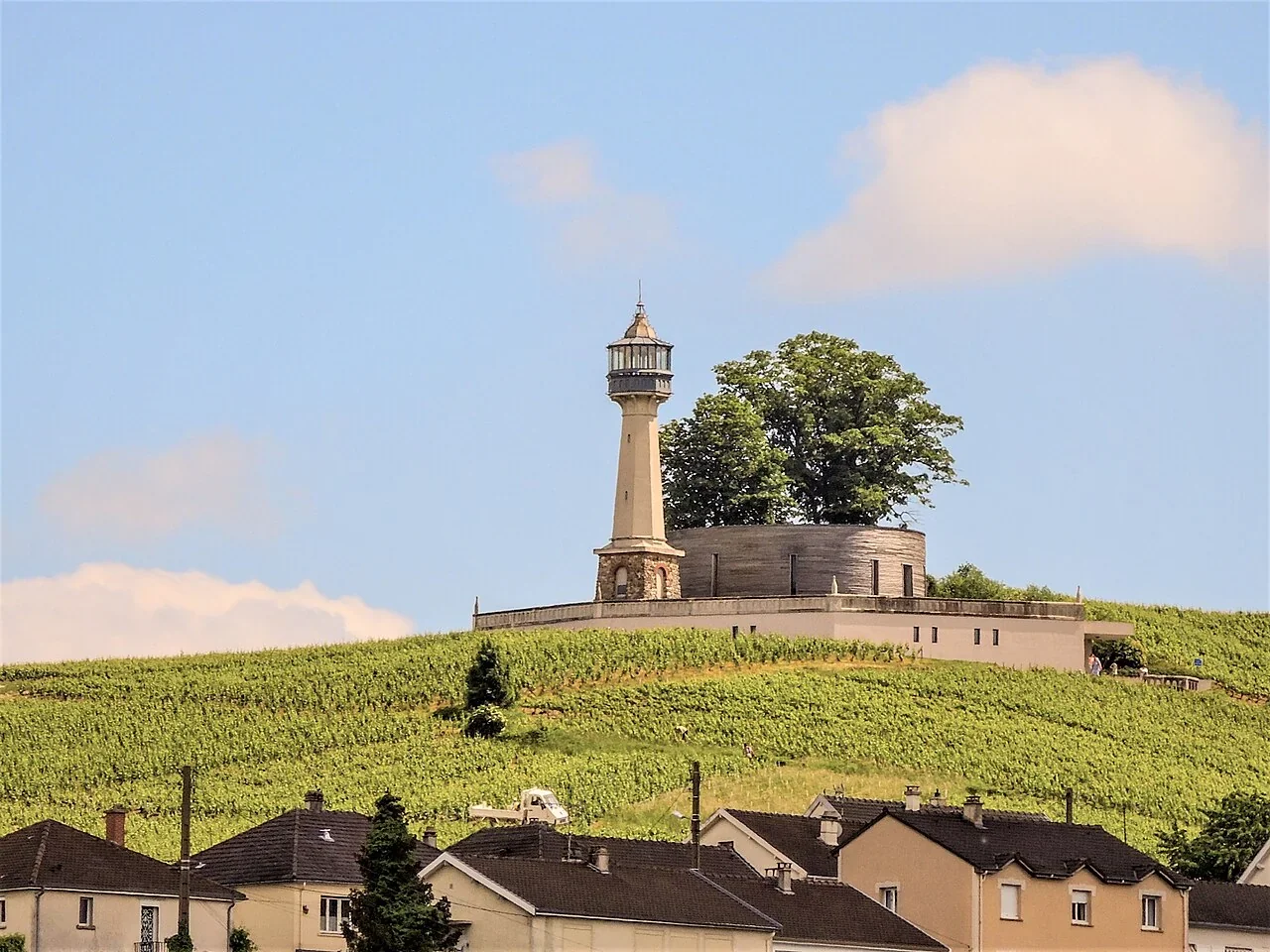
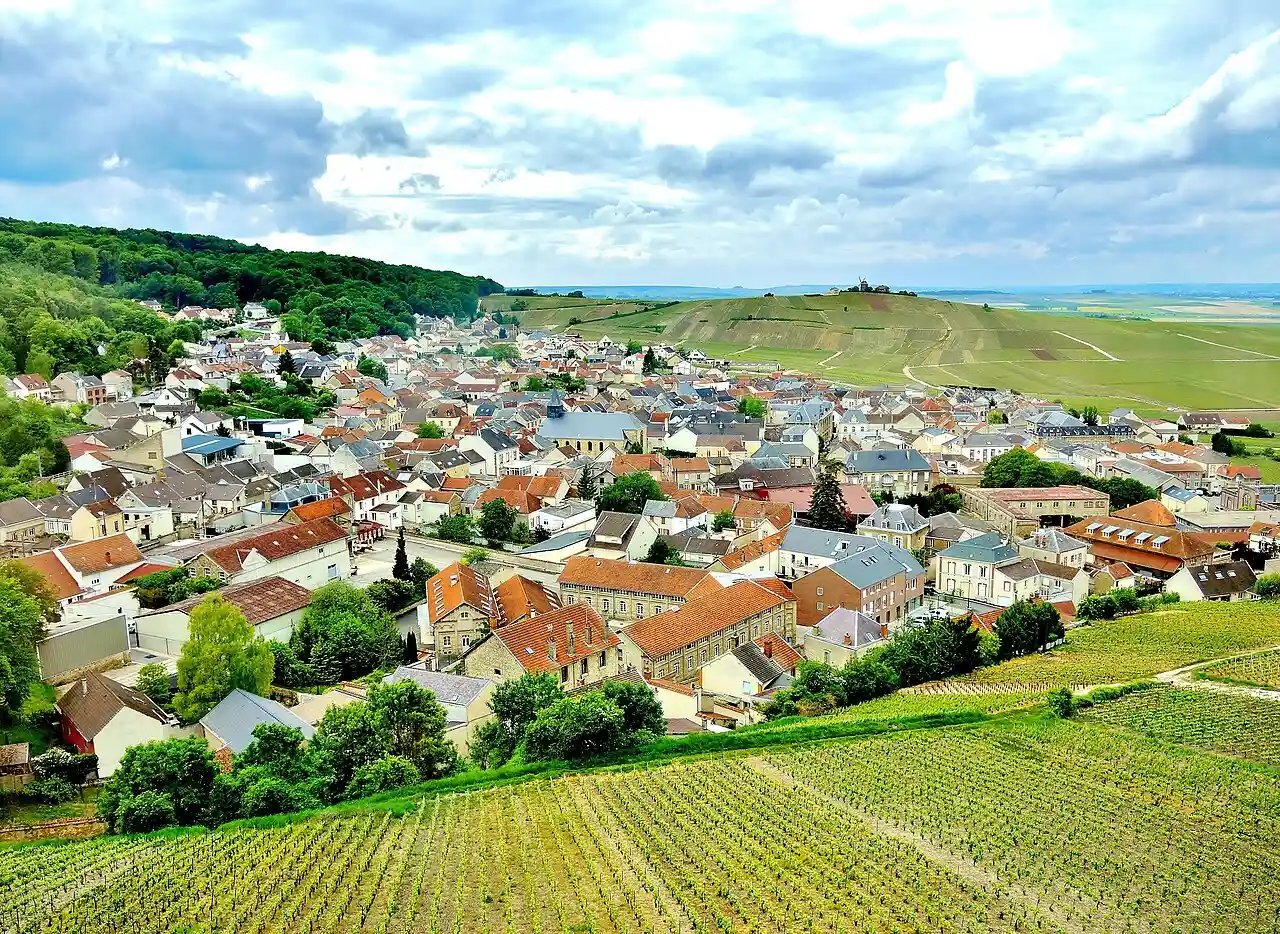
Joseph Goulet imagined the Phare de Verzenay in 1909 as an attention-catching Champagne landmark. Its unmistakable lighthouse shape belongs in the vineyard landscape, not on a coast. The tower stands on the opposite side of Verzenay from the older windmill, so the two silhouettes tell separate stories. The mill began with grain in 1818; the lighthouse belonged to the spectacle and promotion of Champagne at the beginning of the 20th century.
The Phare now houses a vineyard museum and a viewpoint reached by 101 steps. Its later interpretation gives the unusual building another purpose: explaining the landscape that the original tower was designed to stand out within. Verzenay’s two structures thus make a compact history of changing uses. One moved from work to monument, the other from promotion to museum. Their dates and functions remain distinct even though both feature in photographs of the same Grand Cru village.
Mont Sinaï and the war above the vines
The Allies installed the Mont Sinaï military observatory above Verzy in 1914. At 286 metres, its position gave views towards German-held ground at Mont Berru and Mont Haut beyond the Vesle. The remains belong to the long period of observation, trenches and artillery positions that followed the First Battle of the Marne. The forest heights had become strategically valuable because of the same broad views that now draw people to the plateau.
The regional park identifies eleven military cemeteries within its territory. Major burial grounds at Bligny and Marfaux commemorate German, Italian and British forces; more than eighty war memorials also stand across the park. Churches at Saint-Imoges and Ville-en-Selve contain commemorative stained glass. The Second Battle of the Marne in 1918 added another period of heavy fighting. These sites keep the military history attached to named villages and landscapes, alongside the vineyards and estates that resumed civilian work after the war.

Ludes and a family Champagne house
Victor Canard, a barrel maker, married Léonie Duchêne, from a winegrowing family, in 1859. They founded Canard-Duchêne in Ludes in 1868. Their sons Edmond and Alfred expanded the business, and the house received permission to use the Russian imperial coat of arms in 1891. Its beginnings link two practical parts of the wine trade: growing grapes and making the containers in which wine was handled.
The company acquired the Domaine de Ludes in 1929. War damage later left the underground cellars as the principal historic survivors by 1955. The stained-glass window displayed there preserves a link with the former château chapel. The hand-carved 19th-century cellars extend over four levels, between 12 and 38 metres deep. The special centenary bottle appeared in 1968, while the Cuvée V Victor anniversary release followed in 2018: two dated ways in which the house marked its own past.
Shelters among the small vineyard plots
The regional park inventoried nearly 120 vineyard lodges in 2010. Built in brick, wood or stone, these small structures provided shelter and stored tools close to individual plots. Their scattered positions reflect the fragmentation of Champagne vineyard ownership. The park notes that a lodge might belong to one or two owners working a specific parcel, making it a particularly direct record of the relationship between buildings and small-scale cultivation.
Mechanisation changed that relationship. The park’s illustrated history identifies the spread of the high-clearance vineyard tractor from the 1950s and faster motor transport as reasons why shelters lost their practical role. Land consolidation also removed some lodges. Others had already been destroyed during the First World War. Later restoration and use in vineyard interpretation gave some surviving buildings a new role. The 2010 inventory therefore records a disappearing form of working architecture, not a set of buildings originally constructed as tourist viewpoints.

The twisted beeches of Verzy
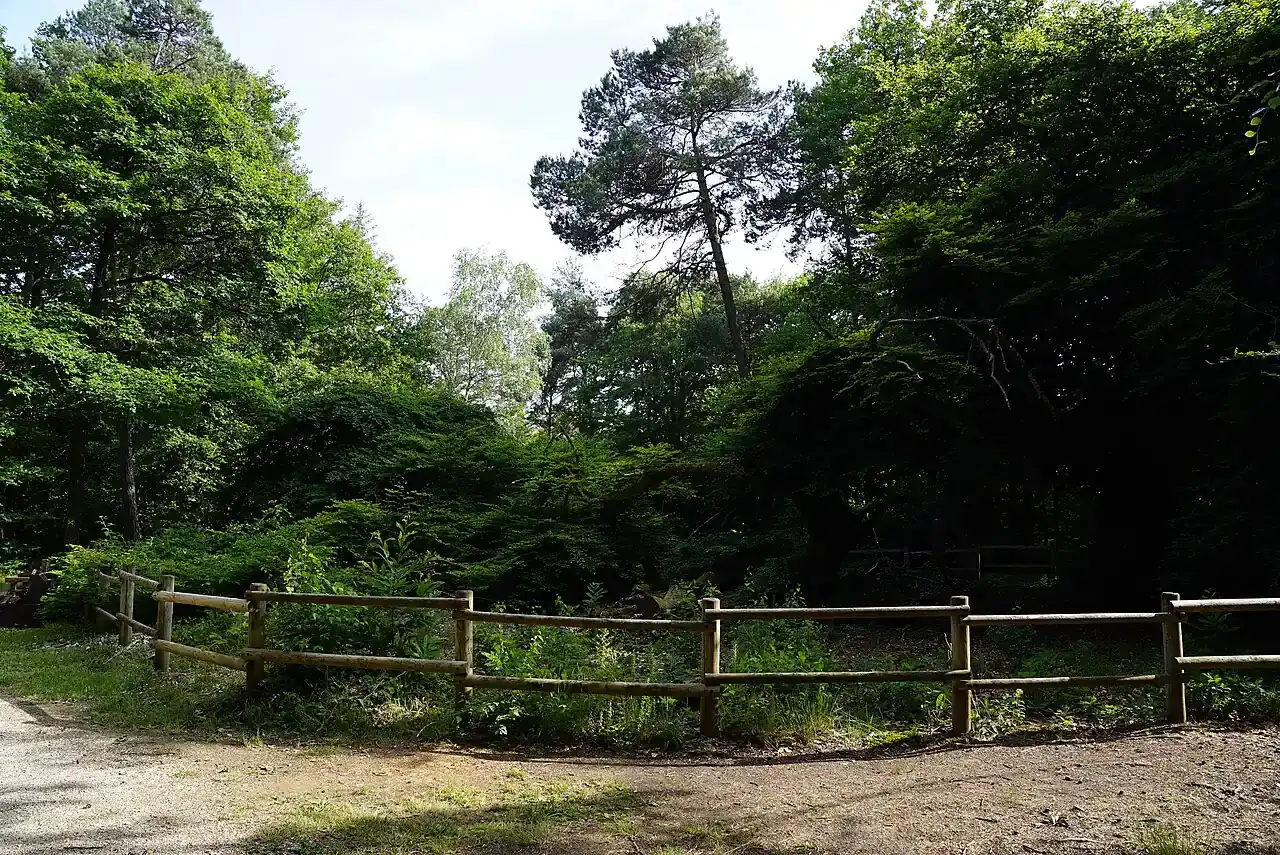
The Faux de Verzy are twisted beeches, with around eight hundred specimens described by the regional park. Their shape generated stories about the former Saint-Basle abbey and its monks. The park explicitly presents those stories as legends. It also records earlier scientific explanations involving the soil or viruses, before the current genetic explanation: a rare mutation produces the unusual growth. A branch that returns to ordinary upright growth creates the mixed form known as a “fau chimère”.
The trees also belonged to local social life. The park recalls dances beneath their domes at the bal des demoiselles into the 1960s. Conservation now has priority in the managed biological reserve: barriers keep feet away from shallow roots, while forestry management controls light and competition from other trees. This is a history of changing relationships with a woodland curiosity, from oral tradition and festivities to scientific study and active protection. The legends remain part of that history without becoming established accounts of the trees’ origin.
Water, estates and the historic slopes
Traditional wash houses survive at Avenay-Val-d’Or, Sermiers, Trépail, Sacy, Germaine and Louvois. The canal beside the Marne preserves a different waterway history in Bisseuil’s swing bridge, the spillways at Tours-sur-Marne and Dizy’s lock and lockkeeper’s house. These structures add domestic work and transport to a landscape usually introduced through Champagne. Domaine du Chalet at Chigny-les-Roses, built in 1860, represents the residential architecture associated with wine estates.
On the southern edge of the Montagne, the historic slopes from Cumières to Mareuil-sur-Aÿ became part of the Champagne UNESCO inscription in 2015. The World Heritage mission connects these vineyards with the former lands of Hautvillers Abbey and the development of winemaking techniques during the 17th century. The forested plateau, river villages and vineyard slopes consequently retain different but connected histories. The 1976 park and 2015 inscription recognise those inherited landscapes through two distinct systems of protection.
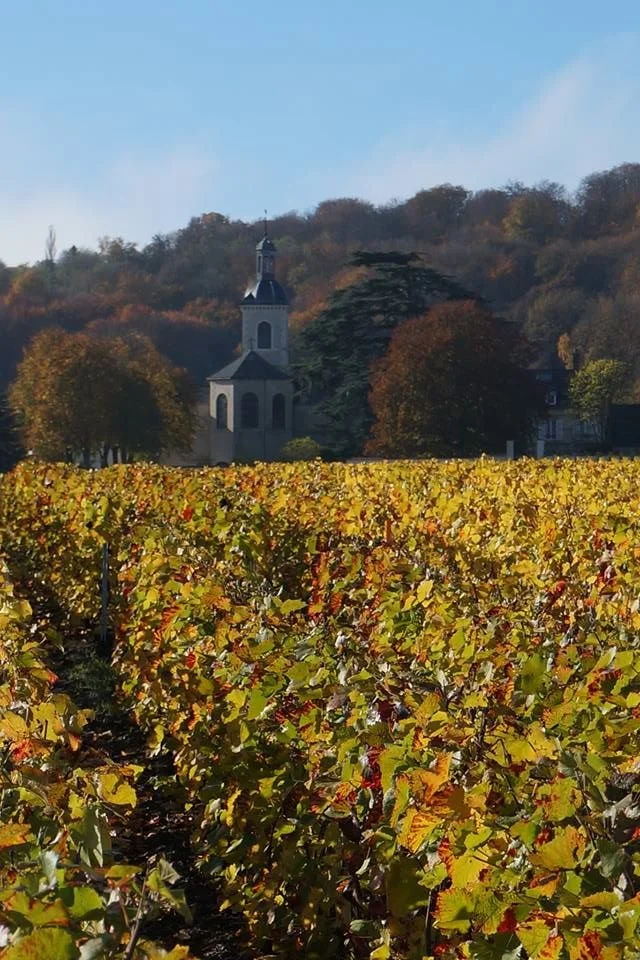

Mailly’s growers build their own future
In 1929 growers at Mailly formed the Société de Producteurs de Mailly Champagne. The producer’s history counts twenty-four original members, all with vines in the village, and describes a press-and-vat building organised on three levels to use gravity. When buyers failed to take their wines, they decided to make and sell Champagne themselves. From 1931 to 1964, winter work extended cellars through the chalk. The producer’s archive describes members contributing ten days of digging per hectare of vineyard. This cooperative history gives the Montagne another type of wine enterprise beside family houses: shared equipment, collective labour and the decision to market a finished wine.
Read Montagne de Reims: places to visit and trip planning guide
Plan your trip to Montagne de Reims
Get there
Book a tour
Select the departure point and date on the booking page. Check the meeting point, language and inclusions before paying.
Compare toursWe may earn a commission if you book through these links, at no extra cost to you.