

History
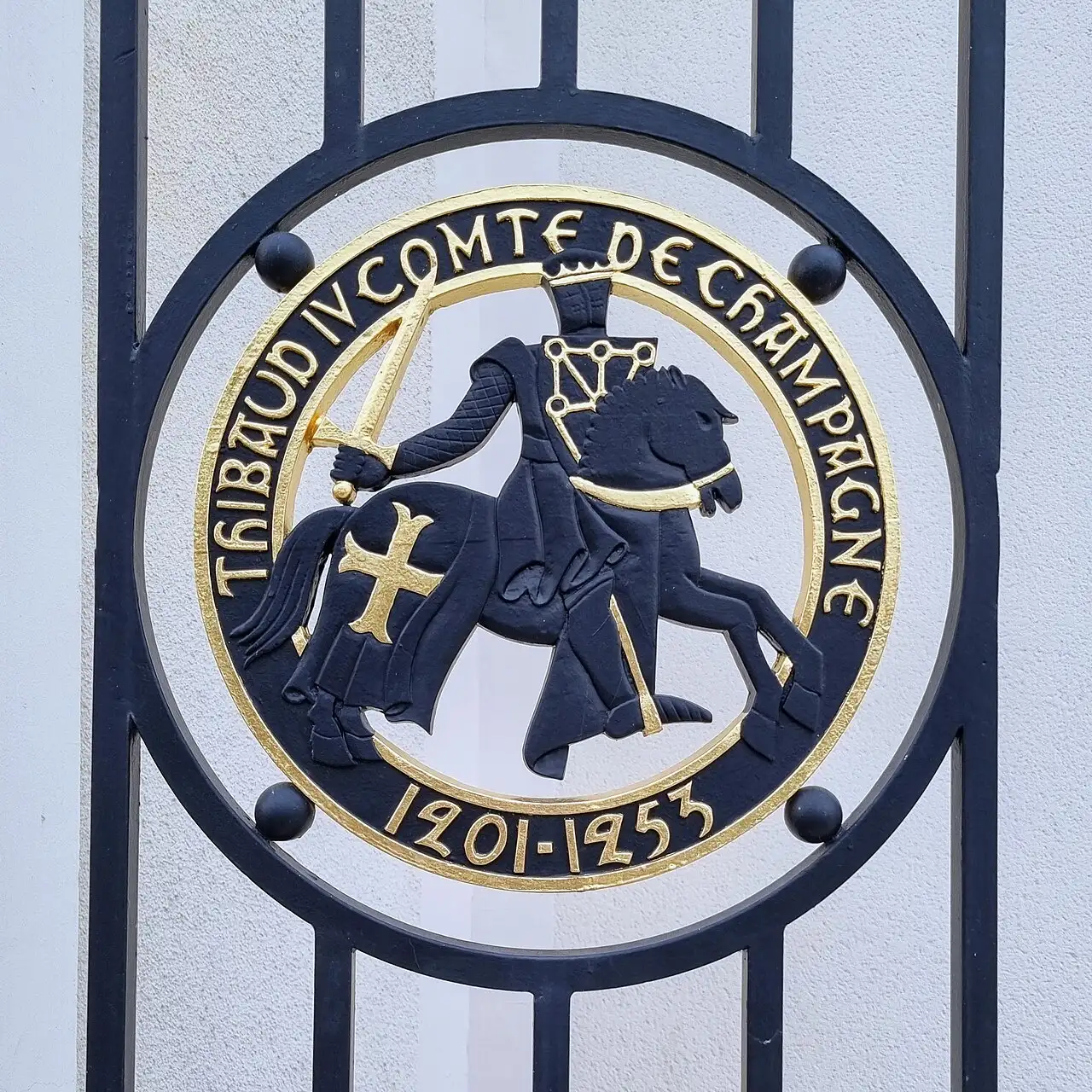
The Taittinger family chapter began in 1932, when Pierre Taittinger and his brother-in-law Paul Evêque purchased Forest-Fourneaux. Pierre’s earlier career as a wine merchant had brought him to Champagne in 1911.
During the First World War, Pierre served at a headquarters installed in Château de la Marquetterie. That château became the starting point of the family wine business in 1932. Folies de la Marquetterie preserves its name in the present range, using a blend of fifty-five per cent Pinot Noir and forty-five per cent Chardonnay.
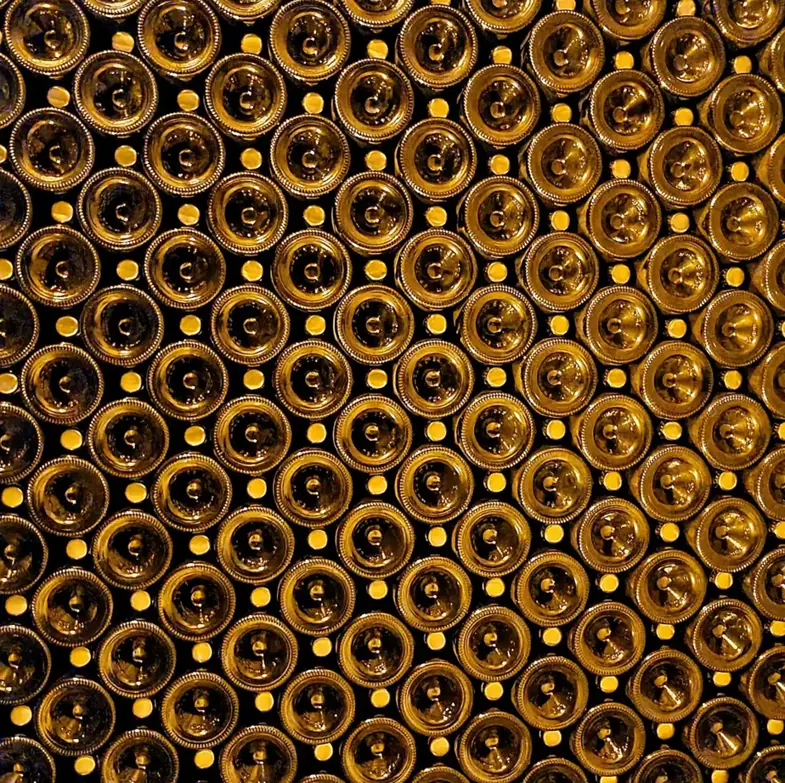
The Saint-Nicaise cellars record a different wartime experience. Following the bombardment of Reims in September 1914, families sheltered below ground. The Augustin Dubail school operated in these spaces, and the house describes roughly 250 people living in the cellar at the same time. Graffiti preserves traces of civilian and military stays.
François Taittinger created Comtes de Champagne Blanc de Blancs in 1952. Its Chardonnay origins are five Grand Cru villages: Avize, Cramant, Chouilly, Le Mesnil-sur-Oger and Oger. Comtes Rosé developed a separate Pinot Noir-led identity, with Grand Cru fruit from the Montagne de Reims and Côte des Blancs.
The Taittinger Collection began in 1983 with Victor Vasarely’s design for the 1978 vintage. Arman’s golden violins surrounded the 1981 wine in the 1985 edition. Later collaborators included Roy Lichtenstein and Zao Wou-Ki. Sebastião Salgado’s 2016 edition placed a photograph of a Namibian leopard around the 2008 vintage.
Taittinger’s vineyard estate covers 288 hectares across thirty-seven crus. Its environmental chronology records a transition beginning in 2005, followed by High Environmental Value and Sustainable Viticulture in Champagne certification in 2017.
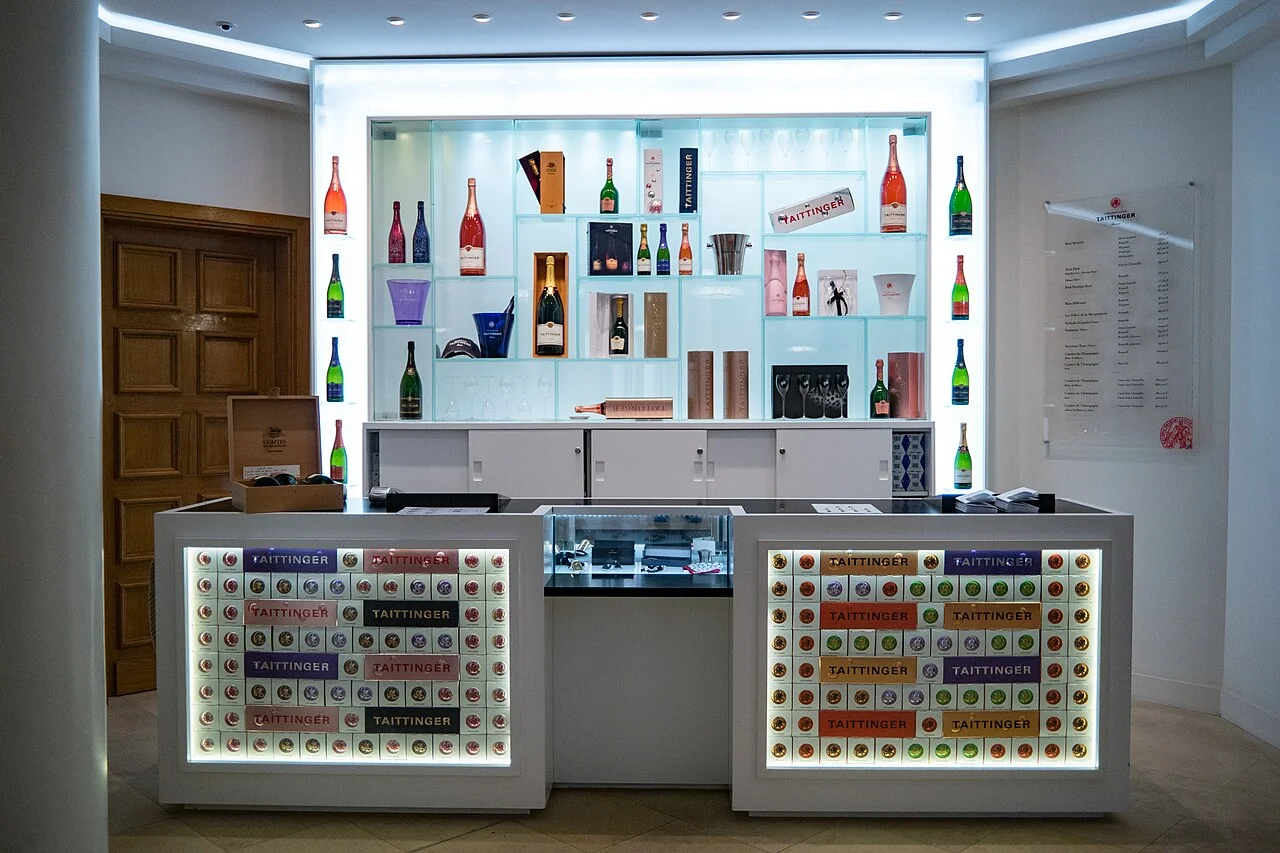
At 9 place Saint-Nicaise, the current visitor site adds Chromatique, the boutique, and Polychrome, the restaurant. Charles Coulombeau helped develop Polychrome after winning the Taittinger International Culinary Prize in 2020. The prize is now called ArsNova.
Taittinger: the place and its story
Taittinger names Brut Réserve, Prestige Rosé, Prélude Grands Crus and Comtes de Champagne in its tasting programmes. Comtes de Champagne Blanc de Blancs and Comtes de Champagne Rosé are poured together on Instant Duo Comtes; Instant Comtes adds Brut Réserve and Prélude Grands Crus to the Blanc de Blancs.
Brut Réserve is listed as 40% Chardonnay, 35% Pinot Noir and 25% Meunier. The current cuvée page describes more than forty vineyard origins and four harvest years. Its winemaking interview identifies approximately 70% from the annual harvest and 30% reserves, with Chardonnay principally from the Côte des Blancs, Pinot Noir from the Montagne de Reims and Aube, and Meunier from the Marne Valley.
François Taittinger created Comtes de Champagne Blanc de Blancs in 1952. The current house page lists ten years of ageing in the Saint-Nicaise chalk cellars. Its five Côte des Blancs Grand Cru origins are Avize, Cramant, Chouilly, Le Mesnil-sur-Oger and Oger; the wine is 100% Chardonnay and is only made in selected years.
Folies de la Marquetterie is tied to the family’s historic estate near Pierry. Its present technical account gives 45% Chardonnay, 55% Pinot Noir and 30% of the wines aged in oak. That estate cuvée is part of the Jeu d’assemblage workshop, which contrasts it with Prélude Grands Crus and Brut Millésimé 2016.
The Taittinger Collection began in 1983 with Victor Vasarely’s design around the 1978 vintage. Arman’s 1985 bottle used golden violins around the 1981 vintage. The thirteen-edition collection later included Roy Lichtenstein, Zao Wou-Ki and Sebastião Salgado, whose 2016 commission used a Namibian leopard photograph around the 2008 vintage.
The present vineyard account gives 288ha. An estate article describes holdings across thirty-seven crus and an environmental transition launched in 2005, with HVE and Viticulture Durable en Champagne certification from 2017. Vineyard director Christelle Rinville joined in 2020. These are estate figures, distinct from the more than forty origins used in the current Brut Réserve blend.
Instant Gourmet is another standard cellar experience: ninety minutes with Prestige Rosé and Brut Millésimé, from €80, checked October 2026. French and English sessions are listed. The special Instant “Champagne Week” appears separately in the booking catalogue at €30 for one hour and Brut Réserve; no assumption is made that this promotional format operates throughout the year.
Instant Famille is designed particularly for children aged six to twelve. It covers Gallo-Roman, medieval and First World War history, followed by an art activity inspired by the Taittinger Collection while adults taste Brut Réserve and Prestige Rosé. The published family format is seventy minutes, with €40 adults and €25 children, checked October 2026.

Visits and tastings
| Experience | Duration | Adult price from | Tasting | Languages | Booking |
|---|---|---|---|---|---|
| Instant Rosé | 70 minutes | €40 (checked October 2026) | Brut Réserve and Prestige Rosé | French, English | Official booking |
| Instant Comtes de Champagne | 105 minutes | €90 (checked October 2026) | Brut Réserve, Prélude Grands Crus, Comtes de Champagne Blanc de Blancs | French, English | Official booking |
| Instant Duo Comtes de Champagne | 90 minutes | €100 (checked October 2026) | Comtes de Champagne Blanc de Blancs and Comtes de Champagne Rosé | French, English | Official booking |
| Instant Famille | 70 minutes | €40 (checked October 2026) | Brut Réserve and Prestige Rosé for adults; art workshop for children | French, English | Official booking |
| Atelier Jeu d’assemblage: Chardonnay & Pinot Noir | 45 minutes | €60 (checked October 2026) | Prélude Grands Crus, Brut Millésimé 2016, Folies de la Marquetterie | French, English | Official booking |
The wines named on the visitor programme
Prestige Rosé is a blend of 40% Pinot Noir, 35% Chardonnay and 25% Meunier. Its colour comes from an eleven to fourteen per cent contribution of red wine. Taittinger’s technical sheet names Ambonnay, Écueil, Rilly-la-Montagne, Verzenay, Hautvillers and Cumières among its origins, alongside Les Riceys and Loches-sur-Ource in the Aube. The rosé served on the Instant Rosé route therefore connects the Reims cellars with vineyards in both the Marne and the southern Champagne region.
The same Prestige Rosé sheet records three years of ageing and a dosage range of 7–9g/L. Parcels are vinified separately before blending. Taittinger lists half-bottles, bottles, magnums, jeroboams and methuselahs for the cuvée. Its food suggestions include salmon, crab, prawns, cured ham and desserts based on red fruit. These are the house’s published pairings for Prestige Rosé; a food pairing is included only when the booked experience specifically says so.
Prélude Grands Crus is an equal blend of Pinot Noir and Chardonnay, made exclusively from first-press juice. Its six Grand Cru villages are Bouzy, Ambonnay and Mailly-Champagne for Pinot Noir, and Chouilly, Avize and Le Mesnil-sur-Oger for Chardonnay. Taittinger’s current technical sheet specifies five years of maturation, a dosage of 9g/L and wines from a single harvest year. Prélude is offered in bottle and magnum. The house pairs it with sea bass, scallops, oysters and other seafood.
Prélude appears in both the Instant Comtes and Jeu de l’Assemblage programmes. Its equal grape split gives those tastings a named comparison with Chardonnay-only Comtes de Champagne Blanc de Blancs and with Folies de la Marquetterie, whose blend contains 55% Pinot Noir. The ticket table identifies each programme’s actual pours: buying a cellar visit and ordering a particular bottle in Chromatique are separate transactions at the Saint-Nicaise site.
Polychrome’s culinary concept was developed with Charles Coulombeau, winner of the Taittinger International Culinary Prize in 2020. The restaurant sits above the historic chalk cellars. Taittinger’s account of its autumn 2025 menu names pollock with watercress and green shiso, foie gras with apple and hibiscus, and pineapple pavlova with tarragon. That dated menu documents the restaurant’s style; the live Polychrome booking page supplies the menu for the selected dining date. The culinary prize is now called the ArsNova Prize.
Comtes de Champagne Rosé contains 40% Grand Cru Chardonnay from the Côte des Blancs and 60% Grand Cru Pinot Noir from the Montagne de Reims. The house describes a twelve to fifteen per cent contribution of Bouzy Rouge within its Pinot Noir component. Nearly twelve years in the Saint-Nicaise chalk cellars precede release. This prestige rosé is one of the two named pours on the ninety-minute Duo de Comtes ticket, paired with Comtes de Champagne Blanc de Blancs. The published experience price covers those two wines and the guided route.

Access and facilities
The visitor entrance is 9 place Saint-Nicaise. Eighteen metres below the site, the route combines Gallo-Roman chalk quarries with remains of the medieval Abbey of Saint-Nicaise. The official booking pages give approximately 12°C for the cellars and describe numerous stairs; their quoted walk is 30 minutes from the city centre.
The same Saint-Nicaise site houses Polychrome restaurant and Chromatique boutique. Chromatique is listed at 9 place Saint-Nicaise, with champagne, photography, gastronomy and tableware objects. Polychrome is a separately bookable restaurant; a cellar ticket does not include its meal.
Official information
Plan nearby visits
Build your visit into a fuller stay with our Reims guide, compare tours and packages and find somewhere comfortable to stay.
Plan your trip to Reims
Get there
Book a tour
Select the departure point and date on the booking page. Check the meeting point, language and inclusions before paying.
Compare toursWe may earn a commission if you book through these links, at no extra cost to you.
From Reims cathedral to the visitor address
Notre-Dame Cathedral to the house: about 1.6 km, 22 minutes walking. Open this OpenStreetMap route.