

History
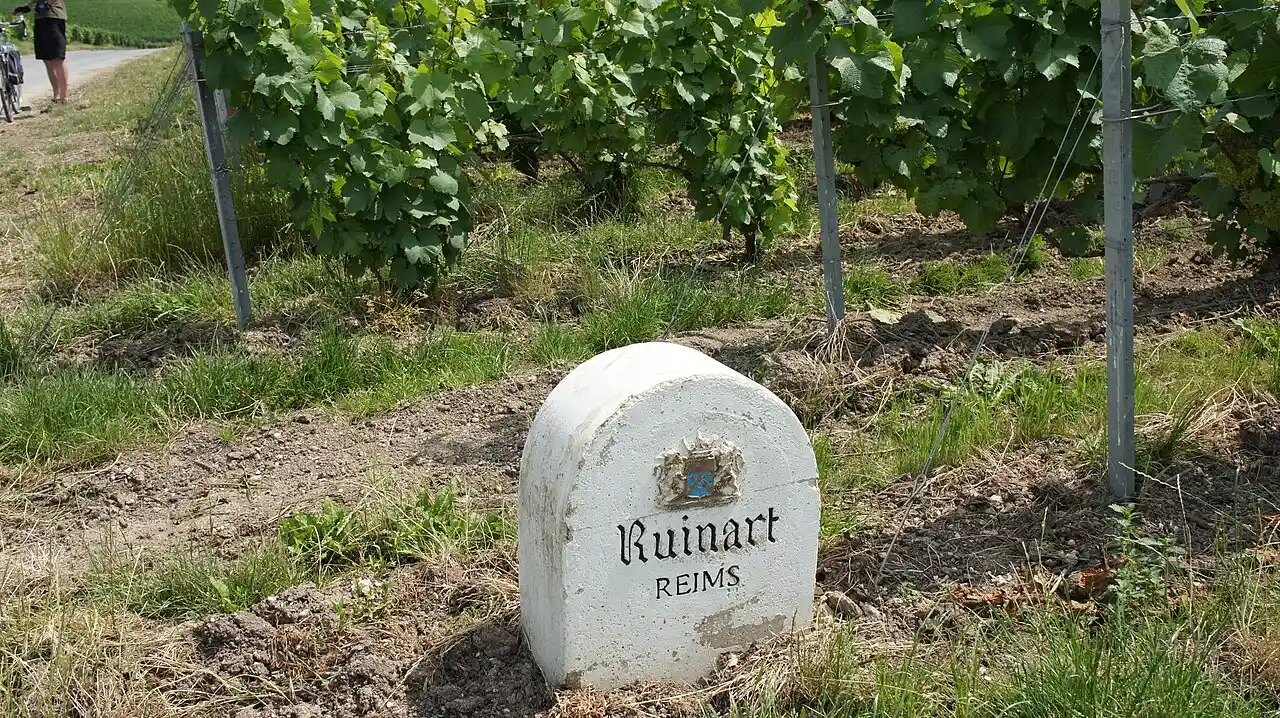
Ruinart’s foundation is unusually precise: Nicolas Ruinart signed the Reims charter on 1 September 1729. The business initially traded in cloth as well as wine, leaving textiles behind in 1736.
The uncle commemorated by Dom Ruinart was a Benedictine monk, Dom Thierry Ruinart, who lived from 1657 to 1709. His experience at Saint-Germain-des-Prés near Paris exposed him to the developing fashion for sparkling wine. Nicolas established the business twenty years after his uncle’s death.
The modern prestige wine keeps that family connection on its label. Dom Ruinart 2010 matured under cork for ten years. The published 2013 release also uses cork during ageing and manual disgorgement, with at least nine years on its lees and twelve years needed for its elaboration.
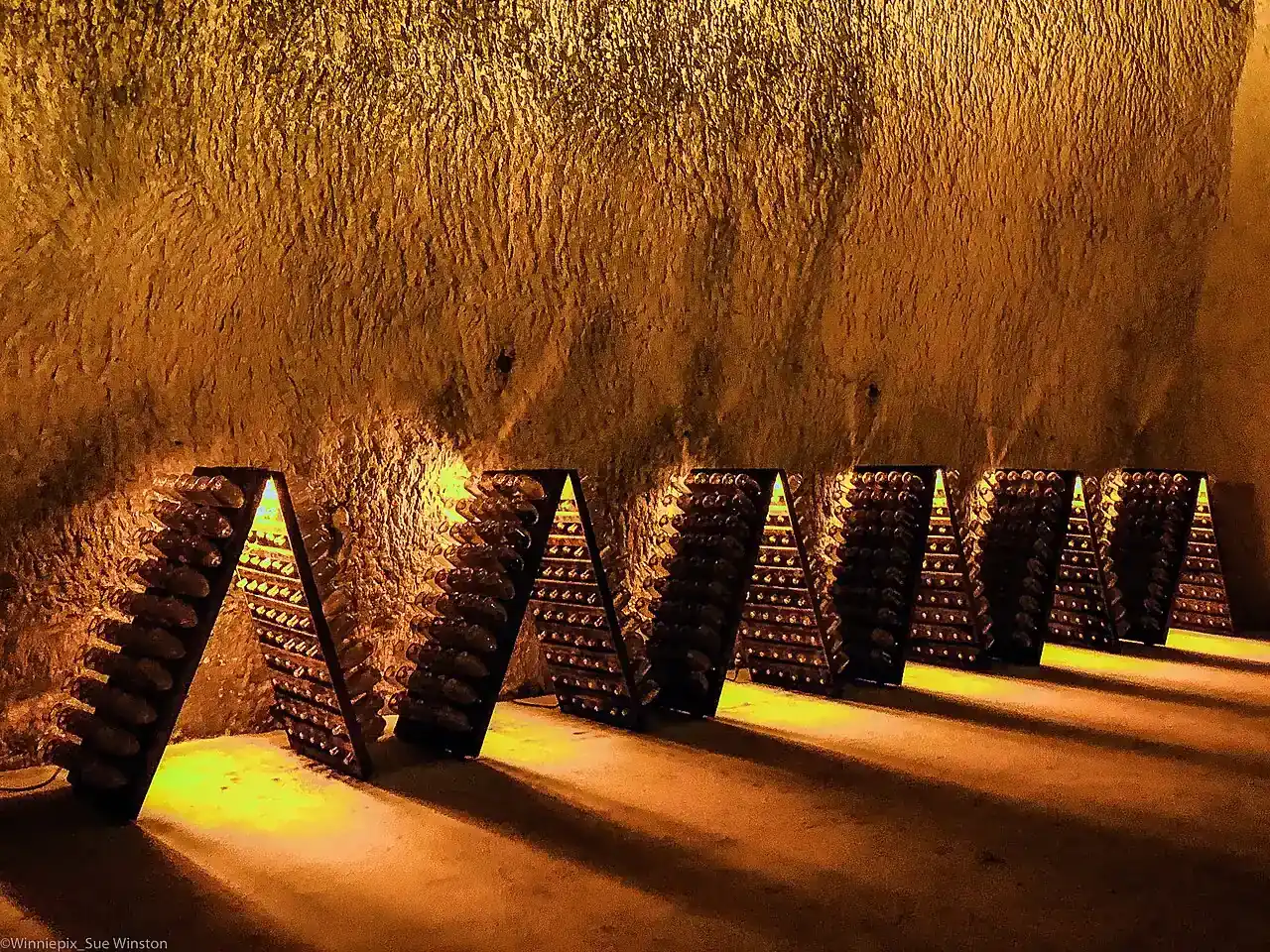
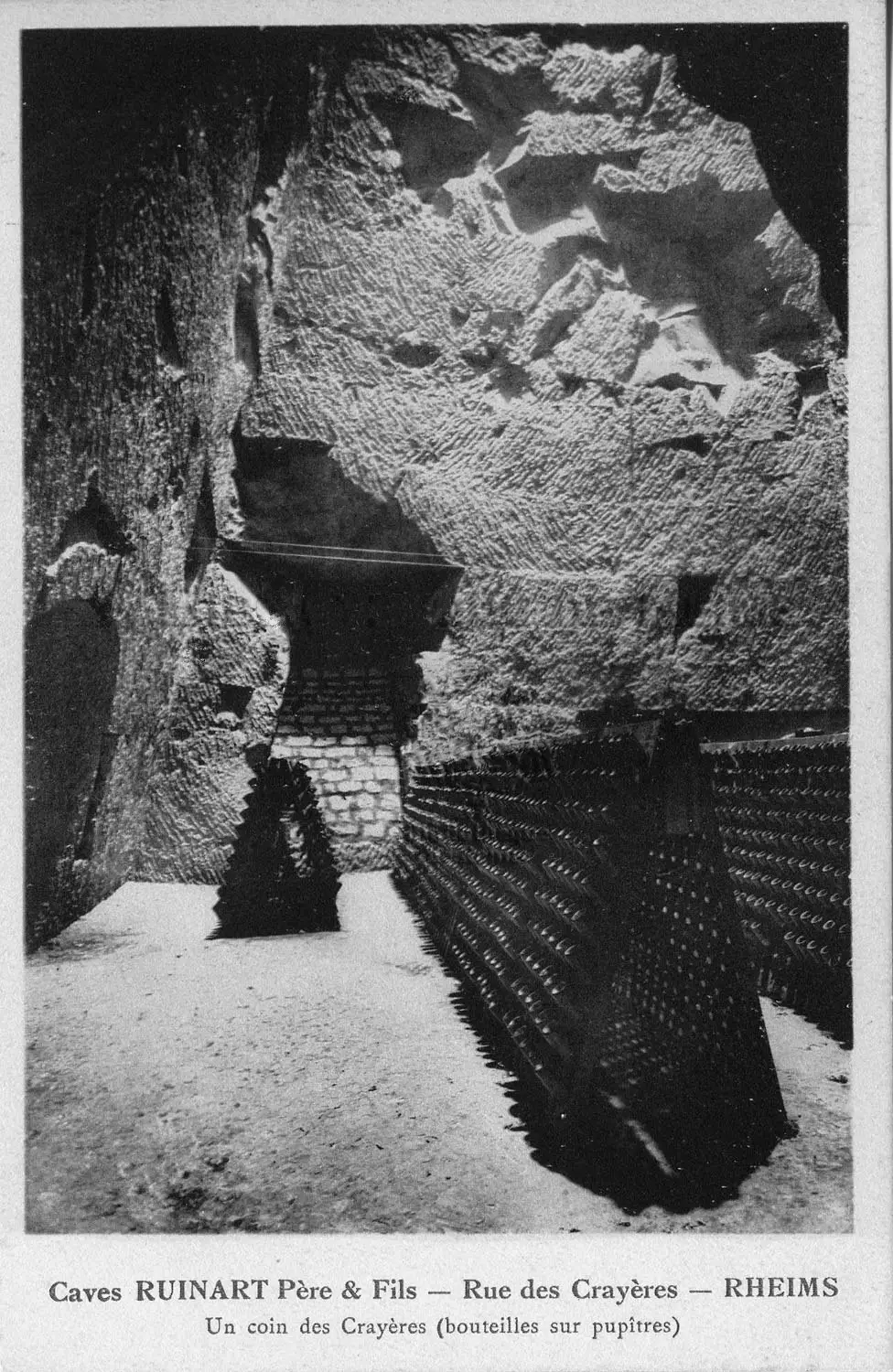
Beneath the Reims property, about twenty chalk pits connect across an eight-kilometre network on two levels. Ruinart’s contemporary art programme places works such as Jeppe Hein’s Modified Social Benches #44 and Mouawad Laurier’s Retour aux Sources within the wider estate experience.
The house’s relationship with commissioned design includes Alphonse Mucha in 1896. Compte à Rebours marks the approach to the three-hundredth anniversary in September 2029 through ten artistic or architectural projects. Its Taissy vineyard project with Reforest’Action covers forty hectares.
The transformed 4 rue des Crayères site brought together architect Sou Fujimoto, interior designer Gwenaël Nicolas and landscape designer Christophe Gautrand. The pavilion contains reception lounges, a boutique and terrace; the sculpture garden can be entered separately from a paid underground tour.
Second Skin packaging, introduced in 2020, was developed with Pusterla 1880 and British paper manufacturer James Cropper. Its textured white surface refers to the chalk cellars. The case weighs forty grams and uses ninety-nine per cent paper, linking the bottle’s presentation with the material that surrounds its maturation.
Ruinart: the place and its story
The Ruinart crayères form an 8km network beneath Reims, with about twenty chalk pits on two levels. Ruinart’s own pages give differing depth figures of approximately 30m, 35m and 40m, so the visit is described here as a deep chalk-quarry route. Contemporary artworks include Modified Social Benches #44 by Jeppe Hein and Retour aux Sources by Mouawad Laurier.
Chardonnay defines the Ruinart range: Blanc de Blancs, R de Ruinart, Ruinart Rosé and the vintage Dom Ruinart wines are separate cuvées. The Dom Ruinart 2010 account describes ten years of maturation under cork, a return to a closure chosen specifically for that vintage. These bottle names identify the range; the two wines served on the standard cellar tour are selected by Ruinart.
Ruinart’s site page lists 09:00–19:00 and closures on 1 May and 11 November. It names the Crayère–Rue des Crayères bus stop and identifies both Reims Centre and Champagne-Ardenne TGV as arrival stations. Parking is offered on site within available capacity; the official driving approach is via the A4 Reims/Saint-Rémi exit.
The standard Visit of the Crayères costs €90 per adult for two hours and two cuvées, with twelve places. The current child price is €50 for ages seven to seventeen, with under-sevens free. The house offers French and English; its public contact for this route is visitesruinart@ruinart.com or +33 (0)3 26 77 51 52.
The Blanc Singulier-focused visit is also two hours for twelve people, but compares three 100% Chardonnay wines: Ruinart Blanc de Blancs, Blanc Singulier and Dom Ruinart Blanc de Blancs. Its adult price is €110, with €60 for ages seven to seventeen and free admission below seven. Both visit prices were checked October 2026.
Ruinart introduced Second Skin packaging in 2020 after two years of development with Pusterla 1880 and British paper manufacturer James Cropper. The case is 99% paper with 1% glue on the labels, and weighs 40g against 355g for the former gift box. The house describes the textured white finish as a reference to its chalk cellars.
Caroline Fiot is Ruinart’s current cellar master. An agricultural engineer and oenologist, she joined the winemaking team in 2016 under Frédéric Panaïotis, who held the role from 2007 to 2025. Her work included fermentation supervision, light-strike research, Second Skin packaging and the first Blanc Singulier editions.
Fiot worked at Chandon Argentina in 2020 and returned to Champagne in 2021 to manage Moët & Chandon’s Mont Aigu winemaking site. She later headed winemaking facilities for Moët Hennessy’s Épernay houses before returning to Ruinart. The present official winemaking-team page identifies her as the person leading the house’s oenological work.

Visits and tastings
| Experience | Duration | Adult price from | Tasting | Languages | Booking |
|---|---|---|---|---|---|
| Visit of the Crayères | 120 minutes | €90 (checked October 2026) | Two signature cuvées | French, English | Official booking |
| Visit of the Crayères around Blanc Singulier | 120 minutes | €110 (checked October 2026) | Ruinart Blanc de Blancs, Blanc Singulier and Dom Ruinart Blanc de Blancs | French, English | Official booking |
Five wines to understand before the tasting
R de Ruinart brings all three principal Champagne grapes into the range. The house gives 40% Chardonnay, 40–45% Pinot Noir and 10–15% Meunier, drawn from forty to fifty crus in the Côte des Blancs and Montagne de Reims. Its published production specification includes hand harvesting, temperature-controlled stainless-steel fermentation, malolactic fermentation and twenty to thirty per cent reserve wines from earlier harvests. The bottles spend two to three years in the cellars and receive a dosage of 7g/L.
Ruinart Blanc de Blancs uses Chardonnay from twenty-five to thirty crus, principally the Côte des Blancs, Montagne de Reims, Sézannais and Vallée de la Vesle. Its reserve-wine proportion is also twenty to thirty per cent. Stainless-steel fermentation and malolactic fermentation precede two to three years in the cellar; the published dosage is 7g/L. Ruinart recommends serving this wine at about 8°C. Resident chef Valérie Radou’s accompanying recipe is sea-bass carpaccio with citrus, mini fennel, Granny Smith apple and radishes.
Blanc Singulier Edition 20 records a particular harvest within a non-vintage approach: 76% of the blend comes from 2020 and 24% from a perpetual reserve begun in 2017. Half of that reserve is kept in oak and half in stainless steel. The wine undergoes malolactic fermentation and receives no dosage, with five years of cellar maturation stated for this edition. The edition number matters when comparing a bottle in the boutique with an older Blanc Singulier release: the composition is published separately for each edition.
Ruinart Rosé combines 45% Chardonnay with 43% Pinot Noir vinified as white wine and 12% Pinot Noir made into red wine. Forty to fifty crus contribute to the blend, including twenty to thirty per cent reserve wines. Its technical specification lists stainless-steel fermentation, malolactic fermentation, two to three years of cellar maturation and an 8g/L dosage. These figures explain the separate red-wine component in this blended rosé. The house’s suggested food partners include oily fish, shellfish and duck.
Dom Ruinart Blanc de Blancs 2013 provides a longer-aged Chardonnay comparison. Seventy per cent of its fruit comes from the Côte des Blancs, with Le Mesnil-sur-Oger, Avize, Chouilly and Bergères-lès-Vertus named; thirty per cent comes from the Montagne de Reims, including Verzenay, Sillery, Taissy and Villers-Marmery. The house dates the harvest to late September after a cold, wet winter and spring. The wine matures under cork, is manually disgorged, spends at least nine years on its lees and receives 5.5g/L dosage.
The Dom Ruinart 2013 production page distinguishes twelve years needed to elaborate the cuvée from its minimum nine years of ageing on lattes. It also records full malolactic fermentation and manual stacking. Those separate stages account for the longer timetable of a prestige vintage. The 2013 bottle described here is part of Ruinart’s published range; the standard two-cuvée cellar ticket does not name that vintage as one of its pours.
Ruinart’s current R de Ruinart page lists 12% alcohol, while its Blanc de Blancs and Dom Ruinart 2013 pages list 12.5%. These are bottle-specific published specifications.

Access and facilities
The pavilion at 4 rue des Crayères is the starting point for guided tours and contains lounges, a terrace and boutique. Architect Sou Fujimoto, interior designer Gwenaël Nicolas and landscape designer Christophe Gautrand worked on the transformed site. The sculpture garden is freely accessible; the guided underground experience is ticketed.
The site accessibility statement identifies accessible parking, ground-level entry, accessible toilets and trained assistance. These named facilities concern the visitor site; a particular underground arrangement is discussed directly through visites@ruinart.com or +33 (0)1 57 32 42 78. The surface sculpture garden and a two-hour cellar ticket are distinct ways to use the same address.
Official information
Plan nearby visits
Build your visit into a fuller stay with our Reims guide, compare tours and packages and find somewhere comfortable to stay.
Plan your trip to Reims
Get there
Book a tour
Select the departure point and date on the booking page. Check the meeting point, language and inclusions before paying.
Compare toursWe may earn a commission if you book through these links, at no extra cost to you.
From Reims cathedral to the visitor address
Notre-Dame Cathedral to the house: about 2.2 km, 31 minutes walking. Open this OpenStreetMap route.