

History
Pierre-Nicolas Perrier and Rose-Adélaïde Jouët founded Perrier-Jouët in 1811. Their interest in botany became part of the house’s identity. Pierre-Nicolas and their son Charles developed vineyard holdings in the Côte des Blancs, including Cramant, Avize and Chouilly. Chardonnay remains central to the estate’s wines.
The predecessor of Grand Brut appeared as Cuvée K in 1846, created for customers seeking a drier champagne, particularly in England. The house’s chronology dates the modern Grand Brut launch to 1971. These milestones distinguish the earlier cuvée from the later name used across the present classic collection.
Octave Gallice commissioned Émile Gallé to decorate four magnums in 1902. Gallé chose Japanese anemones, drawing on his botanical interests. That enamelled floral design subsequently became the emblem of Belle Epoque; the first vintage in the collection was 1964.
The Belle Epoque family later acquired a rosé in 1983 and a Blanc de Blancs in 1998. The non-vintage family followed its own chronology: Blason Rosé appeared in 1985 and the classic Blanc de Blancs in 2017. The latter is distinct from the vintage Belle Epoque Blanc de Blancs.
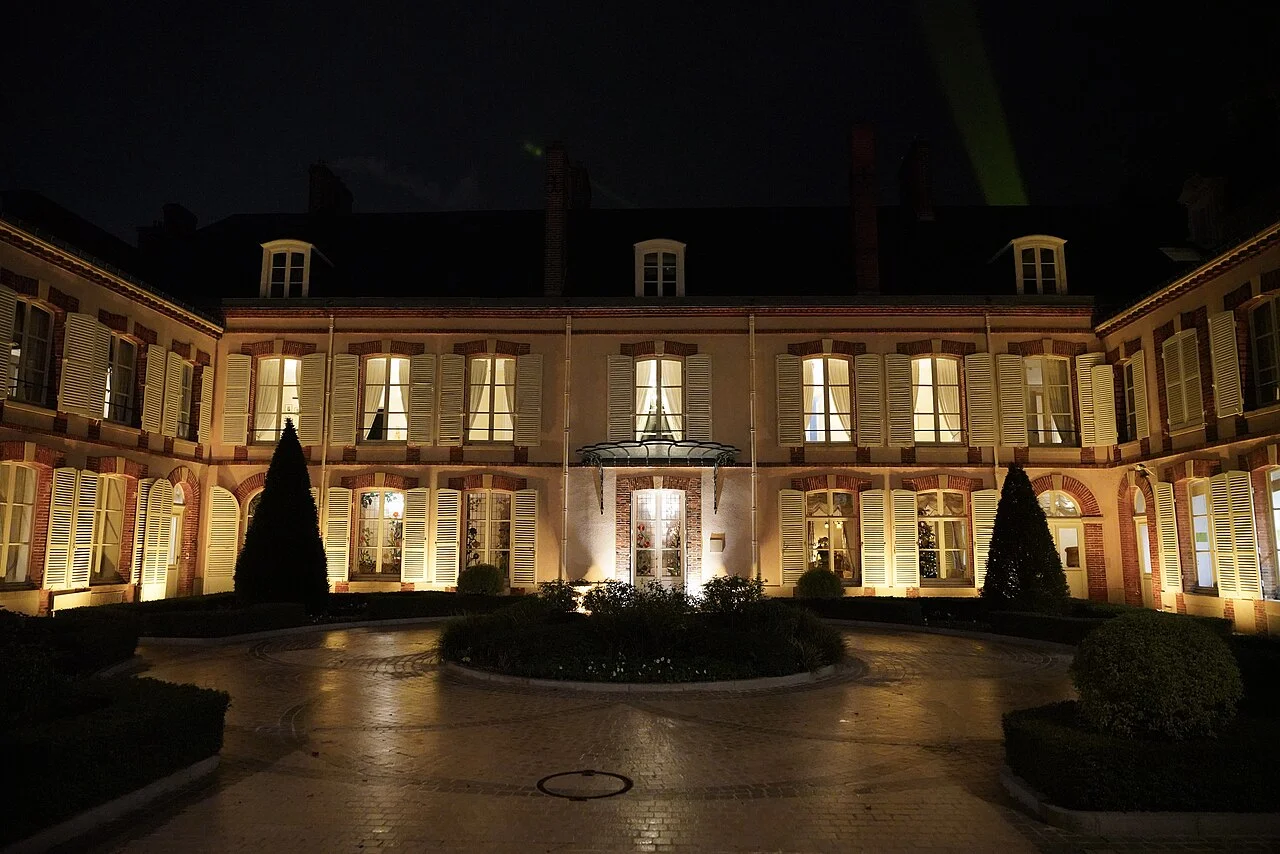
Maison Belle Epoque reopened following restoration in 2017. Its collection includes Gallé’s dragonfly table, three works by Hector Guimard and Louis Majorelle’s Fern Room, parts of which appeared at the Paris Universal Exhibition of 1900. Toulouse-Lautrec’s portrait of Yvette Guilbert is painted on a ceramic plaque.
A bronze version of Rodin’s Eternal Springtime entered the collection as an employee gift to Henri Gallice for the house centenary in 1911. The works form part of the historic residence at 11 avenue de Champagne, a separate address from the Cellier at number 26.
Séverine Frerson became the eighth cellar master in 2020 and the first woman to hold the role. The house’s 2026 vineyard programme records cover crops over 33ha, half its own vineyard area. The recent Formafantasma collaboration, begun in 2024, adds packaging made from paper pulp and vine cuttings to the longer history of art and nature.
Perrier-Jouët: the place and its story
The Art of Chardonnay lasts one hour and costs €95 for two cuvées. The official description expressly excludes a cellar tour. Cellier Belle Epoque advertises a reserved four-course seasonal food-and-champagne pairing menu; request its current price from the house. The separate Maison Belle Epoque five-course gastronomic experience is €390. The €95 and €390 figures were checked in October 2026.
Pierre-Nicolas Perrier and Rose-Adélaïde Jouët founded the house in Épernay in 1811. Pierre-Nicolas and their son Charles acquired Côte des Blancs vineyards in Cramant, Avize and Chouilly. The house’s history identifies Chardonnay as 56% of its own vineyard, explaining the grape’s prominence in the guided Art of Chardonnay tasting.
Maison Belle Epoque reopened after restoration in 2017. Its Art Nouveau collection includes work by Hector Guimard, Louis Majorelle, Émile Gallé and Henri de Toulouse-Lautrec. Chef Sébastien Morellon’s five-course dining experience is inspired by Pierre Gagnaire and developed alongside cellar master Séverine Frerson.
Frerson became Perrier-Jouët’s eighth cellar master, and the first woman in the role, in 2020. The summer 2026 Maison menu names pairings including Blanc de Blancs with red mullet, Belle Epoque Blanc de Blancs 2018 with lobster, Belle Epoque 2016 with ravioli, and Belle Epoque Rosé 2014 with pigeon. That dated menu illustrates the pairing format; it is not promised as an October menu.
The separate Cellier page describes a four-course seasonal pairing menu and an all-day à-la-carte menu, plus the terrace and boutique. Its opening-days notice differs from the main visitor page, so no universal weekly schedule is repeated here. The venue addresses remain clear: Cellier at number 26 and the reserved Maison meal at number 11.
Grand Brut combines 40% Pinot Noir, 40% Meunier and 20% Chardonnay from around fifty crus. The official specification gives at least three years of ageing, up to 15% reserve wines and 8–10g/l dosage. The house traces it to Cuvée K, created in 1846 in response to demand for drier wine, particularly from England.
Blason Rosé contains 50% Pinot Noir, 25% Chardonnay and 25% Meunier from around twenty crus. It ages for at least three years, with up to 15% reserves and an 8–10g/l dosage. The name recalls Blason de France, a cuvée created for restaurants in 1955. The house recommends serving Blason Rosé at 10–12°C.
The first Belle Epoque vintage was 1964. This collection uses the Japanese-anemone bottle design associated with Émile Gallé and Art Nouveau. The classic non-vintage collection comprises Grand Brut, Blanc de Blancs and Blason Rosé; Belle Epoque wines are made from a single harvest.
Belle Epoque Rosé 2014 blends 50% Pinot Noir, 45% Chardonnay and 5% Meunier. The named crus are Cramant, Avize, Aÿ, Ambonnay, Mailly and Dizy. It spends at least six years ageing and has a 9g/l dosage. Its recommended serving temperature is approximately 12°C; the house pairs it with foods including lobster, pigeon and mature Cheddar.
The limited-edition Belle Epoque Cocoon Rosé 2014 packaging was designed with Formafantasma’s Andrea Trimarchi and Simone Farresin. The protective case uses paper pulp with approximately 5% vine cuttings. The collaboration began in 2024 and connects the bottle’s decoration with plant and animal relationships in the vineyards.
Sébastien Morellon creates Maison Belle Epoque’s menus with the creative direction of Pierre Gagnaire and input from cellar master Séverine Frerson. The official Summer 2026 menu pairs Blanc de Blancs with red mullet, fennel and shellfish; Belle Epoque Blanc de Blancs 2018 with blue lobster; and Belle Epoque 2016 with tomato-and-ricotta ravioli.
The same published summer menu pairs Belle Epoque Rosé 2014 with pigeon in blackcurrant bigarade and again with raspberry frozen cream, fresh almonds and champagne granita. These are dated examples of the five-course experience, not a guarantee of the dishes served in a later season. Reservations are taken through hospitality@perrier-jouet.com.
Cellier Belle Epoque’s official page describes a four-course seasonal pairing menu requiring a reservation. Request the current dishes, cuvées and price through the house’s dining booking contact. Its all-day à la carte menu is available without a reservation. These Cellier formats at 26 avenue de Champagne are separate from Maison Belle Epoque’s five-course meal at number 11.
The house’s 2026 vineyard account records cover crops on 33ha, half its own vineyard area, with more than twenty partner growers taking part in related trials. It ceased herbicide use on its own vines in 2020 and introduced an electric Bakus weeding robot. VDC certification dates to 2016.
Its trial plantings include forest rye, faba bean and two clovers as biomass crops, plus fourteen flowering species for pollinating insects. Entomologist Johanna Villenave-Chasset has surveyed trial plots since 2023. The official programme reports eighteen supported local biodiversity projects in partnership with the Champagne UNESCO Mission and Comité Champagne.
Perrier-Jouët’s non-vintage Blanc de Blancs brings together fifteen Chardonnay crus, including Cramant, Avize and Chouilly in the Côte des Blancs, Trépail and Villers-Marmery in the Montagne de Reims, and sites in the Sézannais and Vitryat. Its reserves are also entirely Chardonnay.
The Blanc de Blancs specification gives at least three years of ageing, up to 15% reserve wines and 8g/l dosage, with a recommended serving temperature around 10°C. Published pairing ingredients include oysters, sea bass, almonds, mangetout and Granny Smith apples. This wine is part of the classic collection; Belle Epoque Blanc de Blancs is a separate vintage cuvée.

Visits and tastings
| Experience | Duration | Adult price from | Tasting | Languages | Booking |
|---|---|---|---|---|---|
| The Art of Chardonnay | 60 minutes | €95 (checked October 2026) | Two selected cuvées; no cellar tour | Ask the house | Official booking |
| Cellier Belle Epoque four-course seasonal pairing menu | Ask the house | Request the current dining price | Four-course food and champagne pairings; reservation required | Ask the house | Official booking |
| Maison Belle Epoque gastronomic experience | Ask the house | €390 (checked October 2026) | Five-course food and champagne pairing | Ask the house | Official booking |
Access and facilities
Cellier Belle Epoque combines a restaurant and champagne bar, with all-day dining available without a reservation. The guided tasting and set pairing meals require booking. The official access information states ten minutes on foot from Épernay station, wheelchair access and no on-site parking.
Perrier-Jouët’s public Épernay hospitality has two addresses: Cellier Belle Epoque at 26 avenue de Champagne and Maison Belle Epoque at number 11. The house dates its history to 1811 and identifies Chardonnay as the focus of its guided tasting.
Official information
Plan nearby visits
Build your visit into a fuller stay with our Épernay guide, compare tours and packages and find somewhere comfortable to stay.
Plan your trip to Épernay
Get there
Book a tour
Select the departure point and date on the booking page. Check the meeting point, language and inclusions before paying.
Compare toursWe may earn a commission if you book through these links, at no extra cost to you.