

History
The Épernay business began with Claude Moët in 1743. His grandson Jean-Rémy subsequently developed its international trade. Napoleon’s visits to the estates belong to that expansion: the house records his award of the Légion d’Honneur to Jean-Rémy and connects the later Impérial name with the emperor.
The familiar sabrage story requires a different label. Moët presents the tale of Napoleon’s soldiers opening bottles with swords as a legend. The documented milestones are the family business, the imperial visits and the honour awarded to Jean-Rémy.
Moët’s first vintage champagne dates to 1842. The Grand Vintage collection preserves wines from individual harvests, with older bottles retained in the Grand Vintage Reserve cellars. The 2000 wine occupies the sixty-seventh position in the white-vintage sequence; 2012 is described as the seventy-fourth.
The Collection 2000 technical record illustrates the length of that preservation: fourteen years in the cellars, followed by at least six months after disgorgement. Its blend comprises 50% Chardonnay, 34% Pinot Noir and 16% Meunier. The Collection name identifies an extended-maturation release from an earlier harvest.
Moët Impérial was created in 1869. Its present blend combines Pinot Noir, Meunier and Chardonnay with reserve wines, sustaining a named cuvée across successive harvests. Grand Vintage Blanc and Grand Vintage Rosé instead carry a particular year; the 2016 rosé is the forty-sixth release in its own sequence.
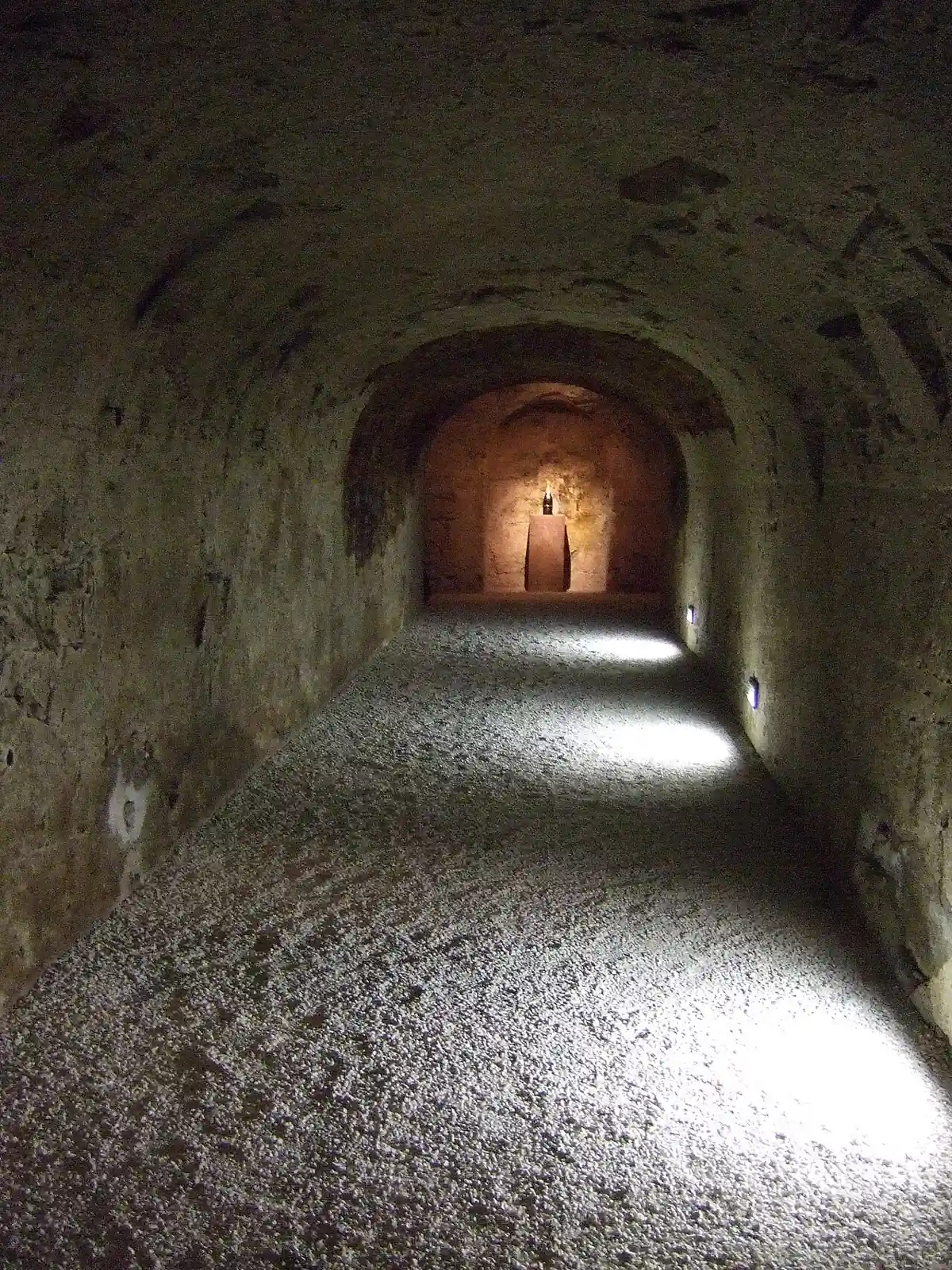
The estate’s underground network extends for 28km. Its contemporary heritage programme also reaches Fort Chabrol, the private research and training site within Épernay. The cellar art includes a Daniel Arsham relief measuring 3m by 1.3m, installed as a permanent work representing the house’s history.
Collection Impériale Création N°1 brings seven vintages together in another interpretation of the reserve-wine collection. In the Haute Œnologie programme, that cuvée is presented alongside a reproduction of Claude Moët’s journal and the Réserve des Grands Millésimes, linking the eighteenth-century founder with present winemaking.
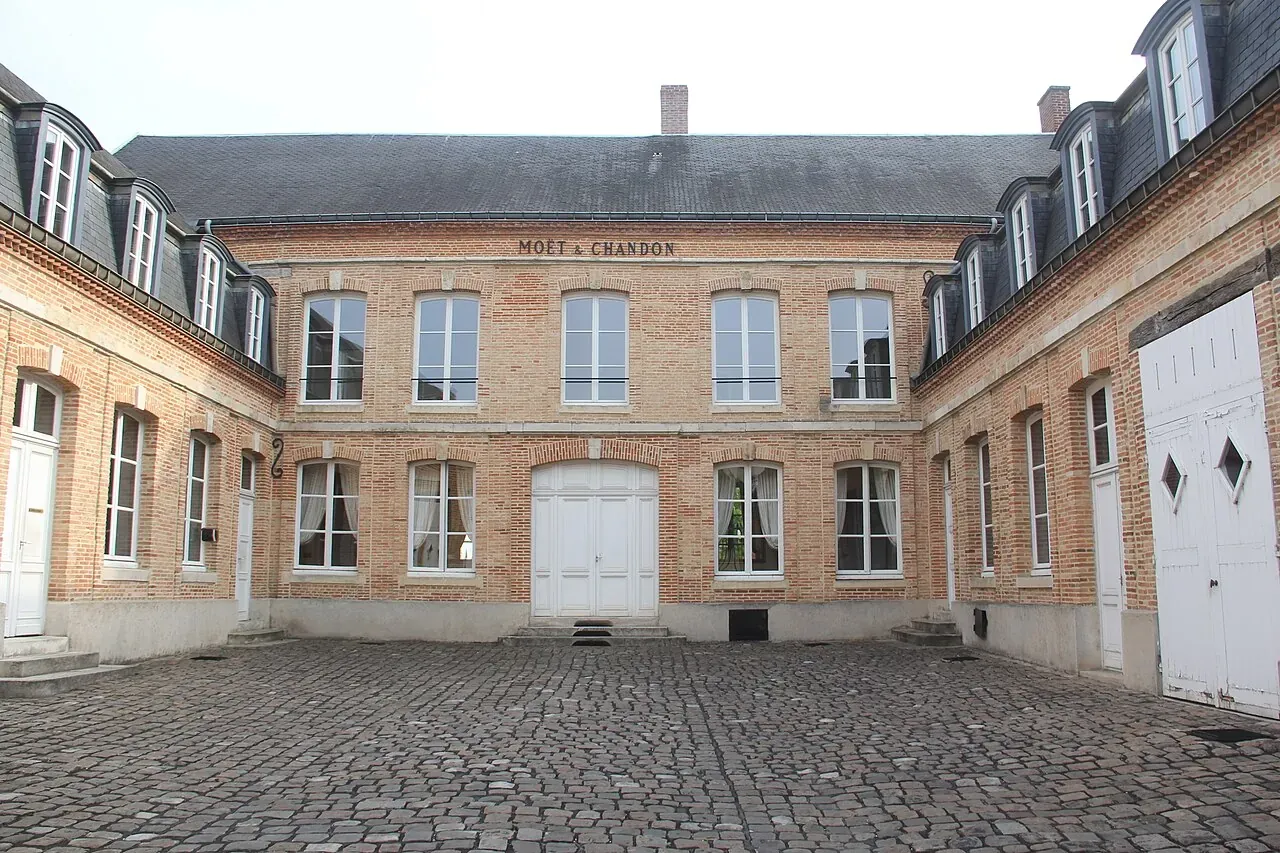
Moët & Chandon: the place and its story
Moët Impérial and Rosé Impérial form The Imperial Moment tasting. Signature substitutes Grand Vintage Blanc for the rosé. Grand Vintage compares white and rosé vintage wines, while Moët Collection adds an older Grand Vintage Collection wine with more than fourteen years of maturation.
Terroir Treasures adds the private Fort Chabrol vineyard site to the cellar visit. Haute Œnologie names Collection Impériale Création N°1 and Grand Vintage Blanc matured in magnum. À la volée includes a disgorgement demonstration and two freshly disgorged Grand Vintage Collection wines.
Moët Impérial, created in 1869, blends Pinot Noir and Meunier at 30–40% each with 20–30% Chardonnay. The current technical pages give 20–30% reserve wines and dosage of 7g/L. Those proportions are ranges, not one fixed recipe repeated for every release, because the blend uses several harvests.
Grand Vintage Rosé 2016 is a separate single-year wine: 43% Pinot Noir, including 13% red wine, 42% Chardonnay and 15% Meunier. The house lists six years in the cellars, at least six months after disgorgement and 5g/L dosage. Its vintage page identifies it as the forty-sixth vintage rosé in Moët’s history.
Signature retains the ninety-minute cellar format but compares Moët Impérial with the latest Grand Vintage Blanc for €65. Grand Vintage is €85 for the white and rosé vintage pair. The dedicated pages currently name the 2016 releases, while the main booking page uses “current vintage”, so the dated ticket remains the reference if the release changes.
Moët Collection, €190 for two hours, includes a cellar route to bottles kept sur pointe for extended maturation and a comparison involving Grand Vintage Collection. The dedicated page discusses the 2009 Collection release, aged fourteen years, and lists an arrival drink separately. The core published tasting is Grand Vintage Blanc with Grand Vintage Collection Blanc.
Haute Œnologie, €220 for two hours, introduces Collection Impériale Création N°1, assembled from seven vintages. Its programme includes a reproduction of Claude Moët’s journal, the Réserve des Grands Millésimes and a Daniel Arsham relief permanently installed in the cellars. The work measures 3m by 1.3m; its subject is the house’s heritage.
À la volée, €460 for two hours, is limited to six people and includes the Gallery of Grand Vintages. A cellar expert performs manual disgorgement, expelling sediment from two Grand Vintage Collection bottles aged approximately fourteen years. The listed tasting is those two freshly disgorged wines plus Grand Vintage Blanc.
Terroir Treasures, €235 for two-and-a-half hours, is limited to four people and excludes children under ten. After a short drive within Épernay it enters Fort Chabrol, a research and training site normally closed to the public. A vineyard biodiversity walk introduces the Natura Nostra programme, with a Grand Vintage Blanc and Rosé comparison after returning to the cellars.
The house’s individual product pages still show 20 avenue de Champagne, while the current main visitor page shows 18. Both refer to the same Moët complex; the main visitor address is used here, with the booked ticket determining the reception point. Private requests use visites@moet.fr or +33 (0)3 26 51 20 20.
Moët dates its first vintage champagne to 1842. Its Grand Vintage philosophy page lists a succession of releases, each made from one harvest, with older bottles retained in the Grand Vintage Reserve cellars. The numbering belongs to the house’s release sequence: Grand Vintage 2012 is described as the seventy-fourth white vintage and Grand Vintage Rosé 2012 as the forty-third rosé.
Grand Vintage Collection 2000 is the sixty-seventh white vintage. Its blend is 50% Chardonnay, 34% Pinot Noir and 16% Meunier. The official specification records fourteen years in the cellar, at least six months of rest after disgorgement and 7g/l dosage. These figures apply to this late-release Collection bottle; the word Collection identifies an older release with its own maturation history.
Ice Impérial has a deliberately different composition and serving method from Brut Impérial. The blend is 40–50% Pinot Noir, 30–40% Meunier and 10–20% Chardonnay, with 20–30% reserves and 45g/l dosage. Moët’s own serving guidance specifies three ice cubes. Its food-pairing page records eighteen months of cellaring and at least three months after disgorgement.
Natura Nostra is the biodiversity programme introduced on Terroir Treasures. The published roadmap records twenty kilometres of ecological corridors already planted since 2022 and a target of one hundred kilometres by 2027. It also reports more than 220 sheep used for grazing. The one-hundred-kilometre figure is a target, not a completed planting claim.
The programme includes work with 2,350 grower partners and a target to halve the house’s carbon footprint by 2030 against a 2019 baseline. Its packaging account gives 60–80% recycled cardboard and fully recyclable cardboard cases. These are the house’s stated programme measures; the Fort Chabrol visit introduces the vineyard work behind them.
Grand Vintage 2016 Blanc contains 48% Chardonnay, 34% Pinot Noir and 18% Meunier. It spends at least six years in the cellar and at least six months resting after disgorgement, with 5g/l Extra Brut dosage. The house’s named recipe pairs it with guinea fowl, green anise, confit fennel and spelt; another pairing uses glazed celtuce, miso and spruce hollandaise. The white and rosé 2016 wines have separate blends despite sharing a harvest year.

Visits and tastings
| Experience | Duration | Adult price from | Tasting | Languages | Booking |
|---|---|---|---|---|---|
| The Imperial Moment | 90 minutes | €48 (checked October 2026) | Moët Impérial and Rosé Impérial | French, English | Official booking |
| Signature | 90 minutes | €65 (checked October 2026) | Moët Impérial and Grand Vintage Blanc | French, English | Official booking |
| Grand Vintage | 90 minutes | €85 (checked October 2026) | Grand Vintage Blanc and Rosé | French, English | Official booking |
| Moët Collection | 120 minutes | €190 (checked October 2026) | Grand Vintage Blanc and Grand Vintage Collection Blanc | French, English | Official booking |
| Haute Œnologie | 120 minutes | €220 (checked October 2026) | Moët Impérial, Grand Vintage Blanc in magnum, Collection Impériale Création N°1 | French, English | Official booking |
| Terroir Treasures | 150 minutes | €235 (checked October 2026) | Grand Vintage Blanc and Rosé | French, English | Official booking |
| À la volée | 120 minutes | €460 (checked October 2026) | Two freshly disgorged Grand Vintage Collection and Grand Vintage Blanc | French, English | Official booking |
Access and facilities
The house describes a 28km underground cellar network. English and French guided visits are available, and the published accessibility information identifies a lift and special wheelchair entrance. The current public visit page lists tours from The Imperial Moment through the higher-priced À la volée disgorgement experience.
The Imperial Moment is the €48, ninety-minute comparison of white and rosé Impérial after a cellar visit. The specific product page places the tasting in a private lounge or garden and provides French or English sessions. Its lift route is available for reduced-mobility access; private-language arrangements are requested at visites@moet.fr.
Moët & Chandon dates its foundation to 1743. The current visitor address is 18 avenue de Champagne, Épernay, not the number 20 used by some older heritage descriptions. Its official travel guidance quotes five minutes on foot from Épernay station.
Official information
Plan nearby visits
Build your visit into a fuller stay with our Épernay guide, compare tours and packages and find somewhere comfortable to stay.
Plan your trip to Épernay
Get there
Book a tour
Select the departure point and date on the booking page. Check the meeting point, language and inclusions before paying.
Compare toursWe may earn a commission if you book through these links, at no extra cost to you.