

History
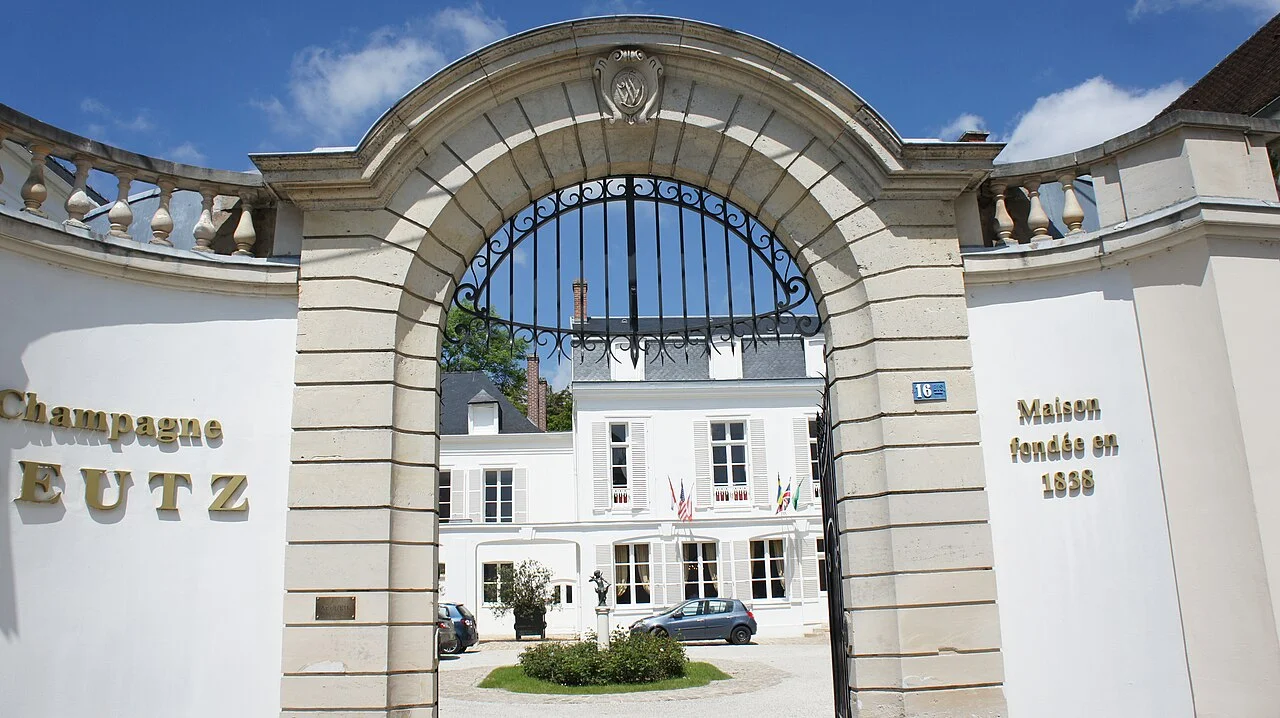
Two merchants from Aachen, William Deutz and Pierre-Hubert Geldermann, established Deutz in Aÿ in 1838. Its first blend joined Aÿ, Verzenay and Cramant under the name Cuvée A.
Germany received more than 95% of the new house’s production in 1838. Shipments reached Austria and the United States in 1841. A marriage into the Daragon family of Pierry brought the Les Gouttes d’Or plot into the story in 1843. Goldlack followed in 1846, a name associated with a flower and the bottle’s gold-wax seal.
Deutz joined the founding membership of the Grandes Marques syndicate in 1882. Its chronology records 300,000 bottles shipped in 1883 and Goldlack served for Queen Victoria’s Jubilee in 1887. These dated export milestones preceded the prestige wines now bearing the founders’ names.
The family residence, gardens and chalk cellars occupy one contiguous Aÿ estate. Deutz describes the cellars as dug 100 feet underground. The modern address remains 16 rue Jeanson; the residence and underground ageing spaces are parts of that same historic property.
Caroline Latrive arrived in 2022 after fifteen years at AYALA, where she had become cellar master in 2012. Her transfer included more than a year working alongside Michel Davesne. The current team also names vineyard director Cédric Georget and oenologists Olivier Bernard and Delphine Goffette.
Jean Lallier introduced William Deutz in 1959 as a tribute to the founder. Its present production specification gives ten years of cellar ageing. Amour de Deutz was first released in 2000 using the 1993 harvest; it is entirely Chardonnay, with a current nine-year ageing programme.
The main Brut received the Brut Classic name in 1994. In 2005, Deutz extended the historic William Deutz bottle shape throughout its range. More recent single-plot wines name Meurtet and La Côte Glacière in Aÿ. The latter contains vines dating to 1967; the former was planted in stages between 1990 and 2006.
16 rue Jeanson: contact before planning a visit
The Champagne Houses association lists Deutz at 16 rue Jeanson, BP 9, 51160 Aÿ, telephone +33 3 26 56 94 00 and email france@champagne-deutz.com. The official website also publishes contact@champagne-deutz.com. Its current pages describe the estate and wines but do not establish a routine public booking product with a verified admission price, duration or tasting selection.

William Deutz, Amour and the modern bottle
Cuvée William Deutz was launched by Jean Lallier in 1959. Amour de Deutz arrived in 2000 from the 1993 harvest. The official chronology dates the renaming of the main Brut as Brut Classic to 1994 and the extension of the historic William Deutz bottle shape across the whole range to 2005. These are launch and packaging milestones; they do not identify the vintage currently available in a shop.
The current range separates Classic wines, Prestige Cuvées, Single-Plot Cuvées and Vintage Cuvées. The prestige group consists of William Deutz, Amour de Deutz and Amour de Deutz Rosé. The single-plot wines are Hommage à William Deutz Meurtet and La Côte Glacière. Blanc de Blancs Millésimé, Brut Millésimé and Rosé Millésimé form the vintage group. This distinction makes the name on a bottle more informative than the word Deutz alone.
Caroline Latrive and the tasting committee
Caroline Latrive joined Deutz in 2022 after fifteen years at AYALA, where she became cellar master in 2012. Her Deutz portrait records a handover lasting more than a year alongside predecessor Michel Davesne. The current tasting committee also names oenologists Olivier Bernard and Delphine Goffette, president Marc Hoellinger and vineyard director Cédric Georget. Latrive makes the final blending decision.
The Champagne Houses association lists a forty-five-hectare estate. Deutz combines its own vineyards with growers’ grapes; that estate figure should not be read as the entire sourcing area. The house’s vineyard account dates both High Environmental Value and Sustainable Viticulture in Champagne certifications to 2015. These are named certification schemes, rather than a claim that every sourced vineyard is certified organic.
Brut Classic: a variable blend, not fixed thirds
The current Brut Classic production page describes a predominantly Chardonnay blend with Pinot Noir and Meunier. It explicitly avoids a fixed formula: the cellar master selects the components anew each harvest, using a reserve library that includes Grand Cru Pinot Noir and Chardonnay. Deutz specifies three years of cellar ageing. Older shorthand descriptions based on equal thirds should therefore not be applied to every present release.
Deutz’s suggested pairings for Brut Classic include sea bream tartare with citrus, poultry and truffled Brie. Those are the producer’s food suggestions, not a restaurant menu or a tasting package. Brut Rosé is a separate Classic wine sourced entirely from Grand and Premier Crus, combining Aÿ Pinot Noir with Côte des Blancs Chardonnay in the current official range description.
Three prestige wines with longer ageing
William Deutz is predominantly Grand Cru Pinot Noir, with Chardonnay and Meunier also listed. Its named origins include Aÿ, Bouzy, Verzenay and the Côte des Blancs. The technical account gives ten years of cellar ageing and currently illustrates the 2014 vintage. Deutz proposes dishes such as lobster, poultry and prawn ceviche for this wine. A bottle labelled William Deutz therefore represents a different ageing programme from the three-year Brut Classic.
Amour de Deutz is a Blanc de Blancs: 100% Chardonnay, principally from Côte des Blancs Grand Crus including Avize and Le Mesnil-sur-Oger, with a smaller Montagne de Reims Premier Cru contribution. The official production account specifies nine years of cellar ageing. Its first release in 2000 used 1993 grapes; a current bottle’s harvest year is a separate piece of information on the label.
Amour de Deutz Rosé also receives nine years of cellar ageing. Its Pinot Noir and Chardonnay come entirely from Grand and Premier Crus, with Bouzy, Ambonnay, Aÿ, the Montagne de Reims and Côte des Blancs named in the sourcing account. Red wine from Deutz’s own vineyards contributes to the blend. The page currently discusses 2015 and recommends pairings including red mullet and lamb.
Meurtet and La Côte Glacière: two Aÿ exposures
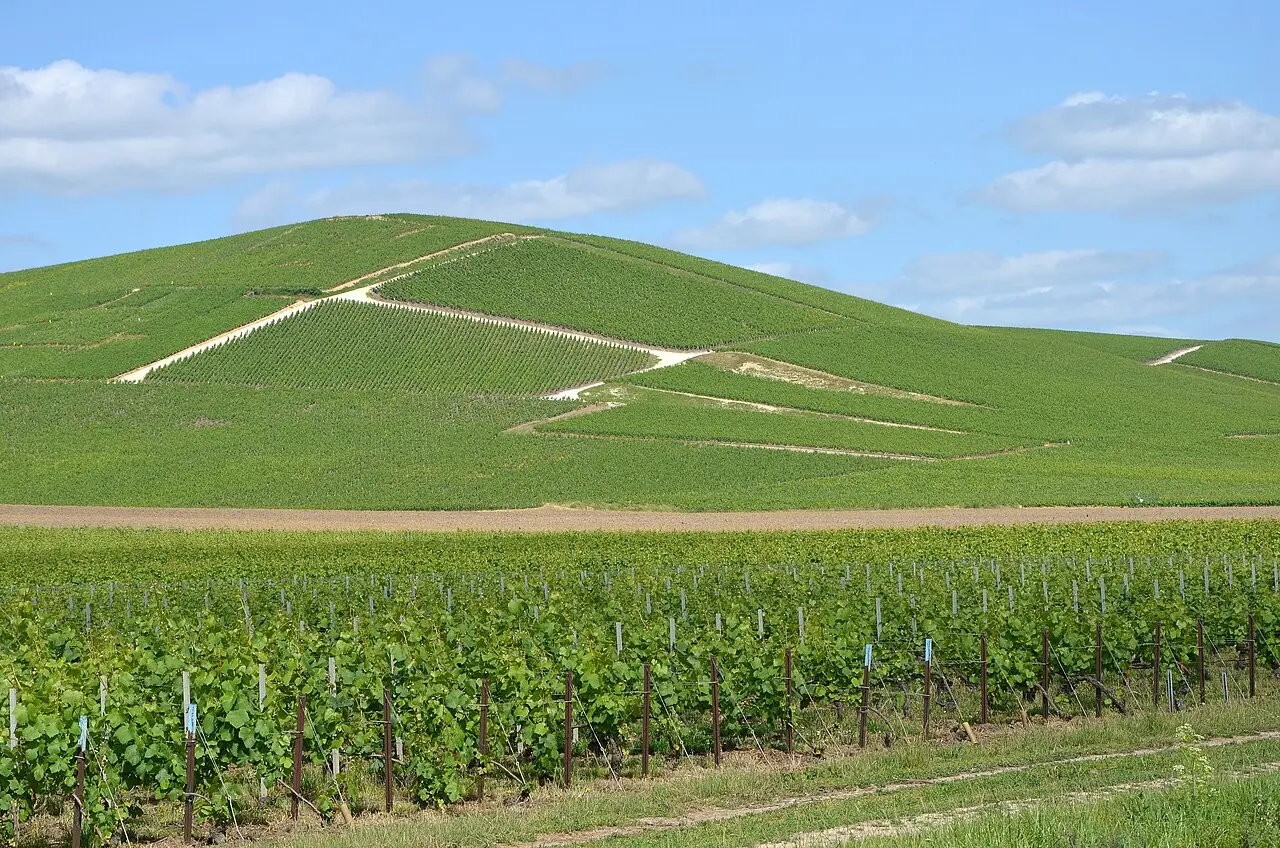
Meurtet is a single-vineyard, 100% Pinot Noir wine from Aÿ Grand Cru. Its east-facing plot has a 15% slope, with vines planted in stages between 1990 and 2006. Deutz identifies colluvial deposits and Tertiary flint in the subsoil and specifies six years of cellar ageing. The official English page gives the plot area as six acres. Meurtet 2019 is the vintage currently described.
La Côte Glacière is the neighbouring single-plot Blanc de Noirs, also entirely Pinot Noir and aged for six years. It faces south, on a slope reaching 25%, with chalk-block subsoil and the oldest vines dating to 1967. Its English technical account gives 4.7 acres. The contrast with east-facing Meurtet is a documented difference in aspect and planting history, rather than simply two labels for the same vineyard.
Vintage Chardonnay and blended rosé
Blanc de Blancs Millésimé is always vintage-dated, made entirely from Grand and Premier Cru Chardonnay, with five years of cellar ageing. The official page names Le Mesnil-sur-Oger, Avize, Chouilly, Trépail and Vertus for its 2019 blend. The same page also carries 2021 tasting notes; those two harvest references should not be combined into a single supposed technical specification.
Rosé Millésimé is made by blending, rather than the saignée method. It is predominantly Pinot Noir, with Chardonnay and Meunier also listed, and incorporates red wines from historic Aÿ and Mareuil-sur-Aÿ plots. Deutz specifies five years of cellar ageing. This is a vintage rosé programme separate from both the non-vintage Brut Rosé and nine-year Amour de Deutz Rosé.
Staying on rue Jeanson
For food in Aÿ, L’Atelier by Patrick Baillet at 6 place Henri-Martin combines chocolates, pastries and a tea room with food to eat in or take away. The tourist-office listing gives a twenty-four-seat terrace and +33 3 26 55 44 26. The Aÿ guide includes Pressoria at 11 boulevard Pierre-Cheval and the village’s nineteen-stop Musardises heritage route.
Access and facilities
Contact Deutz directly to request a visit and give your preferred date, party size and language. Obtain the arrival instructions and any cellar access conditions in the reply before adding the estate to a timed itinerary. The 100-foot cellar depth is a physical description, not evidence of a visitor lift or a step-free route. No such route was confirmed in the published information reviewed in October 2026.
Hôtel Castel Jeanson is at 24 rue Jeanson, on the same named street as Deutz. The tourist office lists an indoor pool, furnished terrace, bar and secure parking, with most rooms served by a lift. Its telephone is +33 3 26 54 21 75. These hotel facilities do not establish access at the Deutz estate. The accommodation guide provides stay booking links.
Deutz has occupied Aÿ since William Deutz and Pierre-Hubert Geldermann founded the house in 1838. The estate at 16 rue Jeanson brings together a family residence, gardens and chalk cellars described by the house as 100 feet deep. Public tour availability requires a direct enquiry.
Plan nearby visits
Build your visit into a fuller stay with our Aÿ guide, compare tours and packages and find somewhere comfortable to stay.
Plan your trip to Aÿ
Get there
Book a tour
Select the departure point and date on the booking page. Check the meeting point, language and inclusions before paying.
Compare toursWe may earn a commission if you book through these links, at no extra cost to you.