

History
Henri-Marc de Venoge left Switzerland’s canton of Vaud for Champagne in 1825. In 1837 he established de Venoge & Cie with his son Joseph. The family’s name also belongs to the Swiss river flowing towards Lake Geneva; that river and the French Order of the Holy Spirit are the two references behind the house’s Cordon Bleu emblem.
Joseph took charge in 1845. His son Gaëtan became president in 1866 and developed American exports. The house received the Grand Prix d’Excellence at Philadelphia’s Universal Exhibition in 1876. In 1898 Gaëtan’s daughter Yvonne and her husband Adrien de Mun assumed leadership, strengthening the brand’s connections with European aristocratic society.
The current Princes technical sheet associates Joseph’s Cuvée des Princes with 1864 and a tribute to the Princes of Orange. Its decanter silhouette recalls crystal flasks used to serve Champagne in aristocratic households at the beginning of the twentieth century. Today the Princes name covers distinct wines including Blanc de Blancs, Blanc de Noirs, Rosé and Extra Brut.
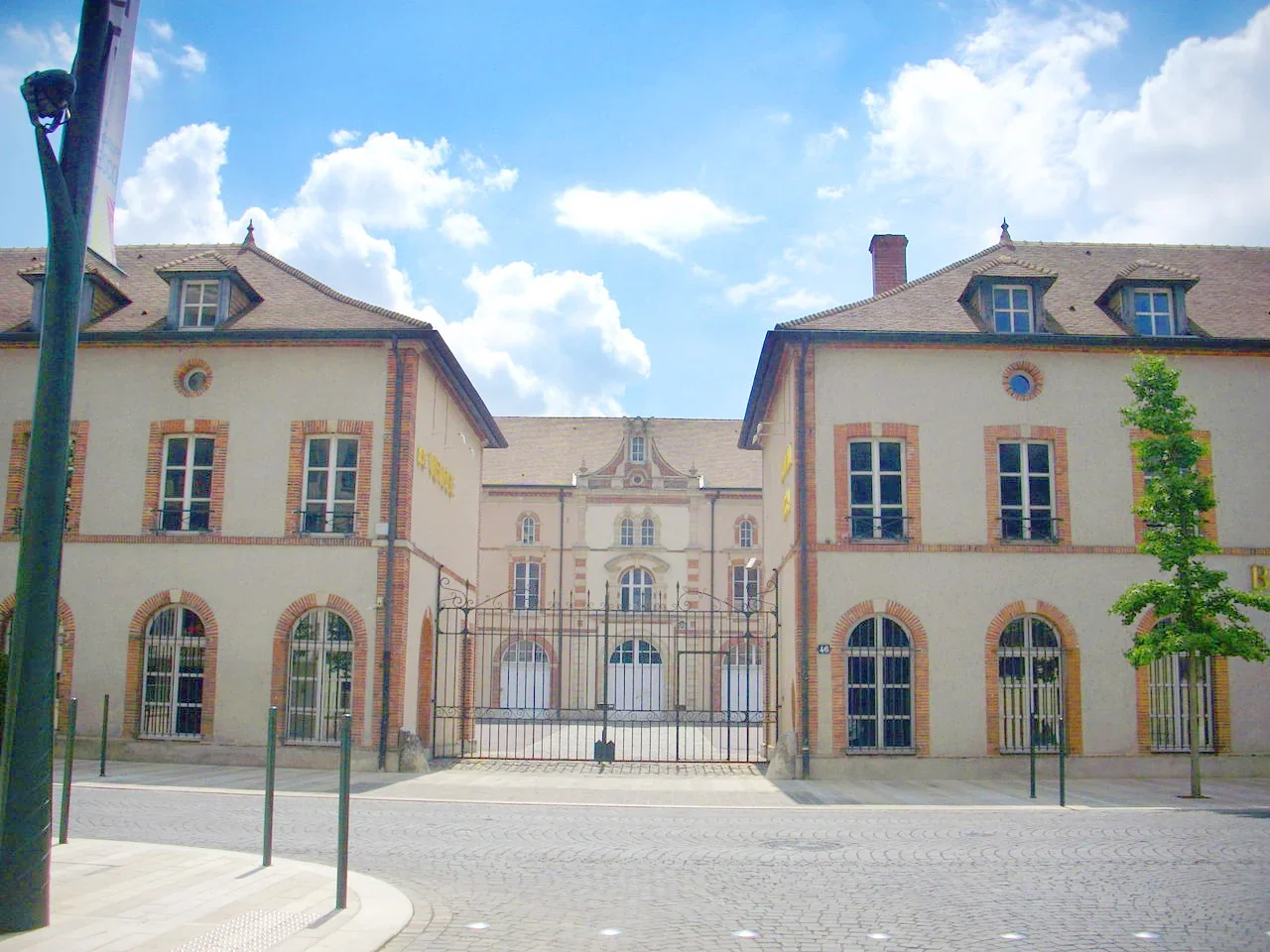
De Venoge joined Boizel Chanoine Champagne in 1998. Louis XV was launched in 2005 as a prestige vintage range composed exclusively of Grand Cru grapes. Its name commemorates the king’s decree of 25 May 1728 permitting Champagne wine to travel and be sold in bottles. In 2015 the house moved to 33 avenue de Champagne.
The number 33 estate includes a nineteenth-century mansion, landscaped grounds and outbuildings. Its restored stable became L’Écurie; accommodation occupies other dependencies. The Vinothèque preserves nearly 20,000 vintage bottles according to the house history. Its catalogue includes Blanc de Blancs 1970 and Rosé magnums from 1973, making the retained stock a record of wines produced across several generations.
de Venoge: the place and its story
The official indexed booking page lists the Premium visit from €90 and Collection Princes tasting from €70, checked October 2026. The live booking page is needed for the available language, date and exact wines; a complete current pour list was not retrievable.
Joseph de Venoge created Cuvée des Princes in 1864 in tribute to the Princes of Orange. The current Club des Princes connects that cuvée with restaurants in countries including Japan and Italy. Its distinctive decanter-shaped bottle recalls crystal vessels used by European aristocratic households in the early twentieth century.
L’Écurie occupies the estate’s restored late-nineteenth-century stable. Its wine-historical tour covers the manor architecture, English-style garden and Vinothèque cellar, followed by a tasting in the bar or on its terrace. The bar also serves tasting plates independently of a mansion tour.
The official contact page gives summer bar hours of 10:00–18:30 from Sunday to Thursday and 10:00–19:30 on Friday and Saturday. Winter hours are listed as 10:00–17:30 daily. It excludes 24, 25 and 31 December and 1 January, and publishes infos@les-dependances.com for the bar, boutique and visits.
Les Suites du 33 occupies the mansion’s outbuildings, with four deluxe rooms and an apartment. The 35m² Deluxe Double or Twin is listed with a kitchenette, ground-floor location and disabled access. The hotel lists French, English, Spanish, Portuguese and Italian among its spoken languages. Reception is at L’Écurie, with arrival from 16:00 to 18:00 and departure by 11:00.
The Cordon Bleu range includes Brut, Extra Brut, Rosé and Blanc de Noirs. Princes adds Blanc de Blancs and Blanc de Noirs, while Louis XV is the house’s Grand Cru vintage range. The Vinothèque lists older wines including Blanc de Blancs 1970 and Rosé magnums from 1973; disgorgement on request takes four to eight weeks, subject to its very limited stocks.
The June 2026 official bar menu lists a tasting of four glasses of Princes at €70, checked October 2026. This is a bar tasting offer, separate from a guided mansion visit. Use the current menu and the house’s reservation page for the wines and service available on your chosen date.

Arrange your visit
de Venoge’s official visitor page provides the direct reservation or enquiry route for Épernay.
Exports and the move to number 33
Joseph took charge of the family business in 1845; his son Gaëtan became president in 1866 and developed sales in the United States. De Venoge won the Grand Prix d’Excellence at Philadelphia’s Universal Exhibition in 1876. Yvonne de Venoge and her husband Adrien de Mun took over in 1898, continuing the business’s links with European aristocratic customers.
The house joined Boizel Chanoine Champagne in 1998, launched Louis XV in 2005 and moved to 33 avenue de Champagne in 2015. Its historical account describes exports to more than forty countries through specialist shops, hotels and restaurants, and a wine library of nearly 20,000 vintage bottles. That library is a defining part of the mansion visit; it does not mean a standard ticket includes a nineteenth-century wine.
Princes Brut: a numbered blend
The official fourth-edition Princes Brut technical sheet identifies 39% Pinot Noir, 35% Chardonnay and 26% Meunier. Its base is 47% wine from the 2021 harvest, completed by 53% reserve wines from 2018, 2019 and 2020. Dosage is 5 g/L and disgorgement is dated October 2025. These figures describe the fourth edition, rather than every earlier Princes Brut release.
The sheet names Chardonnay from Le Mesnil-sur-Oger, Trépail and Monthelon; Pinot Noir from Verzenay, Hautvillers, Ambonnay, Mailly, Tours-sur-Marne and Les Riceys; and Meunier from Ludes, Hautvillers, Monthelon and Chigny-les-Roses. Together they form eleven different village origins because some villages supply more than one grape. The same Princes label can therefore lead to a discussion of several parts of Champagne rather than one estate vineyard.
Louis XV and the bottle decree
The house links Louis XV’s name to the decree of 25 May 1728 authorising Champagne wine to be transported and sold in bottles. Its Louis XV Brut and Rosé are vintage cuvées made exclusively from Grand Cru grapes. The named king and the harvest year convey different information: Louis XV is the prestige range, while 2012 or 2014 identifies the vintage of a particular release.
The Vinothèque catalogue separates bottle and magnum stocks. Its bottle list includes vintage Champagnes from 1979 onwards, Vin des Princes from 1983 and Blanc de Blancs from 1970. The magnum list includes Rosé 1973 and 1977 and Blanc de Blancs 1977 and 1978. These are catalogue entries subject to limited availability; the house asks four to eight weeks for disgorgement on request, so a library purchase can require preparation before the Épernay visit.
The Club des Princes beyond Épernay
The Club des Princes is a gastronomic network associated with the cuvée. The house lists members by country: in Japan, examples include Ebitei-Bekkan in Toyama and Sake Hotel Tamakiya in Niigata; in Italy, Maio Restaurant at Rinascente Milano and Borgo San Jacopo in Florence. Its English list includes La Petite Maison in London.
The French members listed include Le Louis XIV in Reims, L’Archeste in Paris and Alain Llorca at La Colle-sur-Loup. These named restaurants illustrate the house’s food-pairing network; they are separate from L’Écurie’s plates at 33 avenue de Champagne. A Club member listing is not an Épernay tour inclusion or a booking for a meal.
Which Suites du 33 room to request
The official accommodation inventory includes a 45-square-metre double with private terrace, a 50-square-metre suite for up to four and a 40-square-metre double overlooking the garden and mansion. The suite and 40-square-metre room are on the first floor. A 100-square-metre apartment accommodates up to six, with two double bedrooms, one twin bedroom, two bathrooms and an equipped open-plan kitchen.
The room policy lists breakfast at L’Écurie from 08:15 to 09:45 and first-night prepayment after confirmation. Free cancellation is published up to fourteen days before arrival for the direct room reservation; later cancellation rules differ. These conditions belong to accommodation, not the separately booked Champagne tour. The listed electric-vehicle charging service requires a request and an additional payment.
A separate cultural stop at Château Perrier
Château Perrier at 13 avenue de Champagne houses the Musée du vin de Champagne et d’Archéologie régionale, opened in May 2021. Its approximately 2,000 displayed objects cover geology, regional archaeology, Champagne production and collecting. The wine rooms include tools, machines, glassware, paintings and advertising material, giving a broader context to the bottles and manor seen at de Venoge.
The museum’s own practical page lists €10 full admission and free entry on the first Sunday of the month, checked October 2026. From November to March it opens Wednesday–Friday 13:30–18:00 and weekends 10:00–18:00, closing Mondays and Tuesdays. Château Perrier’s public garden has free daily admission, with access from 13 avenue de Champagne or Parking des Arts on rue de Reims.
Access and facilities
De Venoge’s visitor site and L’Écurie champagne bar occupy 33 avenue de Champagne, Épernay. The house’s range includes Princes, Louis XV and Vinothèque wines. Its official booking listings distinguish a two-hour Premium visit from a one-hour Collection Princes tasting.
Official information
Plan nearby visits
Build your visit into a fuller stay with our Épernay guide, compare tours and packages and find somewhere comfortable to stay.
Plan your trip to Épernay
Get there
Book a tour
Select the departure point and date on the booking page. Check the meeting point, language and inclusions before paying.
Compare toursWe may earn a commission if you book through these links, at no extra cost to you.