
History
Born in 1822, Charles-Camille Heidsieck belonged to a family already involved in Champagne: his grand-uncle had established Heidsieck et Cie thirty-seven years earlier. Charles founded the business bearing his own name in 1851, when he was twenty-nine. His mother was Émilie Henriot, another name rooted in Reims wine history.
America became a market in the following year. The house’s account places his first journey there in 1852 and identifies New York and Louisiana among the places where he developed customers. A surviving 1860 letter to his wife records his impressions of the attention surrounding him. He subsequently cultivated customers in Belgium and England.
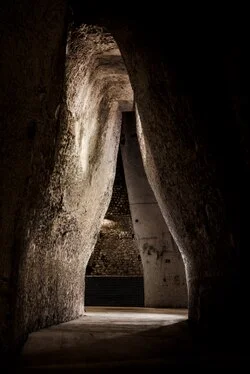
Heidsieck bought his wooded park and chalk cellars in 1867. The producer dates the quarries to the third century and describes galleries extending beyond eight kilometres, around thirty metres underground. Their stable, dark conditions supported ageing that could extend from four years to several decades. These were former quarries adapted for wine storage.
The chalk-cellar landscape received World Heritage recognition through the Champagne inscription of 2015. The estate marked the inscription’s tenth anniversary in 2025. The Descours family had acquired the business in 2011, adding a modern ownership milestone to the founder’s 19th-century story.
A Chardonnay vintage from 1949 precedes the modern non-vintage Blanc de Blancs, relaunched in 2018. Blanc des Millénaires began with the 1983 vintage, presented in 1993. The house’s chronology now identifies ten releases through 2017, including 1985, 1990, 1995, 1996, 2004, 2006, 2007 and 2014.
Émilien Érard joined the company in 2018, working in winery management and grower relations before becoming cellar master. He succeeded Élise Losfelt, appointed in March 2023. These changes belong to the continuing production history; the visitor’s practical enquiry address remains the Reims house contact in the main guide.
Charles Heidsieck: the place and its story
The Comité Champagne lists cellar visits and tastings by appointment at rue de la Procession, Reims. French is the language expressly listed in that directory. The published contact is charles@charlesheidsieck.com or +33 (0)3 26 84 43 00; there is no verified open-calendar public ticket to reproduce here.
The directory describes wines maturing for at least four years, with some bottles remaining for more than forty. A bottle-shaped pigeonhole in the chalk inspired the house’s bottle design. Its private reception room was redecorated in 2017.
Brut Réserve contains 40% Pinot Noir, 40% Chardonnay and 20% Meunier. The house identifies three village pillars: Oger for Chardonnay, Ambonnay for Pinot Noir and Verneuil for Meunier. Sixty crus contribute to the blend, and reserve wines account for half of it.
The Brut Réserve production account separates grapes and crus during vinification. Between 5% and 10% of its base wines are matured in old Burgundy oak barrels; stainless-steel tanks hold the remainder. These proportions describe the current Brut Réserve recipe, not every Charles Heidsieck cuvée.
The non-vintage Blanc de Blancs was relaunched in 2018, following a Chardonnay vintage produced in 1949. Its present blend brings together fifteen Chardonnay crus and 25% reserve wines averaging five years old. It spends three to four years in the cellars before release.
Blanc des Millénaires 2017 is a vintage Chardonnay champagne sourced from Vertus, Le Mesnil-sur-Oger, Avize, Chouilly and Oger. The house lists seven years of ageing and identifies Émilien Erard as cellar master. Its published chronology contains ten Blanc des Millénaires vintages: 1983, 1985, 1990, 1995, 1996, 2004, 2006, 2007, 2014 and 2017.
Champagne Charlie is a separate cuvée honouring the founder. The release cellared in 2020 combines 55% reserve wines with 45% wines from 2019. Its blend is 66% Chardonnay and 34% Pinot Noir, with some reserves having spent twenty-five years on lees. The house describes sixty crus contributing to this assemblage.
Rosé Réserve’s published final blend is 40% Pinot Noir, 35% Chardonnay and 25% Meunier. Reserve wines contribute 25%, with Pinot Noir red wine making up 5–6% of the assemblage. Each cru and variety is vinified separately in stainless steel. The house deliberately selects younger reserves for this rosé than for Brut Réserve.
Brut Millésimé 2018 is 55% Pinot Noir and 45% Chardonnay with an 8g/l dosage. Its named origins include Ambonnay, Tauxières, Vertus, Bouzy, Verzy and Trigny. The house’s 2018 harvest account records heavy spring rain followed by a hot, dry summer and enough healthy fruit to rebuild reserves after 2017.
Rosé Millésimé 2018 combines 59% Pinot Noir, including 8% red wine, with 41% Chardonnay. It has a 9g/l dosage and ten named origins: Oger, Vertus, Chouilly, Cuis, Verzy, Aÿ, Ludes, Ambonnay, Tauxières and Avenay. This vintage rosé is separate from Rosé Réserve, whose reserves blend several years.
The house also makes a still red Coteaux Champenois: Ambonnay 2022, from the Pinot Noir parcel Les Saints-Rémys. This wine sits alongside the sparkling range and shows the Ambonnay fruit used in the house’s blending work without a second fermentation in bottle.
Émilien Erard joined Charles Heidsieck in 2018 and worked across vat-room management and grower relationships. He succeeded Élise Losfelt, who had arrived as cellar master in March 2023 before returning to her family’s Château de l’Engarran estate in the Languedoc. The current official announcement names Erard as cellar master.

Blanc des Millénaires across three releases
Blanc des Millénaires first appeared in 1993 with the 1983 vintage. The house’s archived 1995 page records more than twenty years of maturation for that release. Its Chardonnay came from Oger, Le Mesnil-sur-Oger, Avize, Cramant and Vertus. That historical five-village selection differs from the 2017 list, which includes Chouilly in place of Cramant.
The 2014 vintage also uses Chardonnay from Vertus, Le Mesnil-sur-Oger, Oger, Avize and Cramant. The house gives nearly ten years of lees maturation and describes a sunny June, wet July, cool August and warm, dry September. The 2014 and 2017 bottles consequently have different harvest years, village lists and ageing periods in the producer’s records.
Charles Heidsieck’s Ultimate Collection comprises eighteen Brut Réserve bottles cellared between 1986 and 2018. Its Mis en Cave project identifies the year a multi-vintage blend entered the cellar, allowing comparisons between successive bottlings. The collection concerns the house’s reserve-wine champagne; the single harvest year on Blanc des Millénaires describes a different category of wine.
Reserve wine as a house signature
The house’s style page gives an average age of ten years for the reserve wines making up half of Brut Réserve. By comparison, its non-vintage Blanc de Blancs uses a quarter reserve wines averaging five years. These are different assemblages, even though both combine wines from more than one harvest.
Charles Heidsieck dates its crayères to the third century. Its own account describes darkness, quiet and a stable temperature as the natural conditions for maturation. The galleries hold several million bottles. The house celebrated the tenth anniversary of their inclusion in the Champagne UNESCO World Heritage inscription in 2025; the inscription dates to 2015, not to the cellar purchase in 1867.
Rosé and Les Riceys
The Rosé Réserve account specifically names red wine from Les Riceys as a source of aromatic freshness. Its red reserve wines can come from harvests up to five years before the latest harvest, adding a second time reference to the final assemblage.
A meal and a stay in the Saint-Nicaise district
Le Parc is the domaine’s gastronomic restaurant, led by Christophe Moret and awarded two Michelin stars. Its current official page gives lunch and dinner Wednesday–Sunday, with lunch arrivals from noon to 13:30 and dinner from 19:30 to 21:00 (checked October 2026). Vegetarian dishes are available on request; food allergies are communicated when reserving the table.
La Rotonde is the same estate’s bar, open to non-residents as well as hotel guests. Its official page lists daily opening and a snack service from noon to 19:00, and asks non-residents to reserve ahead. The domaine also operates Brasserie Le Jardin, whose table reservation has its own button on the property website. None of these meal reservations forms part of a Charles Heidsieck cellar appointment.
Arrange your visit
Charles Heidsieck’s official visitor page provides the direct reservation or enquiry route for Reims.
Access and facilities
Domaine Les Crayères is at 64 boulevard Henry Vasnier, in the same southern Reims district as the chalk-cellar houses. The hotel lists twenty rooms and suites divided between the Château and Cottage. Its direct contact is +33 3 26 24 90 00 or contact@lescrayeres.com. A hotel booking uses the property’s own room system; Charles Heidsieck enquiries use the separate house contact.
Official information
Plan nearby visits
Build your visit into a fuller stay with our Reims guide, compare tours and packages and find somewhere comfortable to stay.
Plan your trip to Reims
Get there
Book a tour
Select the departure point and date on the booking page. Check the meeting point, language and inclusions before paying.
Compare toursWe may earn a commission if you book through these links, at no extra cost to you.