
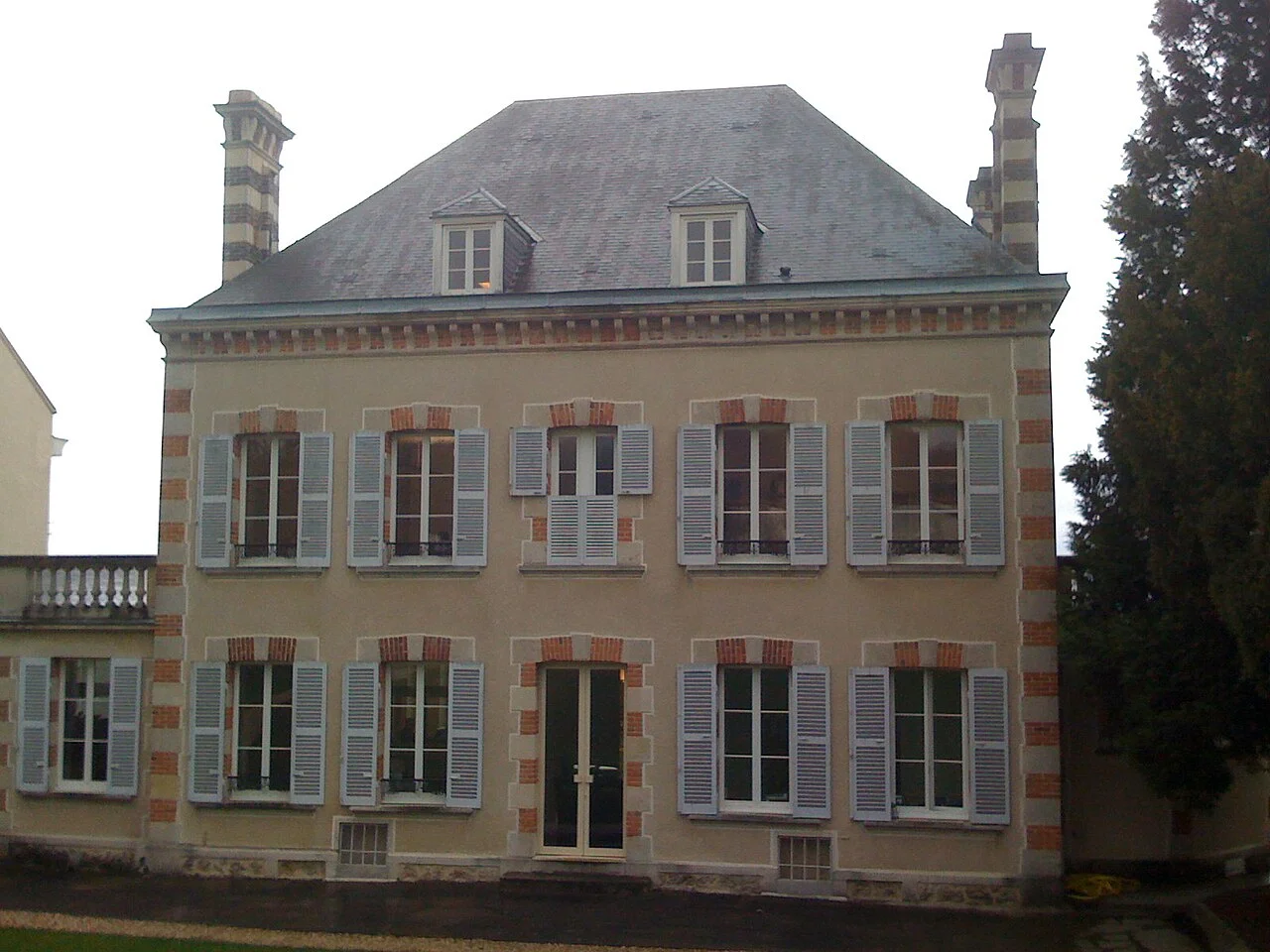

History
Bollinger began trading in Aÿ on 6 February 1829. Its later history can be followed through named wines: Special Cuvée in 1911, R.D. in 1967 and Vieilles Vignes Françaises in 1969.
Athanase de Villermont, Paul Renaudin and Joseph, known as Jacques, Bollinger established the original firm at 16 rue de l’Huilerie. Renaudin directed cellar work while Bollinger developed sales. The present visitor contact is on boulevard Maréchal-de-Lattre; the rue de l’Huilerie address belongs to the founding story.
In the early twentieth century, Jacques Bollinger assembled La Côte aux Enfants from more than fifty separate owners. The house dates its investigations into the Aÿ hillside to 1926. Today the name identifies both a still red wine and a distinct single-plot Champagne from its north-west-facing Pinot Noir slope.
The English name Special Cuvée originated with Georges Bollinger’s British agent in 1911. Its modern production still draws on reserves held in magnums for seven to fifteen years. The house’s library now contains more than a million magnums, separated by vineyard and harvest.
Lily Bollinger assumed responsibility in 1941 and continued to travel around the vineyards by bicycle during the Occupation. A 1963 discussion with the American agent about selling Réserve 1947 preceded the R.D. launch in 1967. That launch used 1952 for England, 1953 for France and Switzerland, and 1955 for the United States and Italy.
Vieilles Vignes Françaises first appeared from the 1969 harvest. Its surviving ungrafted Pinot Noir enclosures are Clos Saint-Jacques and Clos des Chaudes-Terres, together thirty-one ares. Shoots are buried using the provignage method to establish roots, and work includes a draught horse.
Bollinger retains approximately 4,000 old oak barrels, including examples over a century old. They are second-hand Burgundy barrels. Resident cooper Gaël Chanut repairs, cleans and prepares them for subsequent harvests. This continuing workshop links the current oak-fermented vintage wines with a physical craft maintained at Aÿ.
After the war Lily developed the firm with family support. R.D. means Récemment Dégorgé, with long lees ageing followed by disgorgement close to sale. The ungrafted plots behind Vieilles Vignes Françaises were spared by phylloxera.
Bollinger: the place and its story
The current official website offers Discovery Visit and Experiential Visit through its 1829 app. These public booking routes mean Bollinger should not be described as an outside-only house. The webpage does not expose verified prices, durations or tasting selections for those app products.
Bollinger’s official range lists Special Cuvée, Rosé, La Grande Année, La Grande Année Rosé, R.D., PN, Vieilles Vignes Françaises and La Côte aux Enfants. La Côte aux Enfants appears as both a Champagne and a still-wine name in the range, so the bottle description matters when buying.
Bollinger maintains approximately 4,000 old oak barrels, repaired by its resident cooper. The work includes resealing, cleaning, drying and sulphuring the barrels for the next harvest. Vintage wines mature under natural cork held by an agrafe, and the house describes manual riddling and disgorgement for vintage cuvées.
The reserve library contains more than one million magnums, kept separately by vineyard and year. Some remain for five, ten or twelve years and longer before entering Special Cuvée or Rosé blends. The house’s accounts place this practice in the 1890s; their first-use year differs between pages, so no single exact start year is asserted here.
Special Cuvée is 60% Pinot Noir, 25% Chardonnay and 15% Meunier, with more than 85% Grand and Premier Cru origins and a majority of reserve wines. The English and French product pages show differing dosage ranges, so that figure is omitted. The grape proportions and use of long-held reserve magnums are consistent features of the published account.
La Grande Année 2015 combines eleven crus: 60% Pinot Noir, principally Verzenay, Aÿ and Mareuil-sur-Aÿ, and 40% Chardonnay, principally Chouilly and Avize. It is fermented entirely in oak and aged under cork. Its dedicated vintage page gives 8g/L dosage and records the start of the 2015 harvest as 4 September.
The PN labels identify different Pinot Noir-led creations. PN VZ16 has a Verzenay emphasis and a 2016 base year, with reserve magnums as old as 2006. PN TX17 emphasises Tauxières with a 2017 base, while PN AYC18 centres on Aÿ with a 2018 base. These are separate blends, not alternative names for Special Cuvée.
Cuis supplies an eighteen-hectare Chardonnay vineyard to Bollinger’s portfolio. The house’s village account names the Bourgs and La Guette plots with vines more than fifty years old, and La Chenue, formerly a vegetable garden supplying retirement homes. Cuis gives a Côte des Blancs counterpoint to the house’s dominant Pinot Noir origins in the Montagne de Reims.

Visits and tastings
| Experience | Duration | Adult price from | Tasting | Languages | Booking |
|---|---|---|---|---|---|
| Discovery Visit | Ask the house | Official booking enquiry | See the selected official booking option | Ask the house | Official booking |
| Experiential Visit | Ask the house | Official booking enquiry | See the selected official booking option | Ask the house | Official booking |
The current address and 1829 bookings
Bollinger’s current contact address is 20 boulevard Maréchal-de-Lattre, 51160 Aÿ, rather than the historic rue de l’Huilerie address. The visitor telephone is +33 3 26 53 33 66 and the email is contact@champagne-bollinger.fr. The house advertises visits by appointment Monday–Friday. Its 1829 booking page opens the Discovery and Experiential offers in the official app; choose the dated product there to see its current conditions.
Rosé and the significance of the red-wine plots
Bollinger Rosé has a published blend of 62% Pinot Noir, 24% Chardonnay and 14% Meunier, with more than 85% Grand and Premier Cru origins. Its red-wine addition is 5–6%. The house names Poirier Saint-Pierre and Montboeuf in Verzenay among the plots providing those red wines, alongside Aÿ sources. The recommended serving range is 8–10°C. These proportions distinguish Rosé from the 60/25/15 Special Cuvée blend.
The English name Special Cuvée was proposed in 1911 by Georges Bollinger’s British agent. Its reserve component includes wines held in magnums for seven to fifteen years, alongside other reserves. The product page specifies ageing for twice Champagne’s regulatory minimum. Bollinger’s individual magnums therefore serve a production purpose; they are not simply larger retail versions of the finished blend.
R.D.: a release history with three destinations
R.D. grew from a 1963 decision by Lily Bollinger and the house’s American agent to sell a Réserve 1947. The R.D. name was chosen in 1967. That launch used different vintages in different markets: 1952 for England, 1953 for France and Switzerland, and 1955 for the United States and Italy. The house’s collection account defines the style through an older vintage, extended bottle ageing, recent disgorgement and Extra Brut dosage; it specifies ageing exceeding four times the regulatory minimum.
Two ungrafted plots and La Côte aux Enfants
Vieilles Vignes Françaises now comes from two ungrafted Pinot Noir enclosures: Clos Saint-Jacques and Clos des Chaudes-Terres, together thirty-one ares. The house works the vines by hand and with a draught horse. Its enfoule or provignage method buries shoots to establish new roots. After old-oak vinification, the Blanc de Noirs receives at least five years of ageing, with manual riddling and disgorgement. The first vintage was 1969.
La Côte aux Enfants Champagne is a single-plot, 100% Pinot Noir wine from Aÿ Grand Cru’s north-west-facing slope. Jacques Bollinger assembled the property in the early twentieth century from more than fifty owners. The house dates its research into the site to 1926. Its collection lists Champagne vintages including 2012, 2013, 2015 and 2016; the still red La Côte aux Enfants remains a separate wine in the range.
The Aÿ-based PN AYC18
PN AYC18 is the fourth edition of the PN series. It is entirely Pinot Noir, centred on Aÿ with Tauxières and Verzenay also named in the sourcing. The base is 2018, with reserve magnums dating back to 2009, and the published dosage is 6 g/L. Bollinger recommends 10–11°C for this edition. The AYC18 label describes a particular blend and release rather than a promise that any Discovery Visit will pour it.
Food and a bed in Aÿ
L’Atelier by Patrick Baillet at 6 place Henri-Martin is listed by the local tourist office for chocolates, pastries, a tea room and food to eat in or take away. It has a twenty-four-seat terrace; contact +33 3 26 55 44 26. For an overnight Aÿ base, Hôtel Castel Jeanson at 24 rue Jeanson has an indoor pool and secure parking in its tourist-office entry. The Aÿ guide combines these addresses with Pressoria and the heritage walk; the stay guide provides accommodation booking links.
Access and facilities
The boutique’s published hours are Monday–Friday, 09:00–12:00 and 14:00–17:00. Bollinger warns that tour departures can limit shop access. A shop opening period is therefore not a walk-in cellar appointment. No complete step-free route, lift specification or wheelchair policy was verified for the 1829 tours; request those details from the Aÿ visitor team before reserving.
Bollinger was established on 6 February 1829 by Athanase de Villermont, Paul Renaudin and Joseph “Jacques” Bollinger. The original trading firm was based at 16 rue de l’Huilerie, Aÿ. Renaudin oversaw the cellar and Bollinger the sales.
Plan nearby visits
Build your visit into a fuller stay with our Aÿ guide, compare tours and packages and find somewhere comfortable to stay.
Plan your trip to Aÿ
Get there
Book a tour
Select the departure point and date on the booking page. Check the meeting point, language and inclusions before paying.
Compare toursWe may earn a commission if you book through these links, at no extra cost to you.