
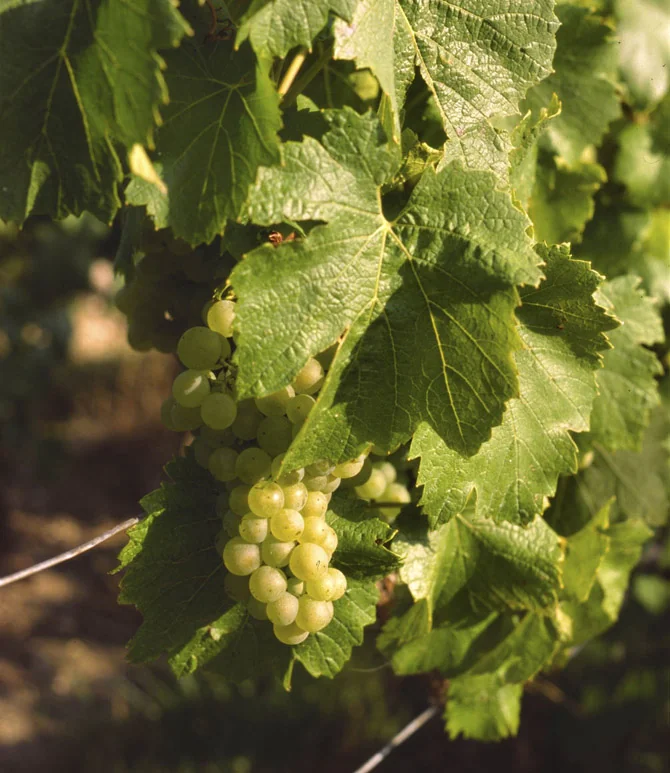

Three grapes dominate the vineyard
The Comité Champagne’s current vineyard figures give Pinot Noir 38% of the area under vine, Chardonnay 31% and Meunier 31%. Pinot Noir predominates in the Montagne de Reims and Côte des Bar; Chardonnay is the principal grape of the Côte des Blancs. These are regional planting shares, not the recipe of every bottle.
Chardonnay contributes freshness, with citrus, floral and sometimes mineral aromas in the Comité’s description. Pinot Noir contributes body and structure, with red-fruit and floral notes. Meunier buds later than the other two principal varieties and is less vulnerable to spring frost. A blend can combine varieties, villages and harvest years; the label alone rarely supplies the complete blend.
For a grape-focused visit, the Côte des Blancs connects Chardonnay villages such as Avize, Cramant, Oger and Le Mesnil-sur-Oger. In Aÿ, Bollinger and Henri Giraud provide contrasting house stories. A producer’s own cuvée sheet gives the grape proportions of the bottle being poured; regional acreage cannot substitute for that sheet.
The bottle’s second fermentation and ageing
The Comité Champagne sets a minimum of 15 months of cellar maturation before a Champagne is released, and at least 3 years for a vintage cuvée. It describes common practice as 2–3 years for non-vintage wines and 4–10 years for vintage Champagne. The legal minimum and a house’s chosen ageing period are different facts.
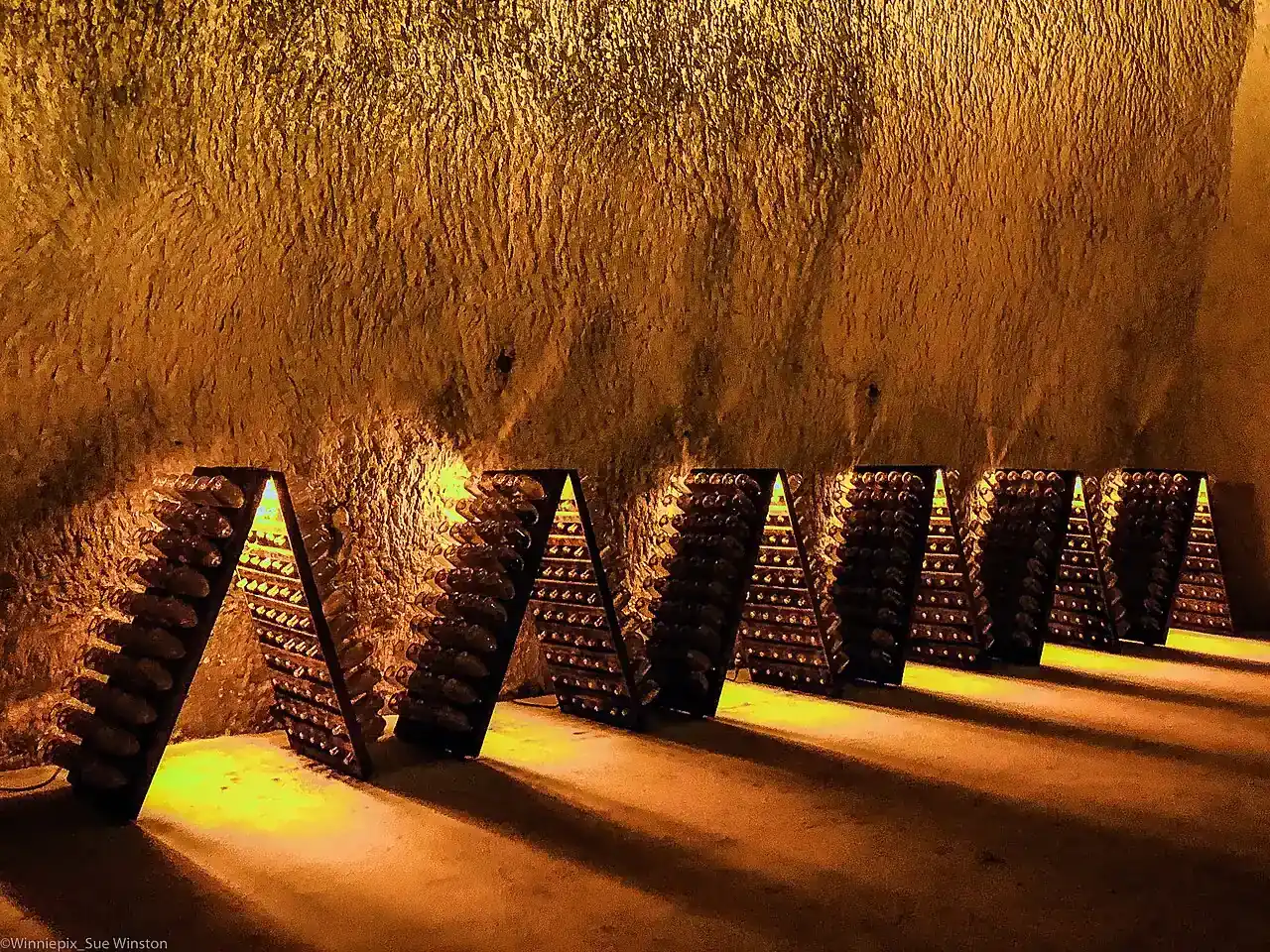
After the bottle’s second fermentation, the wine ages with its lees: the yeasts die and gradually break down, a process called autolysis. The Comité describes the combination of autolysis and slow oxidation as contributing mature aromas. It identifies darkness and a stable cellar temperature around 12°C as important to this stage.
A Reims crayère is a chalk quarry repurposed for cellar use. Saint-Nicaise Hill’s underground production sites form part of the 2015 Champagne UNESCO listing. Ruinart, Taittinger and Pommery have separate visitor entrances and separate tickets; the UNESCO designation is not a combined admission pass.

Read the sugar category in grams per litre
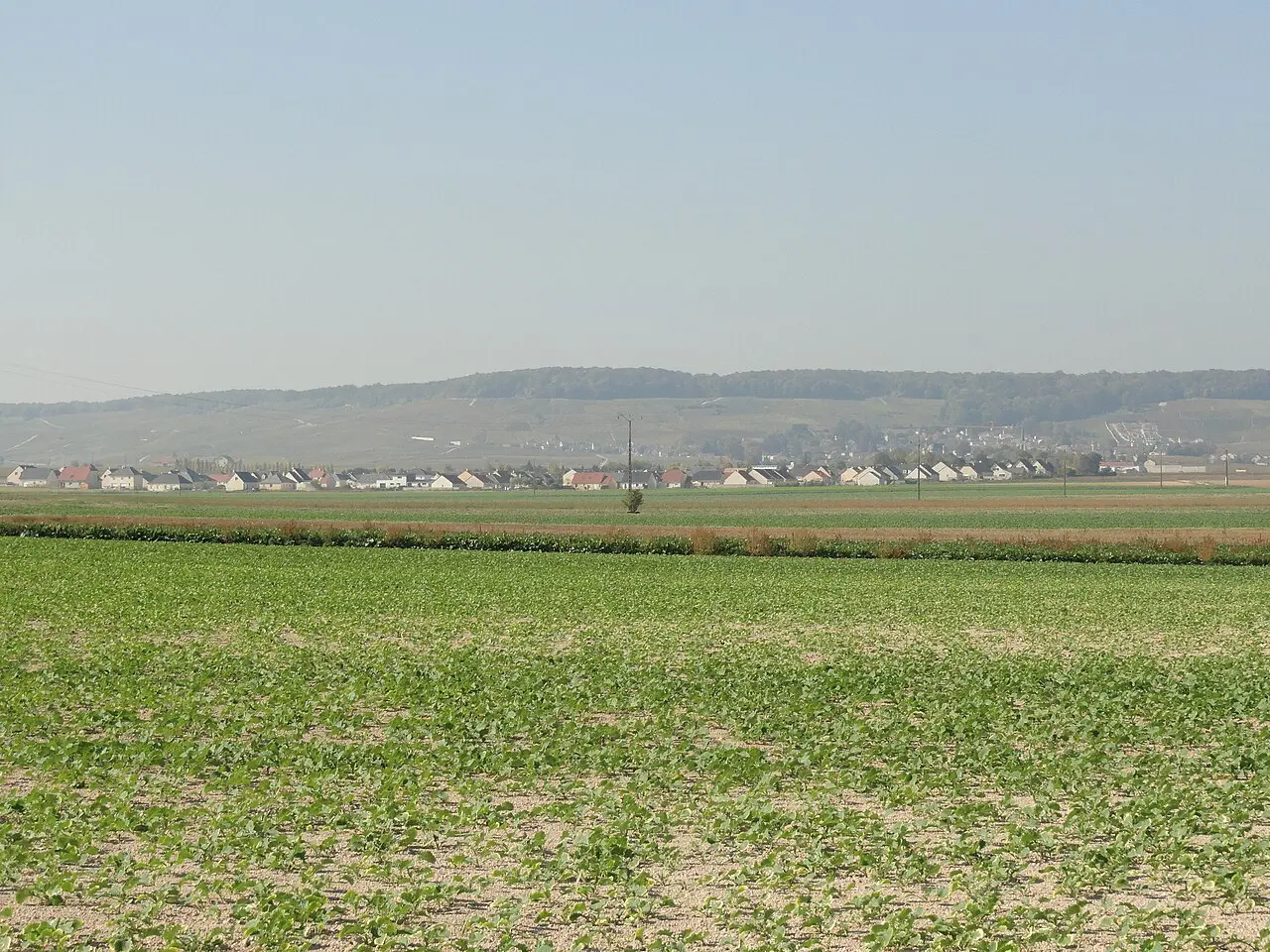
Dosage is the final addition of liqueur before corking. The Comité Champagne describes that liqueur as sugar dissolved in wine; the finished wine’s sugar level determines its category. Brut is below 12 g/L, while Extra Dry is 12–17 g/L: despite its name, Extra Dry is sweeter than Brut.
The scale is Brut Nature below 3 g/L with no added sugar; Extra Brut 0–6 g/L; Brut below 12 g/L; Extra Dry 12–17 g/L; Sec 17–32 g/L; Demi-Sec 32–50 g/L; and Doux above 50 g/L. The Comité’s technical handbook supplies the Extra Brut range as well as the other categories.
Brut Nature can also be labelled pas dosé or dosage zéro when the conditions are met. These terms concern sugar, while blanc de blancs concerns white grape varieties and blanc de noirs concerns black grape varieties. Vintage identifies a harvest year; it does not specify the sweetness category.
Turn the terminology into a visit
At Mercier in Épernay, the official visitor route uses an underground train; at Ruinart in Reims, the crayères and Chardonnay-led wines provide another point of comparison. At a grower such as De Sousa in Avize, book an appointment through the producer instead of assuming that the door operates like a major house ticket desk.
Use the named experience on the official booking page to identify what is poured. A generic “two tastings” description does not establish that a prestige cuvée such as Dom Ruinart or Comtes de Champagne is included. Our house guides separate verified experiences from cuvées mentioned only as part of a house’s range.

Plan your trip to Champagne
Get there
Book a tour
Select the departure point and date on the booking page. Check the meeting point, language and inclusions before paying.
Compare toursWe may earn a commission if you book through these links, at no extra cost to you.