
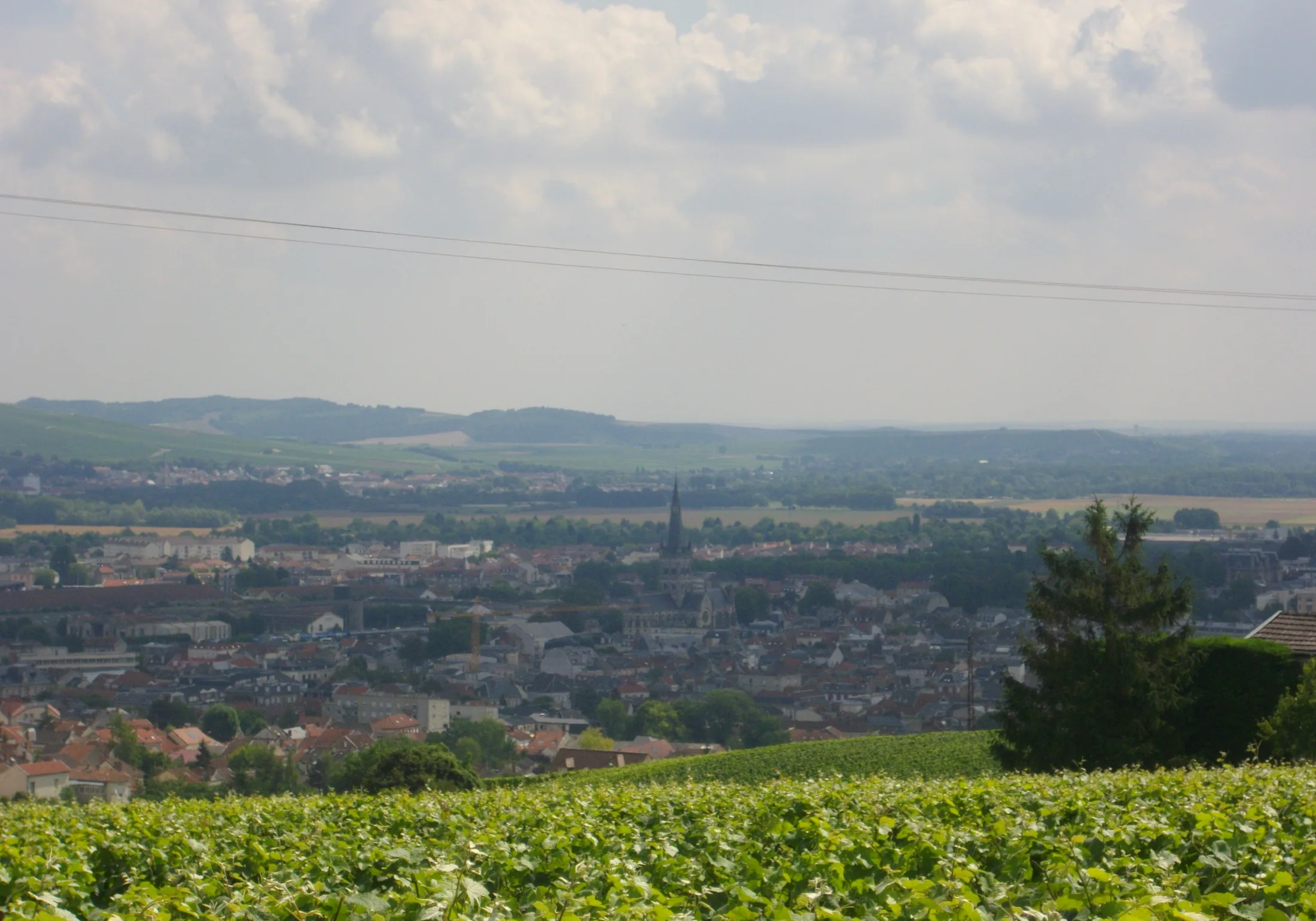
The annual moment when grapes become wine
Champagne harvest has always belonged to the vineyards and their workers. It is the collection of a crop, with different opening dates for different villages and grape varieties, not a single festival starting everywhere on one morning. Today, Comité Champagne describes a two-to-three-week period when approximately 120,000 seasonal workers join the region. Pickers, porters, loaders and forklift operators each have a part in getting intact bunches from rows of vines to the press.
The hand-work survives alongside modern machinery for a specific reason. Pinot Noir and Meunier have dark skins, but much of their juice becomes white Champagne. Whole bunches must be cut carefully and taken quickly to pressing centres to limit colour transfer from skins to juice. The scene of teams moving through the vines therefore belongs to the wine’s production history as well as its seasonal atmosphere. Mechanised transport and presses have changed the operation; picking remains manual.
A calendar shaped by each year’s weather
The Union des Maisons de Champagne’s historical account records strikingly different harvest dates long before today’s maturity-monitoring network. In 1811, the celebrated Comet Year, picking at Avize began on 18 September and ended on 4 October. Its chronology lists an early start on 24 August in 1893 and a much later opening on 26 October in 1852. These dates describe particular historical seasons, not a dependable holiday window for a future September visit.
The same historical account records the exceptionally late Cramant harvest of 1869, which did not begin until 7 November. In 1977, black grapes were authorised from 6 October and white grapes from 10 October. The differences between colours and sites are important: even in a single year, Champagne can have more than one official opening date. The historical record is richer than a list naming one supposedly universal start for the entire appellation.

1956: measuring ripeness together
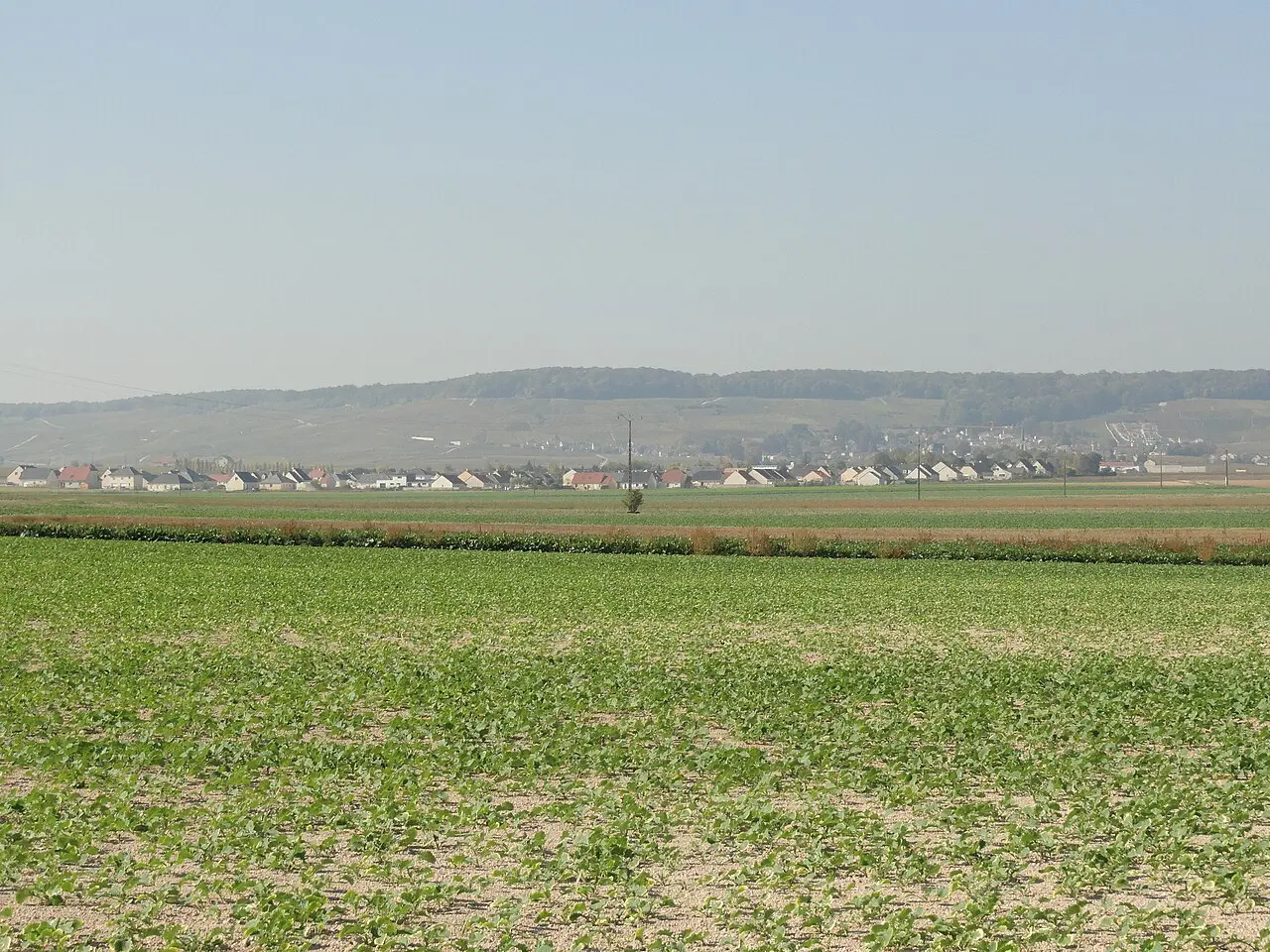
Comité Champagne dates the creation of its grape-ripeness monitoring network to 1956. Its published description uses approximately 600 control plots spread across the vineyard area. Sampling begins around véraison, when grapes change colour, and takes place twice a week. The measurements include the proportion of colour change, average bunch weight, estimated sugar and total acidity. The network brought a shared set of measurements to a decision that still has to respect differences between villages and varieties.
Those maturity results help determine when picking may begin in each winegrowing municipality and for each grape variety. The target is the balance between ripe fruit and acidity, not the convenience of a fixed public celebration. Authorised harvest yields are also set annually by the Comité Champagne’s representatives of houses and growers. Picking dates and permitted quantities answer different questions: one governs when the crop is ready, the other the amount available for Champagne production.
The traditional marc enters a regulated press house
The traditional press-load unit, the marc, is 4,000 kilograms of grapes. Comité Champagne’s technical brochure limits juice extraction from that load to 25.5 hectolitres, or 2,550 litres. The first 20.5 hectolitres form the cuvée and the following five the taille. These names describe juice fractions taken during pressing. Cuvée here refers to that 20.5-hectolitre pressing fraction, independently of a producer’s bottle name.
Each delivery is weighed and recorded when it reaches the pressing centre. The pressing log, or carnet de pressoir, identifies the grape variety, cru and destination of the numbered marc, including whether the winegrower retains it or sells it to a house. This record-keeping preserves the identity of vineyard loads at the moment they become juice. The cellars of Reims and Épernay are the familiar visitor image of Champagne; harvest’s paperwork and presses provide an earlier, equally essential link.

1987: a quality charter for pressing centres
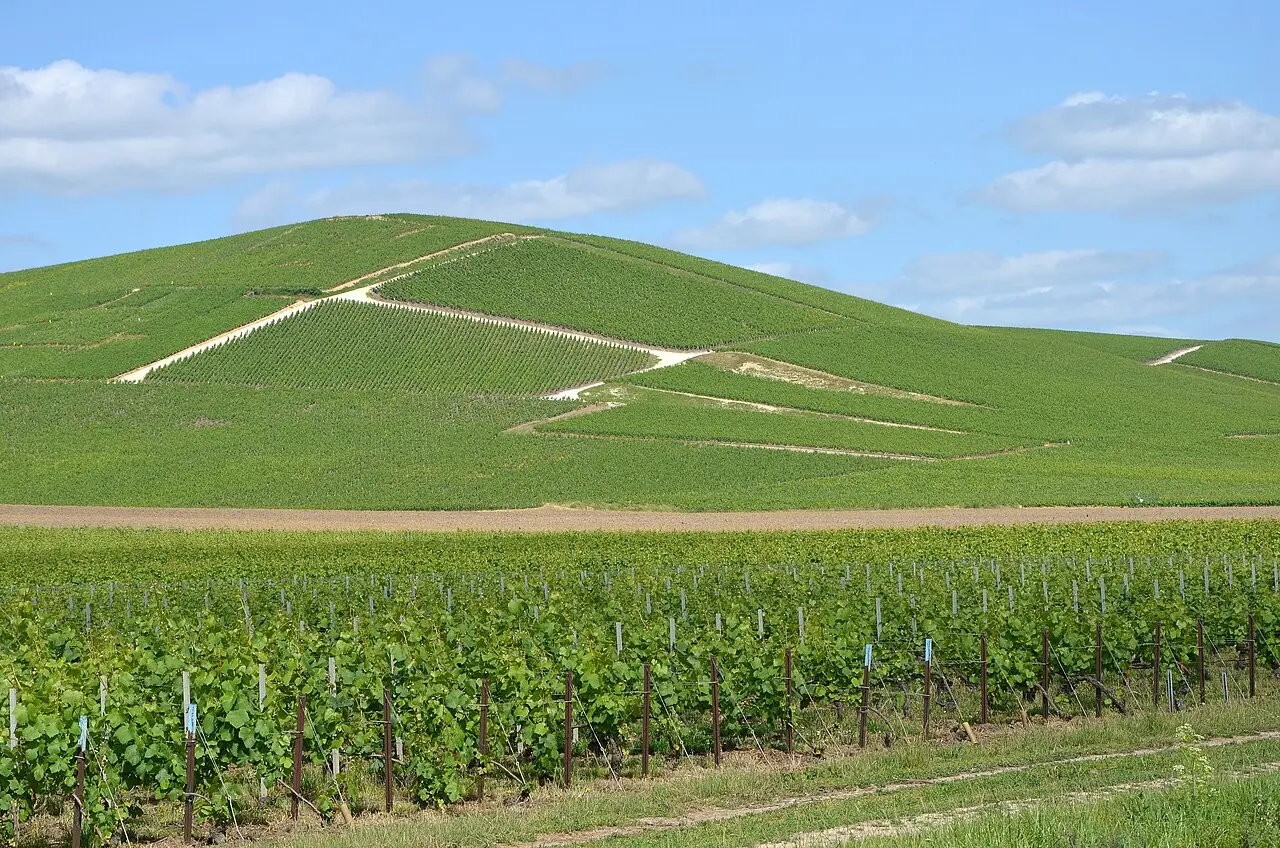
The Union des Maisons de Champagne dates a pressing-centre Quality Charter to 1987. Approval covers the press itself, the building, pressing arrangements and racking facilities. Loading must be rapid and gentle, with a limited drop for the grapes; the pressing surface must be broad. These requirements connect the equipment’s design to the intact bunches arriving from the vineyard. A press house is not simply a shed with a machine inside: its layout forms part of the appellation’s production controls.
The Comité’s technical account describes more than twenty approval criteria introduced in 1987. They include pressing and racking capacity, daily loads, press type, sulphuring and hygiene. Presses range from 2,000 to 12,000 kilograms, and the current overview says eighteen per cent remain manual. Emptying and rinsing between marcs, collecting pressing residues for distillation and recovering washing water are also part of the described operation. Modernisation has added control and sanitation without removing the traditional vocabulary of marc, cuvée and taille.
A working example from Bouzy
Jean Vesselle in Bouzy provides a producer-level view of modern pressing. The grower describes horizontal pneumatic presses with lateral membranes. After loading, the press rotates through 180 degrees and the inflated membrane applies pressure to the bunches. The membrane then deflates; rotation breaks up the compressed mass of grapes in the operation known as retrousse. This is one estate’s documented equipment and process, a useful counterpart to the old wooden basket presses displayed in Champagne’s museums.
Jean Vesselle’s technical description gives pressure increments of 0.2 bar, up to a maximum of two bar, and a cycle of about four hours. The timings belong to production, not to the length of a visitor tasting. A busy harvest press can be occupied long after a picking team has delivered its load. Between vineyard and fermentation tank, the grapes pass through a carefully staged operation; the gradual increase in pressure is part of that sequence.
Two recent seasons in the record
The Union des Maisons de Champagne’s news archive records front-runners picking from 17 August in 2020, describing it at the time as Champagne’s earliest harvest. That is a historical claim attached to the 2020 report, not a timeless record asserted here for every later year. The report places the season alongside 2018 and 2019 as another year with favourable quality. Archived harvest reports show how each year was understood when its fruit was being gathered.
Comité Champagne’s 2023 harvest announcement gives a very different date: Saturday 2 September. It described a fully manual operation across approximately 34,000 hectares, with 100,000–120,000 workers expected. The announcement recorded unusually heavy bunches averaging more than 220 grams and an available yield of 11,400 kilograms per hectare. The figures illustrate a particular crop and season; neither the 2023 date nor its yield can be carried forward as a rule for another vintage.
After the last bunch
Comité Champagne’s seasonal account places the start of pruning in November, with a pause from mid-December to mid-January before work resumes. The end of picking therefore closes one stage and prepares another. Spring bud burst, generally at the end of March or beginning of April, starts the next growth cycle. The Cochelet meal marks the completed harvest, while the winter pruning described by growers lays the foundations for the crop that will follow.
The workers behind the harvest scene
The 2023 harvest also prompted a documented reassessment of working conditions. In a statement dated 16 October 2023, Comité Champagne reported four closures of unsanitary accommodation and mourned five grape-pickers who had died during the season. It announced proposals aimed at preventing a recurrence. That statement belongs in harvest history alongside technical achievements: the labour supporting Champagne is part of the region’s story, and the beauty of a vineyard does not explain how its workforce is housed or protected.
The same statement identified approximately 17,000 employers supported by 120,000 seasonal workers. Épernay tourist office’s harvest information now distinguishes the working harvest from bookable visitor experiences and directs visitors to reserve with the named winegrower or winery. The harvest visitor guide follows that distinction. A recorded end-of-harvest custom, the Cochelet, also called Le Chien in the Aube, is a meal marking completion of the work; it is not automatic public admission to a producer’s gathering.
Plan your trip to Champagne
Get there
Book a tour
Select the departure point and date on the booking page. Check the meeting point, language and inclusions before paying.
Compare toursWe may earn a commission if you book through these links, at no extra cost to you.